
对伴有髓外疾病的多发性骨髓瘤患者骨髓来源的细胞遗传学异常进行的综合分析。
A comprehensive analysis of bone marrow-derived cytogenetic abnormalities in multiple myeloma patients with extramedullary disease.
作者信息
Xu Juan, Yang Haonan, Huang Jingcao, Niu Ting, Sun Chunyan, Zhang Li, Zheng Yuhuan
机构信息
Department of Hematology, Institute of Hematology, West China Hospital, Sichuan University, Chengdu, China.
Institute of Hematology, Union Hospital, Tongji Medical College, Huazhong University of Science and Technology China, Wuhan, China.
出版信息
J Cancer Res Clin Oncol. 2025 May 18;151(5):169. doi: 10.1007/s00432-025-06223-9.
BACKGROUND
Extramedullary disease (EMD) in multiple myeloma (MM) remains a critical clinical challenge due to its aggressive behavior and resistance to conventional therapies. While cytogenetic abnormalities are recognized contributors to MM progression, their specific roles in EMD pathogenesis-particularly in distinguishing bone marrowderived profiles between EMD and non-EMD patients-remain inadequately characterized.
METHODS
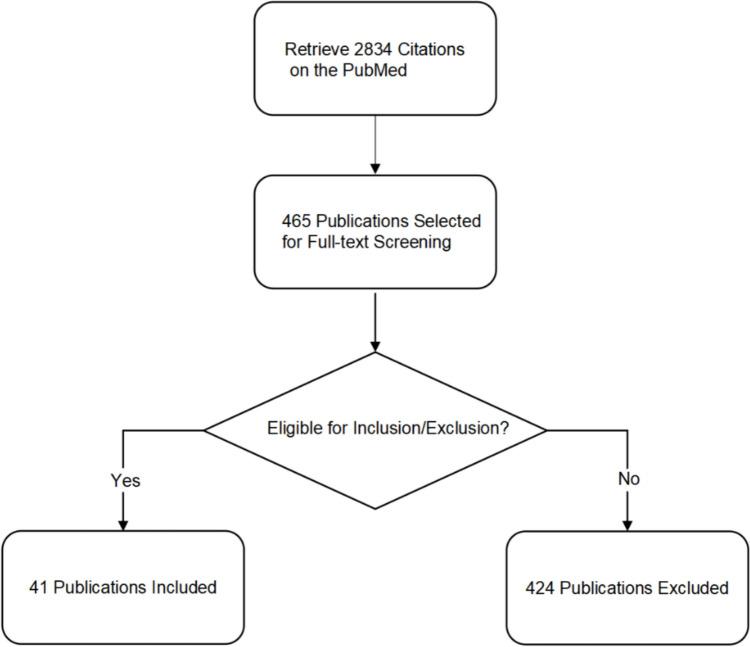
In this comprehensive study, we analyzed 41 published studies involving 9424 MM patients, and identified EMD in 32.2% (3038) of cases. Our aim was to elucidate the bone marrow-derived cytogenetic profiles of MM patients with EMD, comparing them to those without EMD.
RESULTS
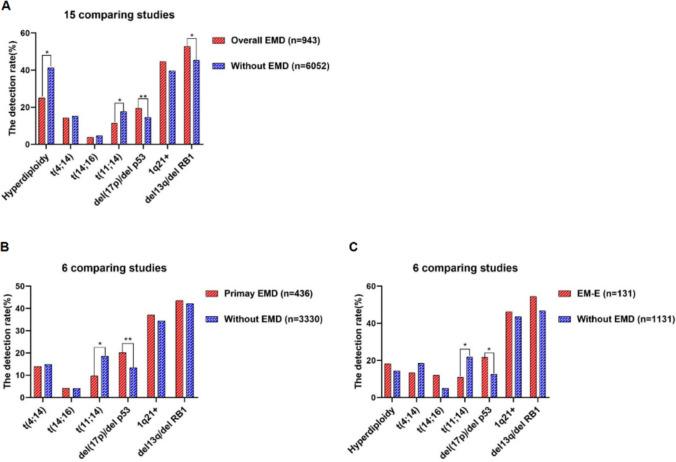
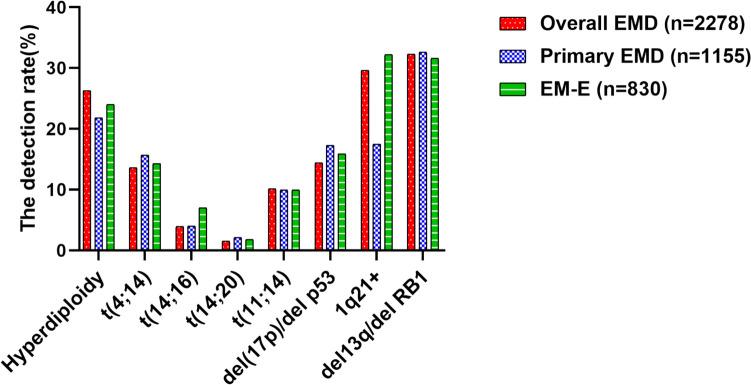
Among EMD-MM patients, the most prevalent abnormalities were del(13q)/del RB1 (32.3%), 1q21+ (29.6%), and hyperdiploidy (26.3%). High-risk cytogenetic abnormalities were led by 1q21+ (29.6%), del(17p)/del p53 (14.4%), and t(4;14) (13.6%). Notably, 1q21+ was the most frequent aberration in the EM-E subgroup, accounting for 32.2% of cases. Comparative analyses revealed significantly higher frequencies of del(17p)/del p53 and del(13q)/del RB1 in EMD patients compared to non-EMD patients, along with a slightly higher frequency of 1q21+. Conversely, EMD patients exhibited lower frequencies of hyperdiploidy and t(11;14) promoting MM evolution. Subgroup analyses confirmed these trends and revealed a more pronounced prevalence of del(13q)/del RB1 in the EM-E subgroup.
CONCLUSIONS
Our findings underscore the importance of integrating cytogenetic data into risk stratification for MM patients with EMD. These results also highlight the need for further research to elucidate the mechanisms underlying cytogenetic abnormalities in EMD and their clinical implications.
背景
多发性骨髓瘤(MM)中的髓外疾病(EMD)因其侵袭性和对传统疗法的耐药性,仍然是一个严峻的临床挑战。虽然细胞遗传学异常被认为是MM进展的促成因素,但其在EMD发病机制中的具体作用——特别是在区分EMD和非EMD患者的骨髓来源特征方面——仍未得到充分描述。
方法
在这项综合性研究中,我们分析了41项涉及9424例MM患者的已发表研究,并在32.2%(3038例)的病例中识别出EMD。我们的目的是阐明伴有EMD的MM患者的骨髓来源细胞遗传学特征,并将其与无EMD的患者进行比较。
结果
在伴有EMD的MM患者中,最常见的异常是del(13q)/del RB1(32.3%)、1q21+(29.6%)和超二倍体(26.3%)。高危细胞遗传学异常以1q21+(29.6%)、del(17p)/del p53(14.4%)和t(4;14)(13.6%)为主。值得注意的是,1q21+是EM-E亚组中最常见的畸变,占病例的32.2%。比较分析显示,与非EMD患者相比,EMD患者中del(17p)/del p53和del(13q)/del RB1的频率显著更高,1q21+的频率也略高。相反,EMD患者中超二倍体和促进MM进展的t(11;14)的频率较低。亚组分析证实了这些趋势,并显示del(13q)/del RB1在EM-E亚组中更为普遍。
结论
我们的研究结果强调了将细胞遗传学数据纳入伴有EMD的MM患者风险分层中的重要性。这些结果还突出了进一步研究以阐明EMD中细胞遗传学异常的潜在机制及其临床意义的必要性。
 Zotero 插件