
黄芪甲苷通过调节由AMPK-MTOR-ULK信号通路介导的自噬来提高外伤性视神经病变中视网膜神经节细胞的存活率。
Astragaloside IV improves the survival rates of retinal ganglion cells in traumatic optic neuropathy by regulating autophagy mediated by the AMPK-MTOR-ULK signaling pathway.
作者信息
Sun Wu, Chao Guojun, Wu Qiong, Xia Yanting, Shang Mengqiu, Wei Qiping, Zhou Jian, Liao Liang
机构信息
Department of Ophthalmology, Xiyuan Hospital China Academy of Chinese Medical Sciences, Beijing, China.
Beijing University of Chinese Medicine, Beijing, China.
出版信息
Mol Vis. 2025 Mar 28;31:99-112. eCollection 2025.
PURPOSE
Autophagy is involved in the pathological changes of traumatic optic neuropathy (TON), and the regulation of autophagy mediated by the AMPK-mTOR-ULK pathway is a potential therapeutic approach. Astragaloside IV (AS-IV) can regulate autophagy and play a therapeutic role in various diseases. This study aimed to observe the therapeutic effect of astragaloside on TON and the role of AMPK-MTOR-ULK pathway-mediated autophagy in this process.
METHODS
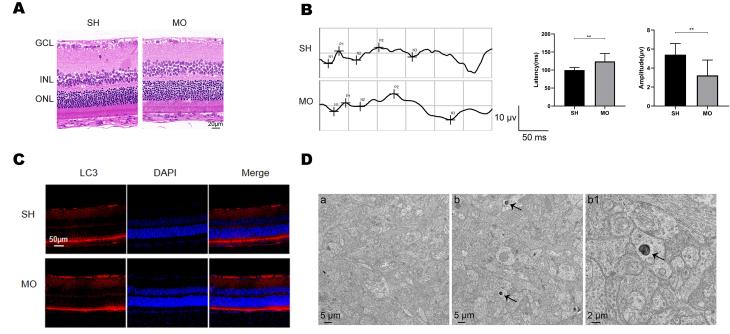
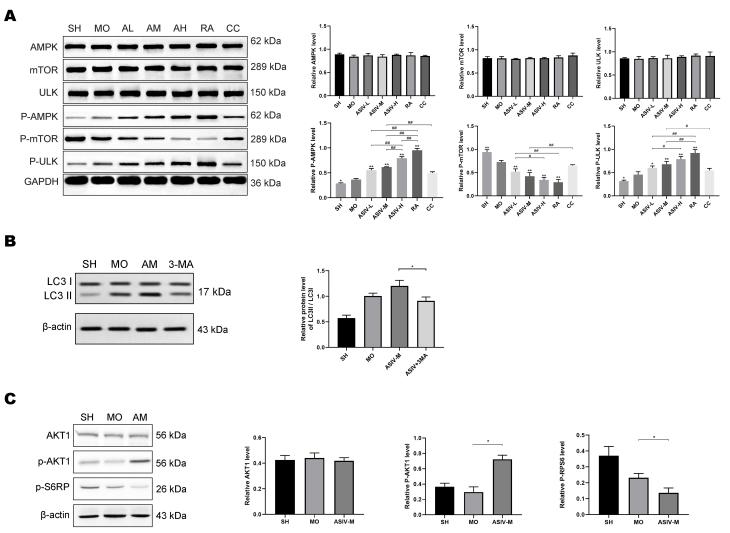
After the TON model was established, varying doses of AS-IV were administered as an intervention. Additionally, compound C (an AMPK inhibitor) or 3-methyladenine (an autophagy inhibitor) was administered intraperitoneally in conjunction with AS-IV. Samples were collected following a 7-day intervention period. Western blot analysis was conducted to measure the protein and phosphorylation levels of AMPK, mTOR, and ULK proteins. Moreover, western blot and quantitative reverse transcription PCR assays were used to quantify LC3 levels in retinal tissue. LC3 immunofluorescence was performed to examine autophagy levels in the ganglion cell layer (GCL), while transmission electron microscopy was employed to observe autophagosomes. Additionally, BRN3A immunofluorescence was used to label retinal ganglion cells (RGCs) in the GCL, and terminal deoxynucleotidyl transferase dUTP nick-end labeling staining was used to assess apoptosis within the GCL. Finally, optic nerve conduction function was evaluated using flash visual evoked potentials.
RESULTS
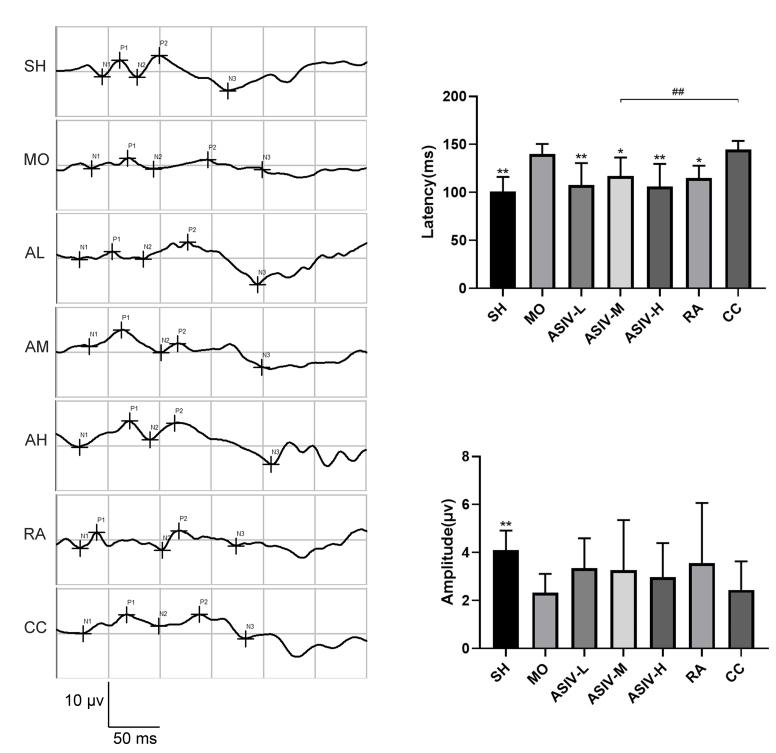
After 7 days, the phosphorylation levels of AMPK, mTOR, and ULK proteins in retinal tissue exhibited significant changes following TON. AS-IV treatment enhanced LC3 messenger RNA and protein levels in TON model rats, and the autophagy-promoting effect of AS-IV was reversed by 3-methyladenine. Moreover, AS-IV elevated P-AMPK and P-ULK levels while decreasing P-mTOR levels. AS-IV also improved the survival rate of RGCs and reduced the P2 peak latency of flash visual evoked potentials. These effects were attenuated by the AMPK inhibitor compound C. Additionally, AS-IV increased the levels of AKT1 and P-AKT1 while decreasing P-S6RP levels in the retinal tissue of TON model rats.
CONCLUSIONS
AS-IV can increase the survival rate of RGCs and improve visual function after TON, which may be related to the improvement of autophagy by regulating the AMPK-MTORC1-ULK pathway.
目的
自噬参与外伤性视神经病变(TON)的病理变化,由AMPK - mTOR - ULK途径介导的自噬调节是一种潜在的治疗方法。黄芪甲苷(AS - IV)可调节自噬并在多种疾病中发挥治疗作用。本研究旨在观察黄芪甲苷对TON的治疗效果以及AMPK - MTOR - ULK途径介导的自噬在此过程中的作用。
方法
建立TON模型后,给予不同剂量的AS - IV作为干预。此外,腹腔注射化合物C(一种AMPK抑制剂)或3 - 甲基腺嘌呤(一种自噬抑制剂)与AS - IV联合使用。在7天的干预期后收集样本。进行蛋白质免疫印迹分析以测量AMPK、mTOR和ULK蛋白的蛋白质水平和磷酸化水平。此外,采用蛋白质免疫印迹和定量逆转录PCR测定法来定量视网膜组织中的LC3水平。进行LC3免疫荧光检查神经节细胞层(GCL)中的自噬水平,同时使用透射电子显微镜观察自噬体。此外,使用BRN3A免疫荧光标记GCL中的视网膜神经节细胞(RGC),并使用末端脱氧核苷酸转移酶dUTP缺口末端标记染色评估GCL内的细胞凋亡。最后,使用闪光视觉诱发电位评估视神经传导功能。
结果
7天后,TON后视网膜组织中AMPK、mTOR和ULK蛋白的磷酸化水平出现显著变化。AS - IV治疗提高了TON模型大鼠中LC3信使核糖核酸和蛋白质水平,并且3 - 甲基腺嘌呤逆转了AS - IV的促自噬作用。此外,AS - IV提高了P - AMPK和P - ULK水平,同时降低了P - mTOR水平。AS - IV还提高了RGC的存活率并缩短了闪光视觉诱发电位的P2峰潜伏期。这些作用被AMPK抑制剂化合物C减弱。此外,AS - IV增加了TON模型大鼠视网膜组织中AKT1和P - AKT1的水平,同时降低了P - S6RP水平。
结论
AS - IV可提高TON后RGC的存活率并改善视觉功能,这可能与通过调节AMPK - MTORC1 - ULK途径改善自噬有关。

 Zotero 插件