
儿童青光眼的变异:表型扩展与临床经验
variants in childhood glaucoma: Phenotypic expansion and clinical experience.
作者信息
Verma Anshuman, Khan Arif O, Pochaboina Venkatesh, Senthil Sirisha
机构信息
Institute of Rare Eye Diseases and Ocular Genetics, LV Prasad Eye Institute, Hyderabad, India.
Eye Institute, Cleveland Clinic Abu Dhabi, Abu Dhabi, United Arab Emirates.
出版信息
Mol Vis. 2025 Mar 23;31:55-67. eCollection 2025.
PURPOSE
This study describes a distinct spectrum of latent transforming growth factor-β-binding protein 2 ()-related ocular phenotypes in pediatric glaucoma with supporting genetic evidence and highlights our clinical experiences in its management.
METHODS
A total of 189 children with childhood glaucoma underwent whole-exome sequencing-based genetic testing. Of these, 24 children displayed -related phenotypes, among whom 18 cases who tested positive for variants were included in the study. The identified variants were confirmed through Sanger sequencing whenever possible and analyzed using in silico tools. The clinical presentation, genetic variants, and management of these 18 cases were thoroughly reviewed and presented.
RESULTS
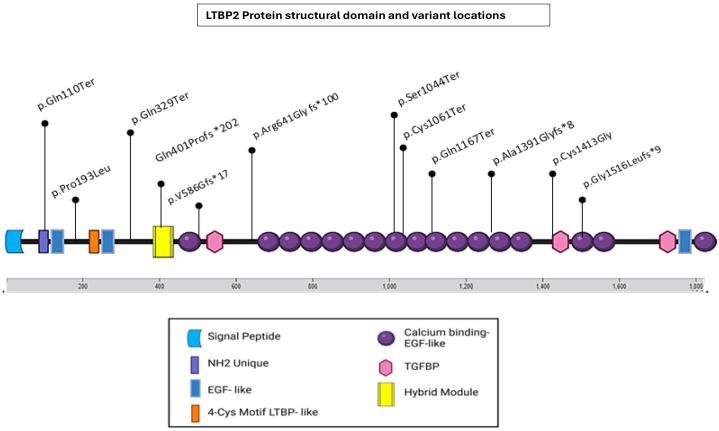
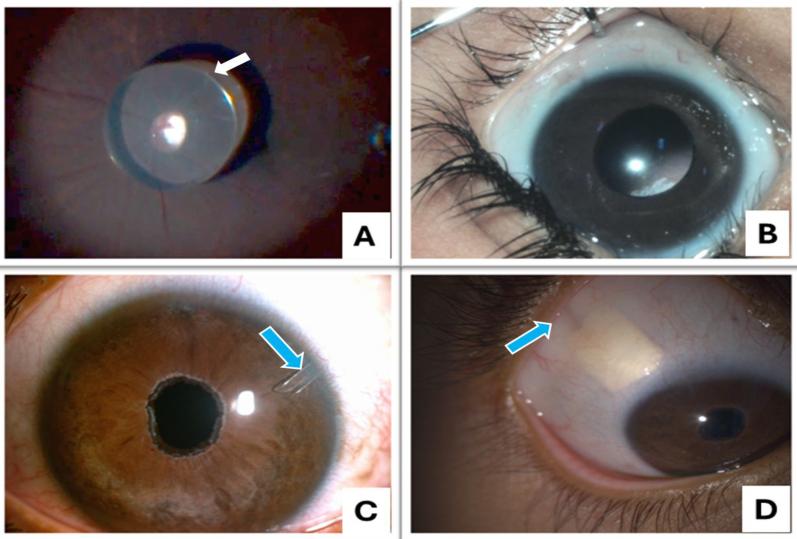
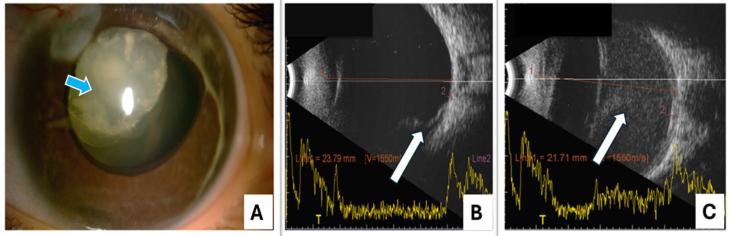
All 36 eyes of the 18 children with biallelic variants exhibited megalocornea without Descemet break, iridodonesis, and ectopia lentis. Pupillary changes were noted in all eyes, with persistent pupillary membrane in 78% (28/36) and ectropion uveae in 19% (7/36) eyes. Secondary glaucoma was observed in 72% (26/36) eyes, requiring surgery in 13 of these. Retinal pathology was noted in 47% (17/36) eyes. Lensectomy was performed in 94% (34/36) eyes with a mean age of 4.09 ± 3.5 years. Logistic regression analysis suggested that older age at lensectomy increased the risk of secondary glaucoma (hazard ratio, 1.69; [95% Confidence Interval: 1.00, 2.86], < 0.05). The identified variants included five stop-gain variations, six frameshift variations, and one substitution variation, with five being novel and seven classified as rare variants.
CONCLUSIONS
The study expands the classic -related phenotype spectrum in an Indian pediatric glaucoma cohort, highlighting additional features such as persistent pupillary membrane, ectropion uveae, and associated retinal pathology. These ocular manifestations were predominantly linked to nonsense variants. From a management standpoint, early lensectomy can help prevent secondary glaucoma, while timely identification and treatment of peripheral retinal pathology can reduce the risk of sight-threatening complications.
目的
本研究描述了小儿青光眼中与潜在转化生长因子-β结合蛋白2(LTBP2)相关的一系列独特眼部表型,并提供了支持性遗传证据,同时强调了我们在其管理方面的临床经验。
方法
共有189例儿童青光眼患者接受了基于全外显子测序的基因检测。其中,24例儿童表现出与LTBP2相关的表型,本研究纳入了18例LTBP2变异检测呈阳性的病例。尽可能通过桑格测序确认所鉴定的变异,并使用计算机工具进行分析。对这18例病例的临床表现、基因变异和管理情况进行了全面回顾并呈现。
结果
18例携带双等位基因LTBP2变异的儿童的36只眼中均出现了角膜增大且后弹力层无破裂、虹膜震颤和晶状体异位。所有眼睛均观察到瞳孔变化,78%(28/36)的眼睛存在持续性瞳孔膜,19%(7/36)的眼睛存在葡萄膜外翻。72%(26/36)的眼睛观察到继发性青光眼,其中13只需要手术治疗。47%(17/36)的眼睛存在视网膜病变。94%(34/36)的眼睛进行了晶状体切除术,平均年龄为4.09±3.5岁。逻辑回归分析表明,晶状体切除术时年龄较大增加了继发性青光眼的风险(风险比,1.69;[95%置信区间:1.00,2.86],P<0.05)。所鉴定的LTBP2变异包括5个截短变异、6个移码变异和1个替换变异,其中5个为新变异,7个被归类为罕见变异。
结论
本研究扩展了印度小儿青光眼队列中经典的LTBP2相关表型谱,突出了其他特征,如持续性瞳孔膜、葡萄膜外翻和相关的视网膜病变。这些眼部表现主要与无义LTBP2变异有关。从管理角度来看,早期晶状体切除术有助于预防继发性青光眼,而及时识别和治疗周边视网膜病变可降低视力威胁性并发症的风险。


 Zotero 插件