
含叉头相关结构域的肿瘤坏死因子受体相关因子相互作用蛋白(TIFA)和白细胞介素-1β在脓毒症相关急性肾损伤中的预测价值:生物信息学分析与实验验证
The Predictive Value of Tumor Necrosis Factor Receptor-Associated Factor-Interacting Protein With Forkhead-Associated Domain (TIFA) and Interleukin-1 Beta in Sepsis-Associated Acute Kidney Injury: Bioinformatics Analysis and Experimental Validation.
作者信息
Zhao Zuyi, Guo Wen, Zhao Bozhi, Ma Long
机构信息
Intensive Care Unit, The First Affiliated Hospital of Xinjiang Medical University, Urumqi, CHN.
出版信息
Cureus. 2025 May 18;17(5):e84333. doi: 10.7759/cureus.84333. eCollection 2025 May.
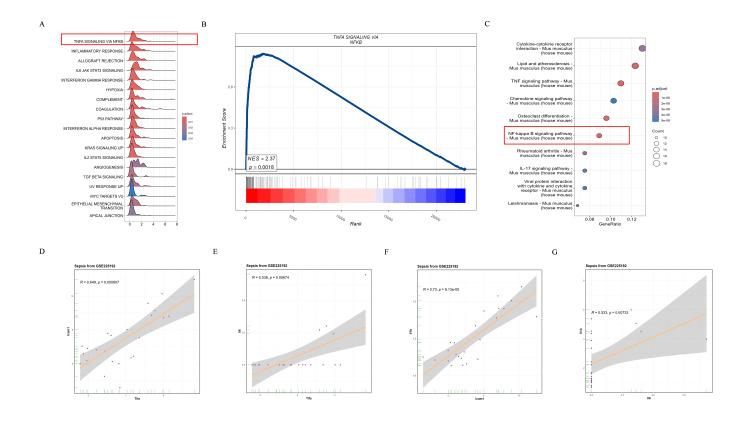
Background and objective Sepsis is a systemic inflammatory response syndrome caused by severe infection. Sepsis-associated acute kidney injury (SA-AKI) is one of the most common complications of sepsis. Early prediction and subsequent treatment of SA-AKI can improve patient outcomes; hence, the accurate prediction of its occurrence is of paramount importance. This study aimed to investigate the predictive value of the potential biomarkers interleukin-1 beta (IL-1β) and tumor necrosis factor receptor‑associated factor (TRAF)‑interacting protein with forkhead‑associated domain (TIFA) related to the development of SA-AKI. Methods We identified relevant GSE datasets (225192) from the Gene Expression Omnibus (GEO) database and conducted secondary analyses, revealing increased expression of TIFA and IL-1β in renal tissues. Building on our preliminary findings, we performed a prospective observational study (March 2024 to December 2024) among patients with sepsis who were admitted to the Department of Critical Care Medicine at the First Affiliated Hospital of Xinjiang Medical University. Patients were stratified based on the development of AKI. Plasma samples were collected within 24 hours of ICU admission and analyzed using enzyme-linked immunosorbent assay (ELISA) to measure plasma levels of TIFA and IL-1β. Results The analysis revealed that the length of hospital stay, albumin/globulin ratio, and white blood cell count did not show any significant differences between groups. However, plasma levels of TIFA and IL-1β were significantly higher in patients with AKI compared to those without AKI. The area under the receiver operating characteristic (ROC) curve (AUC) was 0.912, indicating that TIFA and IL-1β possess high discriminatory power and calibration accuracy. These findings suggest that plasma levels of TIFA and IL-1β are closely associated with respect to the prediction of AKI in patients. Conclusions Bioinformatics analysis and experimental validation revealed that the expression levels of TIFA and IL-1β are significantly upregulated in patients with SA-AKI. These findings suggest that TIFA and IL-1β may serve as potential biomarkers for predicting SA-AKI.
背景与目的 脓毒症是由严重感染引起的全身炎症反应综合征。脓毒症相关急性肾损伤(SA-AKI)是脓毒症最常见的并发症之一。SA-AKI的早期预测及后续治疗可改善患者预后;因此,准确预测其发生至关重要。本研究旨在探讨与SA-AKI发生相关的潜在生物标志物白细胞介素-1β(IL-1β)和含叉头相关结构域的肿瘤坏死因子受体相关因子(TRAF)相互作用蛋白(TIFA)的预测价值。方法 我们从基因表达综合数据库(GEO)中识别出相关的GSE数据集(225192)并进行二次分析,发现肾组织中TIFA和IL-1β的表达增加。基于我们的初步研究结果,我们对新疆医科大学第一附属医院重症医学科收治的脓毒症患者进行了一项前瞻性观察研究(2024年3月至2024年12月)。患者根据急性肾损伤的发生情况进行分层。在入住重症监护病房(ICU)后24小时内采集血浆样本,并使用酶联免疫吸附测定(ELISA)进行分析,以测量血浆中TIFA和IL-1β的水平。结果 分析显示,住院时间、白蛋白/球蛋白比值和白细胞计数在各组之间没有显著差异。然而,与无急性肾损伤的患者相比,急性肾损伤患者的血浆TIFA和IL-1β水平显著更高。受试者工作特征(ROC)曲线下面积(AUC)为0.912,表明TIFA和IL-1β具有较高的鉴别能力和校准准确性。这些发现表明,血浆TIFA和IL-1β水平在预测患者急性肾损伤方面密切相关。结论 生物信息学分析和实验验证表明,SA-AKI患者中TIFA和IL-1β的表达水平显著上调。这些发现表明,TIFA和IL-1β可能作为预测SA-AKI的潜在生物标志物。


 Zotero 插件