
乳汁细胞外囊泡:营养保健品和药物递送领域中新兴的存在。
Milk extracellular vesicles: A burgeoning new presence in nutraceuticals and drug delivery.
作者信息
Marsh Spencer R, Beard Claire E, Gourdie Robert G
机构信息
Fralin Biomedical Research Institute at VTC Virginia Tech Roanoke Virginia USA.
Center for Heart and Reparative Medicine Research Virginia Tech Roanoke Virginia USA.
出版信息
Bioeng Transl Med. 2025 Jan 23;10(3):e10756. doi: 10.1002/btm2.10756. eCollection 2025 May.
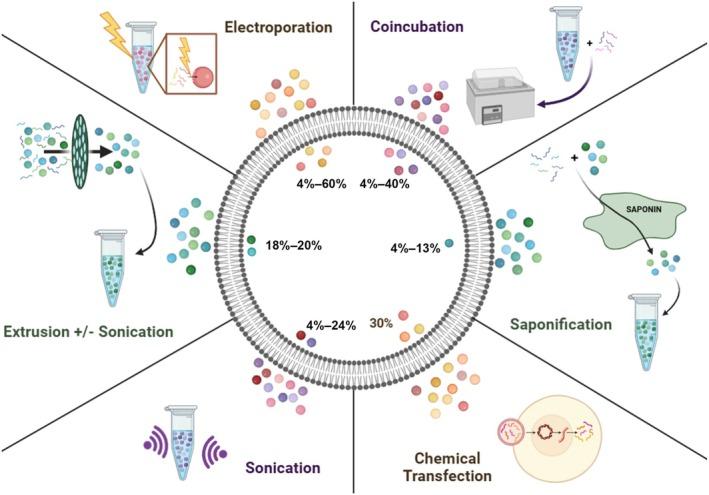
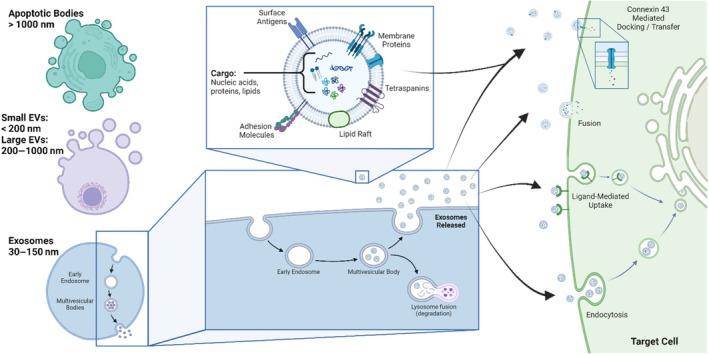
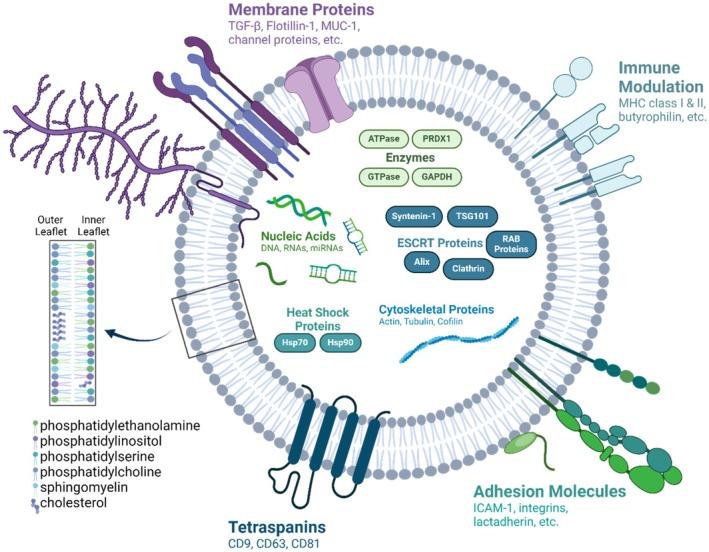
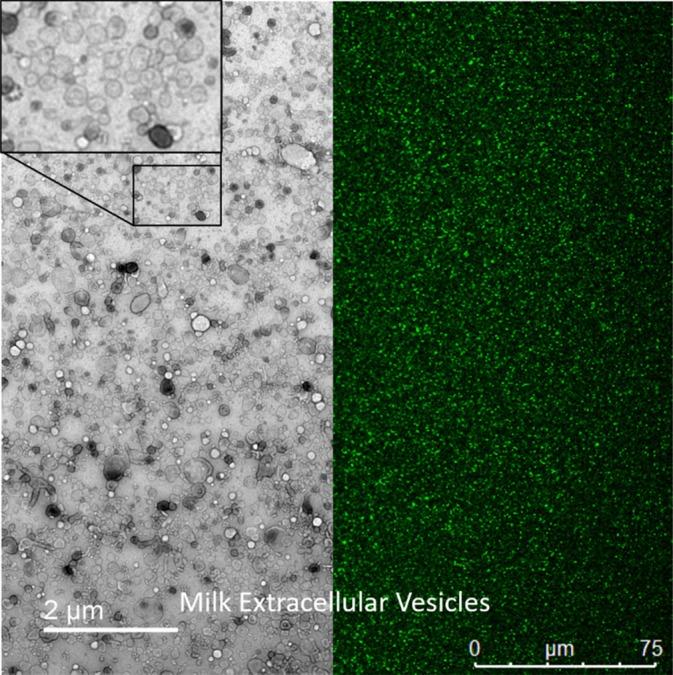
Mammalian milk, a multifaceted developmental biofluid, has attracted new attention due to its diverse constituents and their implications for health and disease. Among these constituents, extracellular vesicles (EVs) have emerged as focal points of investigation. EVs, including exosomes and small EVs, have demonstrated biological activity in preclinical studies-including reports of enhancement of cognition and neural complexity, promotion of gastrointestinal development, barrier function and microbiome richness, the bolstering of immune response, and facilitation of musculoskeletal maturation in neonates. The richness of milk as a source of EVs is noteworthy, with hundreds of milliliters (at >10 EVs/mL) of nanovesicles extractable from a single liter of milk (>10 EVs/starting liter of milk). Techniques such as tangential flow filtration hold promise for scalable production, potentially extending to thousands of liters. Together with the scale and increasing sophistication of the dairy industry, the abundance of EVs in milk underscores their commercial potential in various nutraceutical applications. Beyond natural bioactivity, milk EVs (mEVs) present intriguing possibilities as orally deliverable, non-immunogenic pharmaceutical carriers, with burgeoning interest in their utilization for heart disease and cancer chemotherapy and as vectors for gene-editing modules such as CrispR. This review synthesizes current knowledge on mEV biogenesis, characterization, isolation methodologies, and cargo contents. Moreover, it delves into the therapeutic potential of mEVs, both as inherently bioactive nanovesicles and as versatile platforms for drug delivery. As efforts progress toward large-scale implementation, rigorous attention to safe, industrial-scale production and robust assay development will be pivotal in harnessing the translational promise of small EVs from milk.
哺乳动物乳汁是一种多方面的发育生物流体,因其成分多样及其对健康和疾病的影响而引起了新的关注。在这些成分中,细胞外囊泡(EVs)已成为研究的焦点。包括外泌体和小EVs在内的EVs在临床前研究中已显示出生物活性,包括增强认知和神经复杂性、促进胃肠道发育、屏障功能和微生物群丰富度、增强免疫反应以及促进新生儿肌肉骨骼成熟的报道。乳汁作为EVs来源的丰富性值得注意,从一升乳汁中可提取数百毫升(>10个EVs/mL)的纳米囊泡(>10个EVs/起始升乳汁)。切向流过滤等技术有望实现可扩展生产,有可能扩展到数千升。随着乳制品行业规模的扩大和日益复杂,乳汁中丰富的EVs凸显了它们在各种营养保健品应用中的商业潜力。除了天然生物活性外,乳汁EVs(mEVs)作为口服可递送、无免疫原性的药物载体具有诱人的可能性,人们对其在心脏病和癌症化疗中的应用以及作为CrispR等基因编辑模块的载体的兴趣与日俱增。本综述综合了目前关于mEV生物发生、表征、分离方法和货物内容的知识。此外,它还深入探讨了mEVs作为固有生物活性纳米囊泡和通用药物递送平台的治疗潜力。随着大规模实施的努力不断推进,严格关注安全、工业规模的生产和强大的检测方法开发对于利用乳汁中小EVs的转化前景至关重要。
 Zotero 插件