
全膝关节置换术后临床结局的术前物理因素预测指标
Preoperative Physical Factors Predictive of Clinical Outcomes after Total Knee Arthroplasty.
作者信息
Nakajima Arata, Terayama Keiichiro, Akiba Takashi, Nakano Shiho, Sonobe Masato, Nakagawa Koichi
机构信息
Department of Orthopaedic Surgery, Toho University Sakura Medical Center, Sakura, Japan.
Department of Rehabilitation, Toho University Sakura Medical Center, Sakura, Japan.
出版信息
Prog Rehabil Med. 2025 May 17;10:20250013. doi: 10.2490/prm.20250013. eCollection 2025.
OBJECTIVES
Predicting postoperative clinical outcomes from preoperative physical factors of patients undergoing total knee arthroplasty (TKA) would be useful. This study aimed to investigate the association between preoperative physical factors and postoperative outcomes.
METHODS
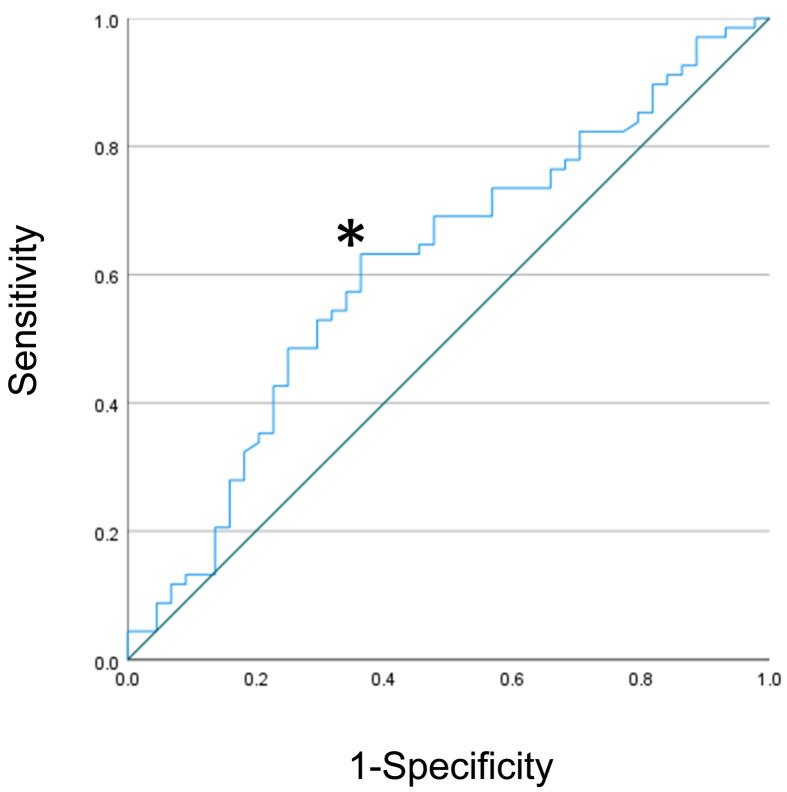
This study included 119 patients. The preoperative physical factors and 1-year postoperative clinical outcomes were collected and assessed. Physical factors included age, sex, body mass index, skeletal mass index, knee range of motion, 5-m walk time, and Timed Up-and-Go (TUG) test result. Postoperative outcomes were evaluated using a sum of symptoms, pain, activities of daily living, and quality of life subscales of the Knee injury Osteoarthritis Outcome Score (KOOS-4), and the Oxford Knee Score (OKS). Correlation between physical factors and postoperative outcomes was analyzed by Spearman's rank correlation coefficient, and the association between physical factors and KOOS-4 or OKS was analyzed using multiple regression analysis. Receiver operating characteristic analysis was performed to calculate the cut-off value for the TUG test time associated with minimum postoperative OKS of 40.
RESULTS
Among the preoperative physical factors, TUG test time showed significant correlation with OKS (ρ=-0.267), but none correlated with KOOS-4. Multiple regression analysis showed a significant association between TUG test time and OKS (95% confidence interval: -0.590 to -0.163) but not with KOOS-4. The cut-off value of preoperative TUG test time associated with minimum postoperative OKS of 40 was 12.96 s.
CONCLUSIONS
Among the preoperative physical factors of patients undergoing TKA, the TUG test time was associated with clinical outcomes at 1 year after surgery.
目的
通过全膝关节置换术(TKA)患者的术前身体因素预测术后临床结果将很有帮助。本研究旨在调查术前身体因素与术后结果之间的关联。
方法
本研究纳入了119例患者。收集并评估了术前身体因素和术后1年的临床结果。身体因素包括年龄、性别、体重指数、骨骼质量指数、膝关节活动范围、5米步行时间和计时起立行走(TUG)测试结果。使用膝关节损伤和骨关节炎结果评分(KOOS-4)的症状、疼痛、日常生活活动和生活质量子量表总和以及牛津膝关节评分(OKS)来评估术后结果。通过Spearman等级相关系数分析身体因素与术后结果之间的相关性,并使用多元回归分析分析身体因素与KOOS-4或OKS之间的关联。进行受试者工作特征分析以计算与术后最低OKS为40相关的TUG测试时间的临界值。
结果
在术前身体因素中,TUG测试时间与OKS显示出显著相关性(ρ=-0.267),但与KOOS-4均无相关性。多元回归分析显示TUG测试时间与OKS之间存在显著关联(95%置信区间:-0.590至-0.163),但与KOOS-4无关。与术后最低OKS为40相关的术前TUG测试时间的临界值为12.96秒。
结论
在接受TKA的患者的术前身体因素中,TUG测试时间与术后1年的临床结果相关。

 Zotero 插件