
超声引导下粗针穿刺活检诊断的非典型导管增生:与升级为恶性肿瘤相关的临床、病理及超声特征
Atypical ductal hyperplasia diagnosed by US-guided core needle biopsy: clinical, pathological and US features associated with upgrading to malignancy.
作者信息
Li Jun Kang, Xu Yong Jie, Niu Rui Lan, Fu Nai Qin, Jin Zhi Ying, Li Shi Yu, Liu Yu Chen, Wang Zhi Li
机构信息
Department of Ultrasound, The First Medical Center, Chinese PLA General Hospital, Beijing, China.
Department of Ultrasound, Chinese PLA 63820 Hospital, Mianyang, Sichuan, China.
出版信息
BMC Med Imaging. 2025 May 19;25(1):168. doi: 10.1186/s12880-025-01707-z.
BACKGROUND
To develop a predictive model to identify atypical ductal hyperplasia (ADH) that was underestimated by US-guided core needle biopsy (CNB) and to evaluate the risk factors for underestimation for ADH with intraductal papilloma diagnosed by CNB.
METHODS
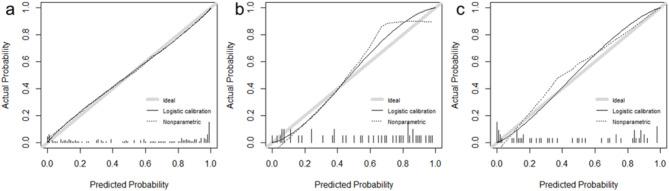
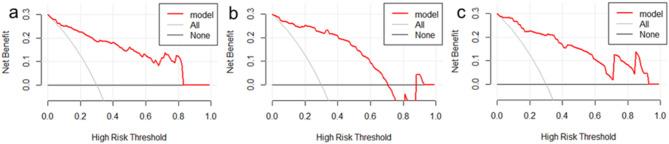
In this retrospective study, 300 CNB-diagnosed ADH lesions in 291 consecutive women between January 2014 and July 2023 were included and divided into training set (n = 181), internal validation set (n = 54), and external validation set (n = 65). The review included clinical, pathological, and US features, as well as final outcomes. Multivariate logistic regression was employed to establish predictive model and to evaluate risk factors. Model performance was evaluated using area under the receiver operating characteristic curve (AUC), calibration curve, decision curve analysis, and utility (patient stratification into low and high-risk groups). Model was validated both internally and externally by calculating its performance on validation sets.
RESULTS
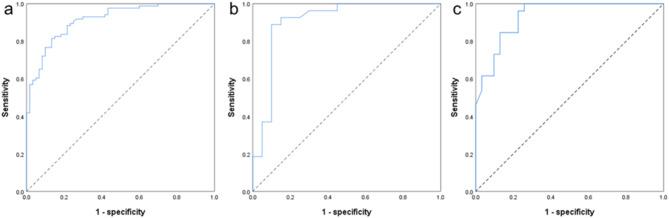
The upgrade rate to malignancy was 51.0%. Predictors included in the model were age, the pathological pattern of ADH with intraductal papilloma or ADH alone, Ki-67 positivity, and imaging-pathological discordance. The AUC was 0.915 (95% CI: 0.858, 0.955) in the training set, 0.906 (95% CI: 0.785, 0.972) in the internal validation set, and 0.934 (95% CI: 0.836, 0.983) in the external validation set. Using a cutoff value of 0.11, 38.3% of nonmalignant lesions in the training set were stratified into low-risk group with an upgrade rate of 4.1%. Similar results were obtained in the validation sets. For ADH with intraductal papilloma, age and imaging-pathological discordance were the independent risk factors for malignancy upgrading.
CONCLUSIONS
The model established to predict ADH upgrading can help in individualized risk management. If predictors of non-upgraded ADH lesions can be confirmed with larger studies, more than one-third of non-malignant lesions are expected to be candidates for non-excision.
TRIAL REGISTRATION
This is a retrospective study.
背景
建立一种预测模型,以识别美国超声引导下粗针穿刺活检(CNB)低估的非典型导管增生(ADH),并评估CNB诊断为导管内乳头状瘤的ADH低估的危险因素。
方法
在这项回顾性研究中,纳入了2014年1月至2023年7月期间291例连续女性中300个经CNB诊断的ADH病变,并将其分为训练集(n = 181)、内部验证集(n = 54)和外部验证集(n = 65)。回顾内容包括临床、病理和超声特征以及最终结果。采用多变量逻辑回归建立预测模型并评估危险因素。使用受试者操作特征曲线下面积(AUC)、校准曲线、决策曲线分析和效用(将患者分层为低风险和高风险组)评估模型性能。通过计算其在验证集上的性能对模型进行内部和外部验证。
结果
恶性升级率为51.0%。模型中的预测因素包括年龄、伴有导管内乳头状瘤或单独ADH的ADH病理模式、Ki-67阳性以及影像-病理不一致。训练集中的AUC为0.915(95%CI:0.858,0.955),内部验证集中为0.906(95%CI:0.785,0.972),外部验证集中为0.934(95%CI:0.836,0.983)。使用截断值0.11,训练集中38.3%的非恶性病变被分层为低风险组,升级率为4.1%。在验证集中也获得了类似结果。对于伴有导管内乳头状瘤的ADH,年龄和影像-病理不一致是恶性升级的独立危险因素。
结论
建立的预测ADH升级的模型有助于个体化风险管理。如果非升级ADH病变的预测因素能在更大规模研究中得到证实,预计超过三分之一的非恶性病变将成为非切除的候选对象。
试验注册
这是一项回顾性研究。



 Zotero 插件