
微生物群失调在心血管疾病中的作用:机制与治疗意义。
The role of microbiome dysbiosis in cardiovascular disease: Mechanisms and therapeutic implications.
作者信息
Abdulaal Razan, Tlaiss Yehya, Jammal Fatima, Moussbah Tayib Hadi, Tarchichi Alaa, Hteit Ali, Tlais Mohamad, Nassif Dana
机构信息
Faculty of Medicine and Medical Sciences, University of Balamand, Beirut, Lebanon.
Department of Nutrition and Food Sciences, American University of Beirut, Beirut, Lebanon.
出版信息
Glob Cardiol Sci Pract. 2025 Feb 28;2025(1):e202503. doi: 10.21542/gcsp.2025.3.
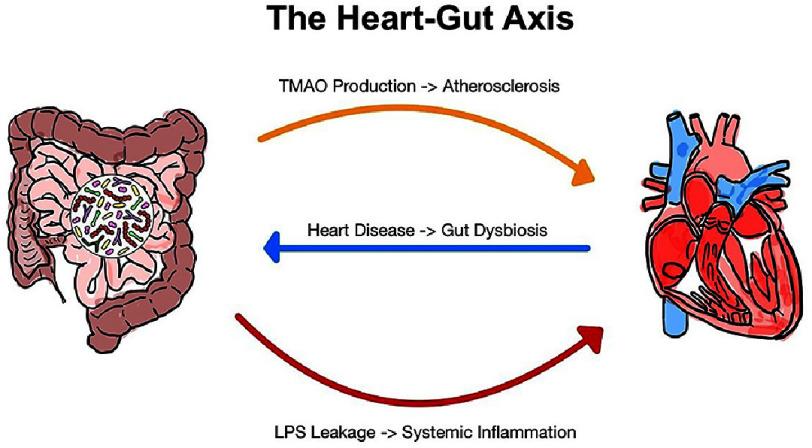
The gut microbiome plays a critical role in cardiovascular disease (CVD) pathogenesis through systemic inflammation, disrupted lipid metabolism, and proatherogenic metabolites like trimethylamine-N-oxide (TMAO). Dysbiosis contributes to increased intestinal permeability, platelet hyperreactivity, and reduced short-chain fatty acids (SCFAs), exacerbating cardiovascular risk. Emerging microbiome-targeted therapies, including probiotics, prebiotics, fecal microbiota transplantation (FMT), and dietary interventions, show promise in mitigating CVD. However, challenges remain in translating these findings into clinical practice due to strain-specific effects and interindividual variability. The gut-heart axis represents a transformative avenue for CVD prevention and management, warranting further research to optimize long-term efficacy and safety.
肠道微生物群通过全身炎症、脂质代谢紊乱以及三甲胺-N-氧化物(TMAO)等促动脉粥样硬化代谢产物,在心血管疾病(CVD)发病机制中起关键作用。生态失调会导致肠道通透性增加、血小板反应性增强以及短链脂肪酸(SCFA)减少,从而加剧心血管风险。新兴的以微生物群为靶点的疗法,包括益生菌、益生元、粪便微生物群移植(FMT)和饮食干预,在减轻心血管疾病方面显示出前景。然而,由于菌株特异性效应和个体间差异,将这些研究结果转化为临床实践仍面临挑战。肠-心轴是心血管疾病预防和管理的一个变革性途径,值得进一步研究以优化长期疗效和安全性。


 Zotero 插件