
碳酸钙纳米填充聚乳酸/聚碳酸亚丙酯复合材料的分子动力学模拟:界面性质与水蒸气阻隔性
Molecular dynamics simulation of calcium carbonate nano filled PLA/PPC composites: interfacial properties and water vapor barrier.
作者信息
Ding Yingjie, Xin Yong
机构信息
College of Advanced Manufacturing, Nanchang University, Nanchang, 330036, Jiangxi Province, China.
出版信息
Discov Nano. 2025 May 20;20(1):85. doi: 10.1186/s11671-025-04223-9.
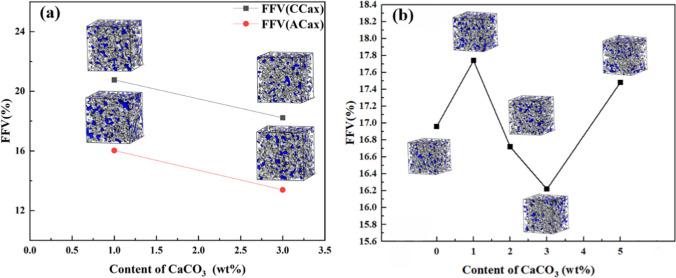
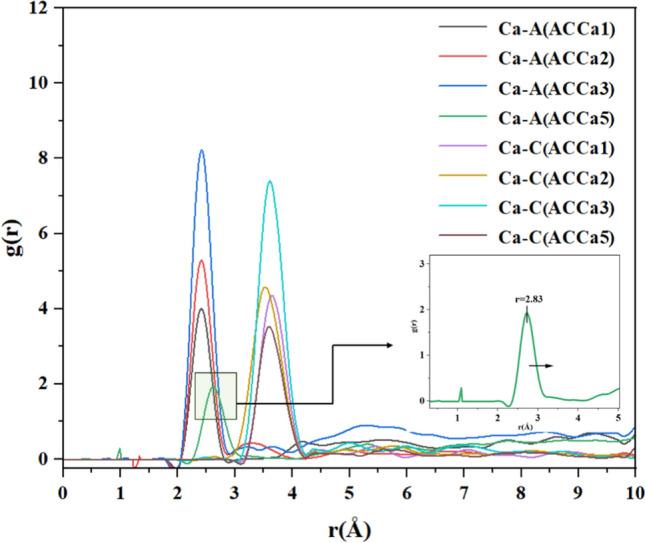
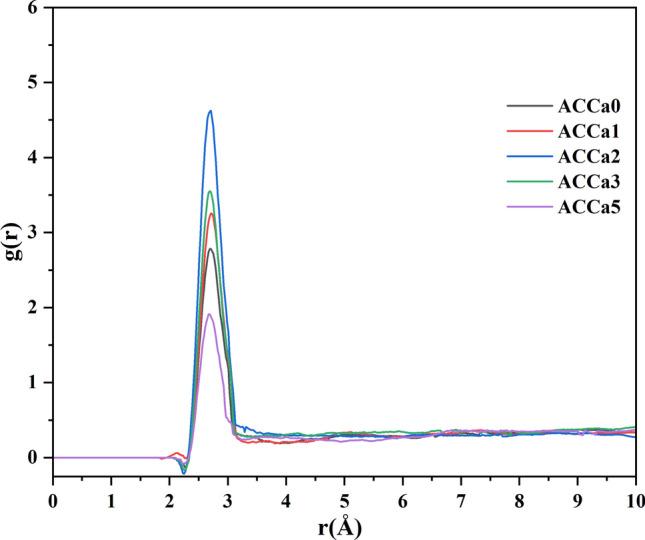
In recent years, polymer bio-nanocomposites have attracted much attention in the fields of industry and agriculture due to their desirable overall performance and environmentally friendly properties. Among them, polylactic acid (PLA) and polypropylene carbonate (PPC), as renewable polymers, have a number of advantages but also have their respective limitations, and their blending is expected to complement each other's strengths. In addition, the addition of appropriate compatibilizers such as calcium carbonate (CaCO₃) nanoparticles can improve performance. Considering the high cost and time consuming experimental studies, the present study was carried out using molecular dynamics (MD) simulations for PLA/PPC/CaCO₃ bio-nanocomposites with different mass fractions (0-5 wt%), with samples denoted by ACCax (0 ≤ x ≤ 5). FFV calculations revealed that CaCO₃ nanoparticles interacted with PLA and PPC chains and changed the distribution and folding of polymer chains; the T results showed that a small amount of CaCO₃ added to the composites shifted the T towards higher temperatures, which improved the compatibility of the two polymer chains; and the inter-component interaction energy results showed that, for the ACCax nanocomposites, the filling threshold of CaCO₃ in PLA/PPC blends was 3 wt%. The radial distribution function (RDF) results indicated that the interactions between components were hydrogen bonding and van der Waals force, and the strength depended on the nanoparticle content. The interaction between PLA and CaCO₃ was mainly hydrogen bonding, and the interaction between PPC and CaCO₃ was mainly van der Waals force, and the comparative analysis showed that nanoparticles in the samples containing 3 wt% of CaCO₃ interacted more strongly with the PLA chain. Comparative analysis showed that the nanoparticles in the sample containing 3 wt% CaCO₃ interacted more strongly with the PLA chains, and the order of the RDF peaks in each sample was ACCa3 > ACCa2 > ACCa1 > ACCa5. The analysis of the water adsorption sites on the composites, the energy distribution, and the mean square displacements (MSD) of water in the different samples, as well as the diffusion coefficients, showed that the filler with 3 wt% of CaCO₃ had a better dispersibility in the matrix, the free volume of the system was reduced, and the diffusion channel of water vapour was widened, which led to promising success in the field of biodegradable membranes for food packaging or waterproofing for agriculture. In conclusion, MD simulation is a powerful tool for predicting the gas permeability of polymers, blends and nanocomposites.
近年来,聚合物生物纳米复合材料因其理想的综合性能和环境友好特性在工农业领域备受关注。其中,聚乳酸(PLA)和聚碳酸亚丙酯(PPC)作为可再生聚合物,有诸多优点但也各自存在局限性,二者共混有望优势互补。此外,添加适量的增容剂如碳酸钙(CaCO₃)纳米粒子可改善性能。考虑到实验研究成本高且耗时,本研究采用分子动力学(MD)模拟对不同质量分数(0 - 5 wt%)的PLA/PPC/CaCO₃生物纳米复合材料进行研究,样品标记为ACCax(0 ≤ x ≤ 5)。自由体积分数(FFV)计算表明,CaCO₃纳米粒子与PLA和PPC链相互作用,改变了聚合物链的分布和折叠;玻璃化转变温度(Tg)结果表明,向复合材料中添加少量CaCO₃使Tg向更高温度移动,改善了两种聚合物链的相容性;组分间相互作用能结果表明,对于ACCax纳米复合材料,PLA/PPC共混物中CaCO₃的填充阈值为3 wt%。径向分布函数(RDF)结果表明,组分间的相互作用为氢键和范德华力,其强度取决于纳米粒子含量。PLA与CaCO₃之间的相互作用主要是氢键,PPC与CaCO₃之间的相互作用主要是范德华力,对比分析表明,含3 wt% CaCO₃样品中的纳米粒子与PLA链相互作用更强。对比分析表明,含3 wt% CaCO₃样品中的纳米粒子与PLA链相互作用更强,各样品中RDF峰的顺序为ACCa3>ACCa2>ACCa1>ACCa5。对复合材料上的水吸附位点、不同样品中水的能量分布、均方位移(MSD)以及扩散系数的分析表明,含3 wt% CaCO₃的填料在基体中具有更好的分散性,体系的自由体积减小,水蒸气的扩散通道变宽,这在食品包装用可生物降解膜或农业防水领域取得了有前景的成果。总之,MD模拟是预测聚合物、共混物和纳米复合材料气体渗透性的有力工具。








 Zotero 插件