
用于糖尿病管理的纳米药物递送系统:最新进展与未来展望
Nano-Based Drug Delivery Systems for Managing Diabetes: Recent Advances and Future Prospects.
作者信息
Liu Meihan, Wang Rui, Hoi Maggie Pui Man, Wang Yitao, Wang Shengpeng, Li Ge, Vong Chi Teng, Chong Cheong-Meng
机构信息
State Key Laboratory of Quality Research in Chinese Medicine, Institute of Chinese Medical Sciences, University of Macau, Macau, People's Republic of China.
Guangdong Provincial Key Laboratory of Pathogenesis, Targeted Prevention and Treatment of Heart Disease, Guangdong Provincial People's Hospital (Guangdong Academy of Medical Sciences), Guangzhou, People's Republic of China.
出版信息
Int J Nanomedicine. 2025 May 16;20:6221-6252. doi: 10.2147/IJN.S508875. eCollection 2025.
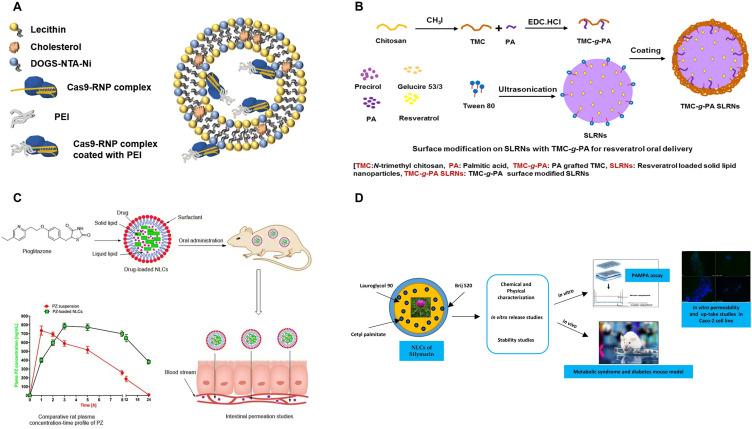
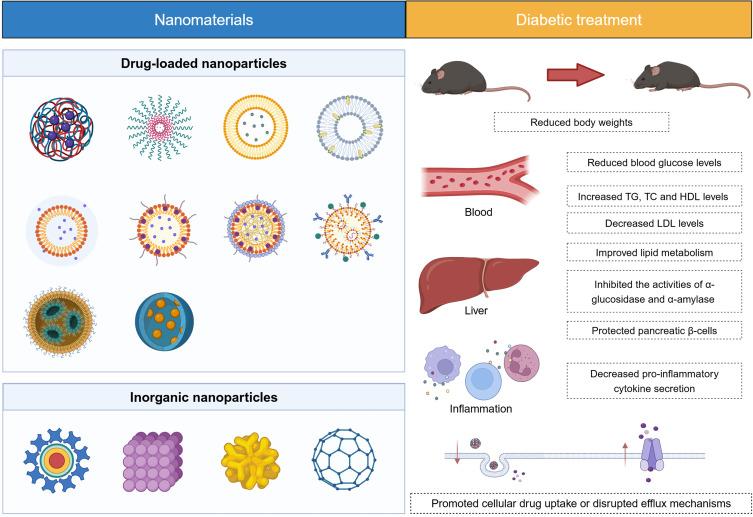
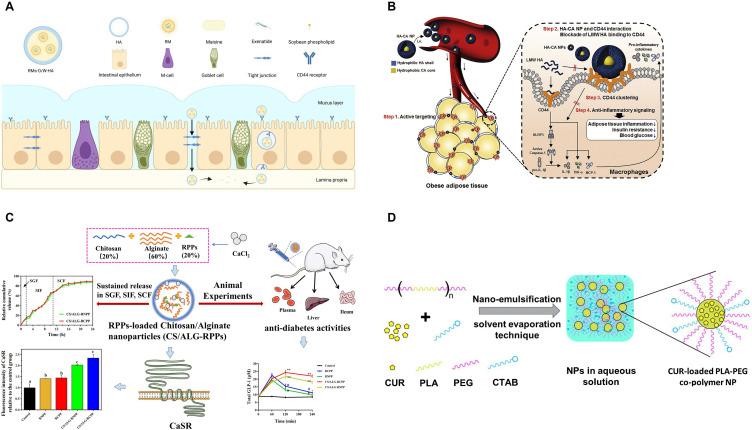
Diabetes mellitus is a chronic metabolic disorder, which is characterized by high blood glucose levels, and this can lead to serious diabetic complications. According to the World Health Organization, approximately 830 million adults worldwide are living with diabetes in 2024, with its prevalence continuing to rise steadily over the years. To treat this disease, researchers have developed a variety of first-line drugs, such as sulfonylureas and thiazolidinediones. Despite their long clinical use, there are still many drawbacks and limitations. One of the main drawbacks is low bioavailability, this causes the diabetic patients to take the drugs frequently to lower the blood glucose levels continuously. Some patients may have to take multiple drugs to increase the effectiveness of lowering blood glucose levels. To address these limitations, nano-based drug delivery systems have emerged to overcome these problems. It has emerged as a promising approach for diabetes management, which offers controlled and localized release of anti-diabetic drugs, thus enhancing therapeutic efficacy. This review discusses recent advances in the field of nano-based drug delivery systems for diabetes management, safety and toxicity profiles of anti-diabetic drugs, and future perspectives for the development of nanomedicine in diabetic treatment. Literature search was conducted using electronic databases, and only English literatures were used and published between 2014 and 2024. Recent advancements in nanotechnology have facilitated the development of various nanocarriers, such as polymeric carrier nanoparticles, nanoliposomes, nanocrystals, nanosuspension and inorganic nanoparticles, which enhance drug stability, bioavailability, and efficacy. These systems can deliver anti-diabetic drugs and natural compounds more effectively, thereby minimizing side effects and improving patient compliance. As the field continues to evolve, the successful clinical implementation of nanodrugs could revolutionize the management of diabetes and improve the quality of life for millions of diabetic patients worldwide.
糖尿病是一种慢性代谢紊乱疾病,其特征是血糖水平升高,这可能导致严重的糖尿病并发症。根据世界卫生组织的数据,2024年全球约有8.3亿成年人患有糖尿病,并且其患病率多年来一直在稳步上升。为了治疗这种疾病,研究人员开发了多种一线药物,如磺脲类药物和噻唑烷二酮类药物。尽管它们在临床上使用已久,但仍然存在许多缺点和局限性。主要缺点之一是生物利用度低,这使得糖尿病患者需要频繁服药以持续降低血糖水平。一些患者可能不得不服用多种药物来提高降低血糖水平的效果。为了解决这些局限性,基于纳米的药物递送系统应运而生以克服这些问题。它已成为一种有前景的糖尿病管理方法,可实现抗糖尿病药物的可控和局部释放,从而提高治疗效果。本综述讨论了基于纳米的糖尿病管理药物递送系统领域的最新进展、抗糖尿病药物的安全性和毒性概况以及纳米医学在糖尿病治疗中发展的未来前景。使用电子数据库进行了文献检索,仅使用了2014年至2024年期间发表的英文文献。纳米技术的最新进展促进了各种纳米载体的开发,如聚合物载体纳米颗粒、纳米脂质体、纳米晶体、纳米混悬液和无机纳米颗粒,这些纳米载体可提高药物稳定性、生物利用度和疗效。这些系统可以更有效地递送抗糖尿病药物和天然化合物,从而将副作用降至最低并提高患者的依从性。随着该领域的不断发展,纳米药物的成功临床应用可能会彻底改变糖尿病的管理方式,并改善全球数百万糖尿病患者的生活质量。

 Zotero 插件