
使用加速度计识别短期失眠中具有临床意义的焦虑的机器学习模型
Machine Learning Models to Identify Clinically Significant Anxiety in Short-Term Insomnia Using Accelerometers.
作者信息
Fang Leqin, Zeng Weixiong, Zheng Shuqiong, Du Shixu, Yang Hangyi, Luo Xue, Zeng Shufei, Huang Zhiting, Chen Weiguo, Zhang Bin
机构信息
Department of Psychiatry, Sleep Medicine Center, Nanfang Hospital, Southern Medical University, Guangzhou, China.
Institute of Brain Disease, Nanfang Hospital, Southern Medical University, Guangzhou, China.
出版信息
Depress Anxiety. 2025 May 13;2025:3082856. doi: 10.1155/da/3082856. eCollection 2025.
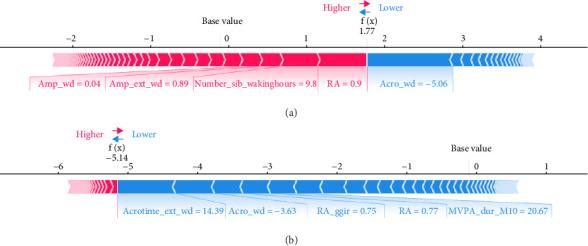
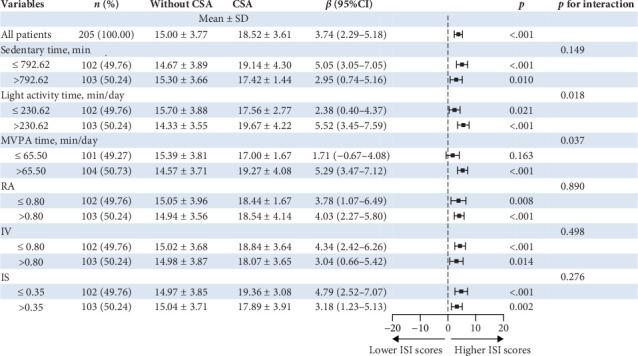
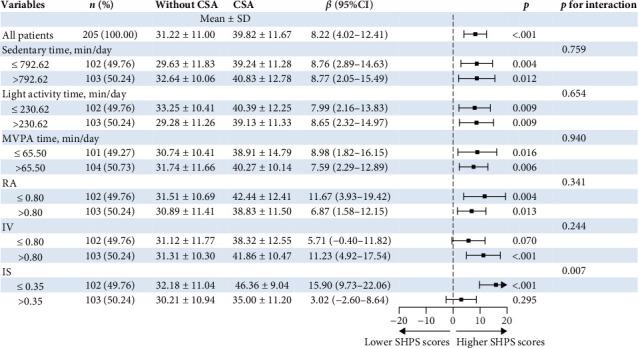
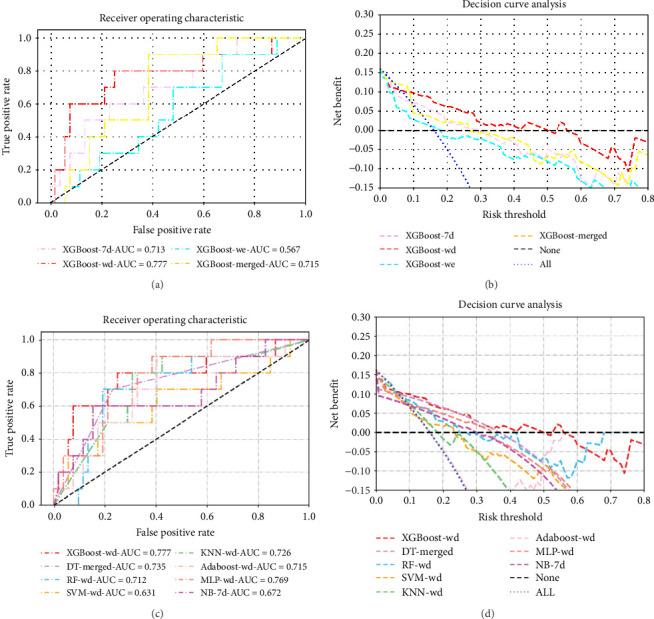
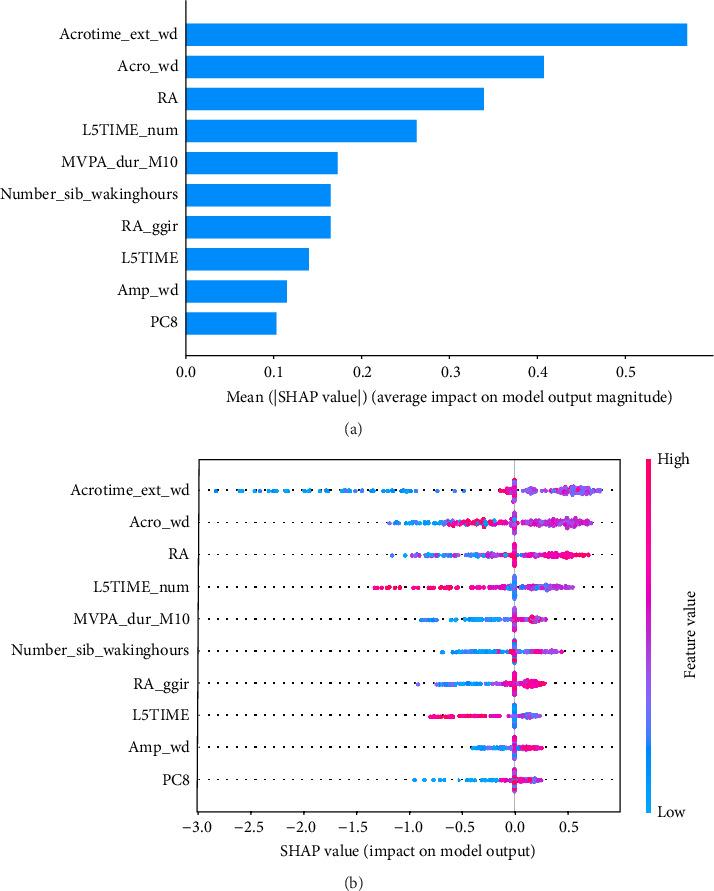
Clinically significant anxiety (CSA) is common in individuals with short-term insomnia. This study aims to explore the relationship between CSA and the subjective and objective parameters of sleep in patients with short-term insomnia and construct machine learning (ML) models to determine the utility of accelerometer features in identifying significant anxiety. A total of 205 short-term insomnia participants from China were assigned to the group with CSA ( = 33) or the group without CSA ( = 172). Interaction analysis based on linear regression was used to estimate the possible interactive effect of accelerometer features between CSA and sleep problems. Four feature sets and eight algorithms were used to construct ML models, with Shapley Additive exPlanations (SHAP) values used to visualize feature importance and influence processes. CSA in patients with short-term insomnia leads to more severe subjective sleep problems, and accelerometer-measured features warrant further attention for the identification of interactive factors. A significant interaction effect was found between anxiety symptoms and longer duration of physical activity on insomnia severity ( < 0.05). Anxiety symptoms and interdaily stability had an interactive association with sleep hygiene behaviors ( < 0.01). ML can process and analyze complex accelerometer features to identify CSA in patients with short-term insomnia. Compared with other feature sets and algorithms, the XGBoost model with accelerometer-measured features on weekdays more effectively identified CSA with area under the curve (AUC) value of 0.777. SHAP analysis results indicated that circadian rhythm features had significant contributions. Decision plots based on SHAP were applied to visualize the personalized risk factors for each patient and provide clinicians with more easily understandable and practical explanation methods that enhance clinical decision-making. Chinese Clinical Trial Registry identifier: ChiCTR2200062910.
临床上显著的焦虑(CSA)在短期失眠患者中很常见。本研究旨在探讨短期失眠患者中CSA与睡眠的主观和客观参数之间的关系,并构建机器学习(ML)模型,以确定加速度计特征在识别显著焦虑方面的效用。共有205名来自中国的短期失眠参与者被分为CSA组(n = 33)或无CSA组(n = 172)。基于线性回归的交互分析用于估计CSA与睡眠问题之间加速度计特征的可能交互作用。使用四个特征集和八种算法构建ML模型,使用Shapley加性解释(SHAP)值来可视化特征重要性和影响过程。短期失眠患者的CSA会导致更严重的主观睡眠问题,加速度计测量的特征在识别交互因素方面值得进一步关注。发现焦虑症状与更长时间的身体活动对失眠严重程度有显著的交互作用(P < 0.05)。焦虑症状和日际稳定性与睡眠卫生行为有交互关联(P < 0.01)。ML可以处理和分析复杂的加速度计特征,以识别短期失眠患者中的CSA。与其他特征集和算法相比,工作日使用加速度计测量特征的XGBoost模型更有效地识别CSA,曲线下面积(AUC)值为0.777。SHAP分析结果表明昼夜节律特征有显著贡献。基于SHAP的决策图用于可视化每个患者的个性化风险因素,并为临床医生提供更易于理解和实用的解释方法,以增强临床决策。中国临床试验注册标识符:ChiCTR2200062910。

 Zotero 插件