
自噬在阿尔茨海默病发病机制中的作用及其治疗价值。
Autophagy in alzheimer disease pathogenesis and its therapeutic values.
作者信息
Angst Gabrielle, Jia Nuo, Esqueda Luis E Tron, Fan Yanbo, Cai Qian, Wang Chenran
机构信息
Department of Cancer Biology, University of Cincinnati College of Medicine, Cincinnati, OH, USA.
Department of Cell Biology and Neuroscience, Division of Life Science, School of Arts and Sciences, Rutgers, The State University of New Jersey, Piscataway, NJ, USA.
出版信息
Autophagy Rep. 2025 May 8;4(1):2471677. doi: 10.1080/27694127.2025.2471677. eCollection 2025.
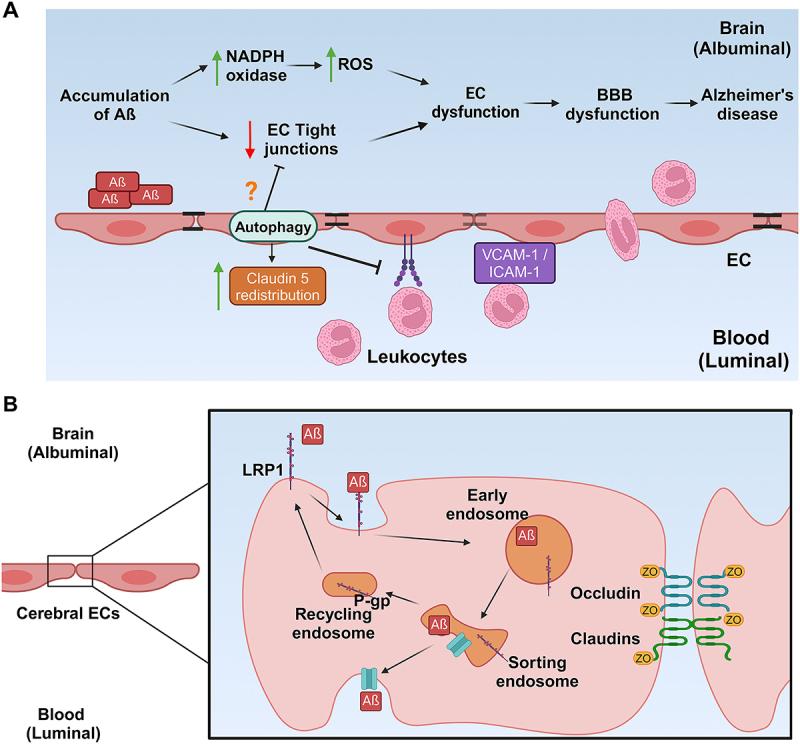
Alzheimer disease (AD) is the most common form of dementia with hallmarks of β-amyloid deposits, neurofilament tangles, synaptic loss and neuronal death in the patient's brain. AD is a heavy burden in an ageing society as there are no effective therapies in treating the causes or slowing down its progression. Autophagy is a conserved process through formation of double membrane structure, namely autophagosome which is delivered to lysosome to digest cellular disposals. Autophagy maintains homoeostasis in the brain and is generally considered to protect brain functions against ageing. The first evidence of autophagy involvement in AD is that there is decreased expression of autophagy essential genes in post-mortem AD brains. Autophagy is also believed to be protective in neurodegeneration. However, the molecular and cellular mechanisms for dysfunction of autophagy in AD are not fully understood. Recent studies of autophagy regulation in AD cover the findings not only in neurons, but also from fast growing evidence for their importance in glia and brain vascular system. Thus, this review composes pertinent information regarding the involvement of autophagy in neurons, glias (including microglia, astrocyte, and oligodendrocyte), and brain vascular cells in AD, and their unique cellular mechanisms of this connection in AD pathology. We will provide effectual insights both in investigating autophagy in AD pathological mechanisms and in establishing a strategic approach for developing autophagy-based AD therapies.
阿尔茨海默病(AD)是最常见的痴呆形式,其特征是患者大脑中存在β-淀粉样蛋白沉积、神经丝缠结、突触丧失和神经元死亡。在老龄化社会中,AD是一个沉重的负担,因为目前尚无有效的疗法来治疗病因或减缓其进展。自噬是一个保守的过程,通过形成双层膜结构即自噬体来实现,自噬体被运送到溶酶体以消化细胞废物。自噬维持大脑内稳态,通常被认为可保护脑功能免受衰老影响。自噬参与AD的首个证据是,在AD患者死后的大脑中,自噬必需基因的表达下降。自噬也被认为在神经退行性变中具有保护作用。然而,AD中自噬功能障碍的分子和细胞机制尚未完全明确。最近关于AD中自噬调节的研究不仅涵盖了在神经元中的发现,而且越来越多的证据表明其在神经胶质细胞和脑血管系统中也很重要。因此,本综述汇集了有关自噬在AD的神经元、神经胶质细胞(包括小胶质细胞、星形胶质细胞和少突胶质细胞)以及脑血管细胞中的参与情况,以及它们在AD病理学中这种联系的独特细胞机制的相关信息。我们将为研究AD病理机制中的自噬以及建立基于自噬的AD治疗策略提供有效的见解。


 Zotero 插件