
运城盐湖土壤病毒的特征、多样性及生物地球化学潜力
Characterization, diversity, and biogeochemical potential of soil viruses inhabiting in Yuncheng Salt Lake.
作者信息
Liu Jin, Dong Xiaoxiao, Wang Xiaokai, Chu Yunmeng
机构信息
Department of Life Sciences, Yuncheng University, Yuncheng, Shanxi, China.
National Key Laboratory of Crop Genetic Improvement, Huazhong Agricultural University, Wuhan, Hubei, China.
出版信息
Front Microbiol. 2025 May 7;16:1597514. doi: 10.3389/fmicb.2025.1597514. eCollection 2025.
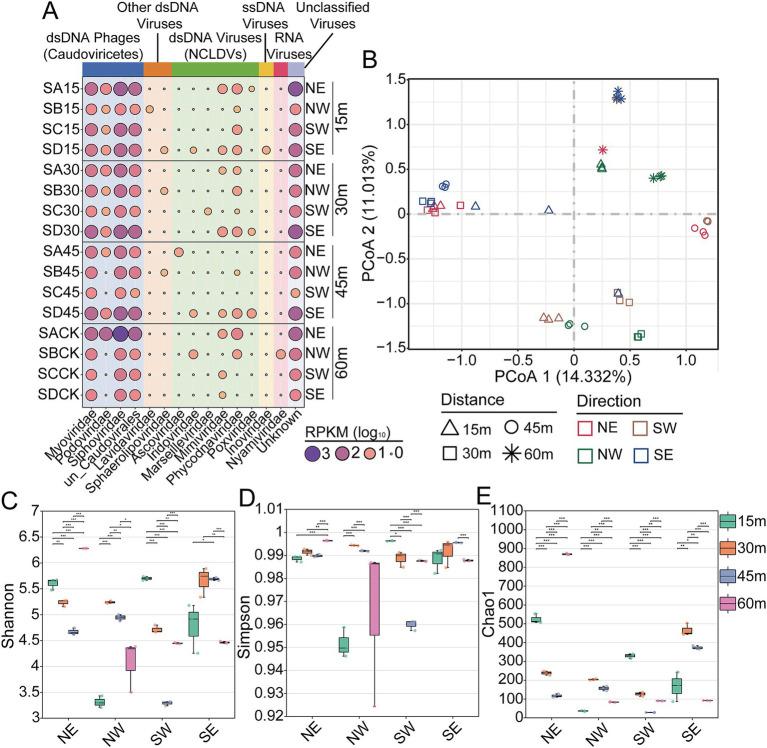
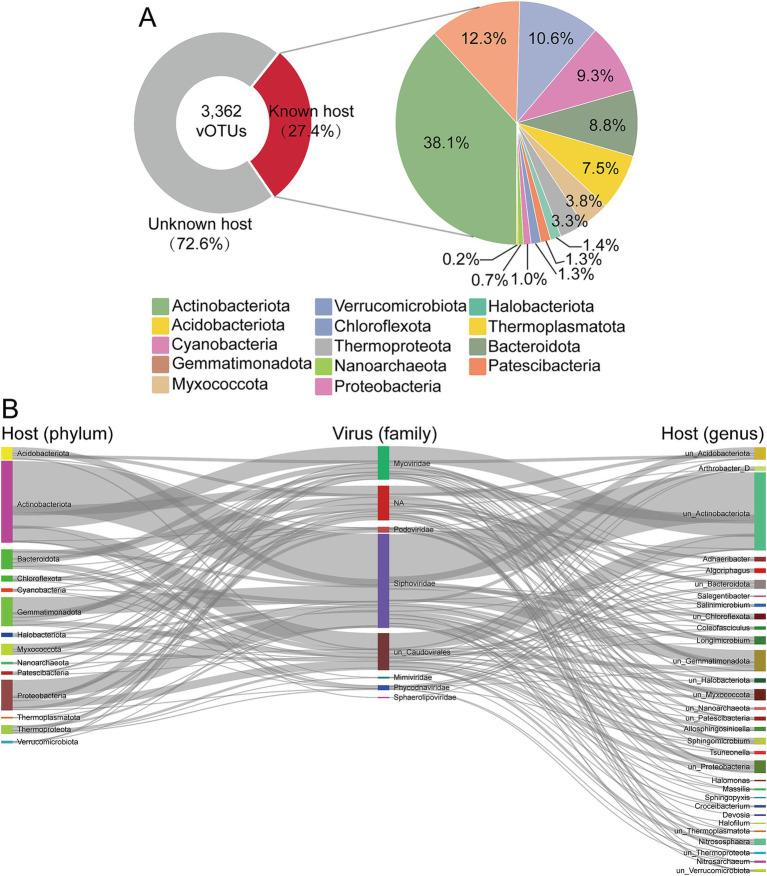
Viruses play a crucial role in microbial communities and can significantly influence ecosystem processes and biogeochemical cycles by regulating the structure of these communities and the metabolic functions of their hosts. Salt lakes are recognized for harboring a diverse array of halotolerant microorganisms; however, there is limited knowledge regarding the viruses and their co-occurring hosts in these halotolerant environments. Herein, 3,362 viral operational taxonomic units (vOTUs) were recovered from Yuncheng Salt Lake soils by combining with a binning method, with less than 2% showing homology to known viruses, highlighting a significant unexplored viral diversity. Virus communities were typically specific to their habitats, exhibiting low overlap across various geographical regions and other ecological environments. It was predicted that 27.4% of viruses were associated with microbial host populations, and the majority of the predicted vOTUs are linked to dominant bacteria and archaea. Metabolic predictions revealed that 568 putative auxiliary metabolic genes (AMGs) were involved in various processes related to biosynthesis and transformation reactions associated with resource utilization within host cells. The virus-encoded AMGs indicated that these viruses influenced the metabolism of carbon, nitrogen, sulfur, and phosphorus in microorganisms, as well as their adaptation to salinity. This study highlighted the unique characteristics and potential ecological roles of soil viruses in Yuncheng Salt Lake, suggesting that these viruses may significantly influence microbial communities and the biogeochemistry of salt lake soils. These findings provide valuable insights into the diversity, function, and ecology of viruses in soils surrounding salt lakes, establishing a foundation for understanding their roles in these unique ecosystems.
病毒在微生物群落中发挥着关键作用,通过调节这些群落的结构及其宿主的代谢功能,可显著影响生态系统过程和生物地球化学循环。盐湖以蕴藏着各种各样的耐盐微生物而闻名;然而,对于这些耐盐环境中的病毒及其共生宿主,我们了解有限。在此,通过结合分箱方法,从运城盐湖土壤中获得了3362个病毒操作分类单元(vOTU),其中与已知病毒具有同源性的不到2%,这突出表明存在大量未被探索的病毒多样性。病毒群落通常具有栖息地特异性,在不同地理区域和其他生态环境中的重叠度较低。据预测,27.4%的病毒与微生物宿主群体相关,且大多数预测的vOTU与优势细菌和古菌有关。代谢预测显示,568个推定的辅助代谢基因(AMG)参与了与宿主细胞内资源利用相关的生物合成和转化反应的各种过程。病毒编码的AMG表明,这些病毒影响了微生物中碳、氮、硫和磷的代谢,以及它们对盐度的适应性。这项研究突出了运城盐湖土壤病毒的独特特征和潜在生态作用,表明这些病毒可能会显著影响微生物群落和盐湖土壤的生物地球化学。这些发现为深入了解盐湖周边土壤中病毒的多样性、功能和生态学提供了有价值的见解,为理解它们在这些独特生态系统中的作用奠定了基础。


 Zotero 插件