
韩国首尔大都市区使用便携式监测仪对过敏患者个人PM2.5暴露进行时间加权评估。
Time-weighted assessment of personal PM2.5 exposure of patients with allergies using portable monitors in Seoul Metropolitan Area, Korea.
作者信息
Jang Hyeok, Park Shin-Young, Lee Cheol-Min
机构信息
Department of Environmental & Chemical Engineering, Seokyeong University, Seoul, 02713, Republic of Korea.
出版信息
Environ Monit Assess. 2025 May 22;197(6):666. doi: 10.1007/s10661-025-14109-z.
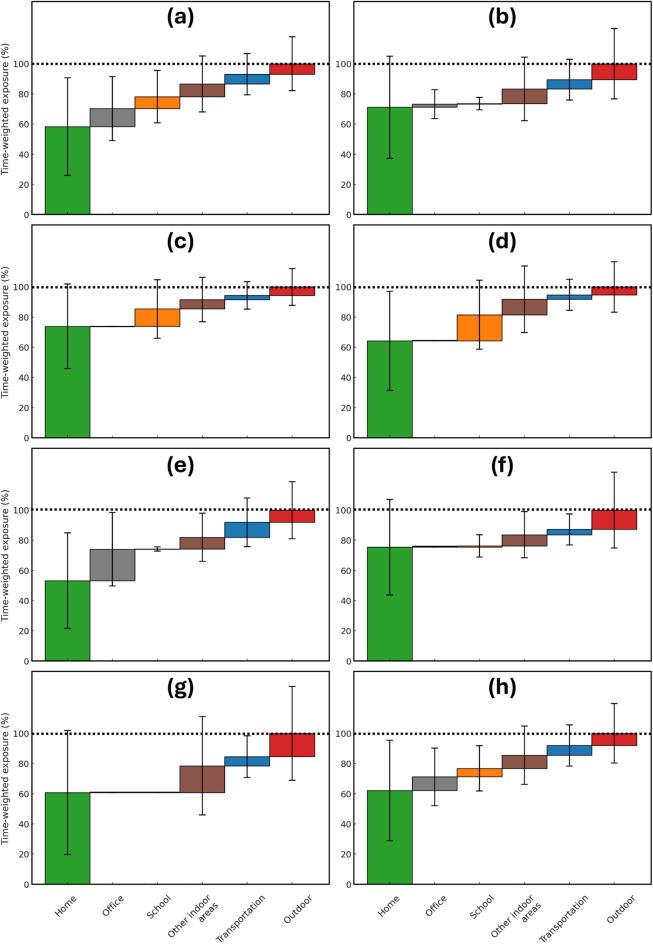
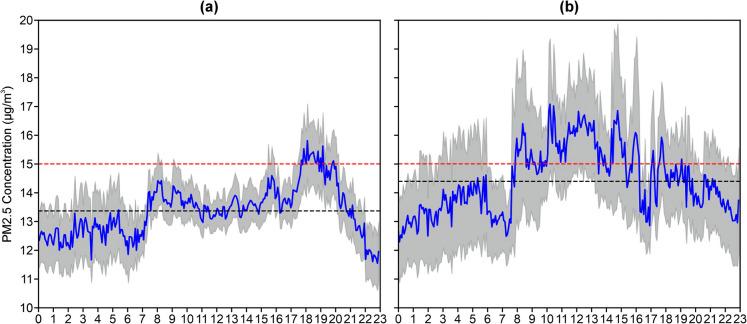
Patients with allergies are more sensitive to fine particulate matter (PM2.5) than the general population; however, since PM2.5 exposure levels are influenced by microenvironments, time, and activity patterns, epidemiological studies using conventional stationary monitors face challenges in accurately estimating personal exposure levels. Therefore, this study analyzed the personal PM2.5 exposure characteristics of 86 individuals with allergies living in Seoul using portable monitors and GPS units from February to April 2024. The Kolmogorov-Smirnov test confirmed that the measured PM2.5 concentrations did not follow a normal distribution. Therefore, non-parametric statistical methods such as the Kruskal-Wallis and Wilcoxon rank-sum tests were used to assess statistically significant differences in PM2.5 concentrations. Over 90% of their time was spent indoors, with outdoor environments and schools (weekdays) and transportation (weekends) having the highest average PM2.5 concentrations. The lowest PM2.5 concentrations were consistently observed at home on both weekdays (12.76 μg/m) and weekends (13.46 μg/m). Despite this, the time spent at home resulted in the highest integrated exposure levels (weekdays: 58.25%; weekends: 71.14%). The highest levels of time spent and integrated exposure at home were similarly observed across all five subpopulations (child, student, employed, unemployed, and housewife). The average PM2.5 exposure concentrations did not exceed the WHO 24-h PM2.5 exposure guideline of 15 μg/m. However, analysis of the 5-min interval personal PM2.5 exposure concentrations revealed that participants exceeded this threshold 5.9% and 31.25% of the time on weekdays and weekends, respectively, indicating a higher frequency of high-concentration exposure on weekends. These findings quantitatively identify the primary microenvironments where patients with allergies are exposed to PM2.5 during the day and demonstrate that personalized air quality information provides better insights into personal PM2.5 exposure sources. These results should serve as foundational data for technology development aimed at elucidating the correlation between PM2.5 exposure and allergic diseases and for providing personalized air quality management guidelines.
过敏患者对细颗粒物(PM2.5)比一般人群更敏感;然而,由于PM2.5暴露水平受微环境、时间和活动模式影响,使用传统固定监测器的流行病学研究在准确估计个人暴露水平上面临挑战。因此,本研究于2024年2月至4月使用便携式监测器和全球定位系统(GPS)设备分析了居住在首尔的86名过敏患者的个人PM2.5暴露特征。柯尔莫哥洛夫-斯米尔诺夫检验证实,测得的PM2.5浓度不服从正态分布。因此,使用非参数统计方法,如克鲁斯卡尔-沃利斯检验和威尔科克森秩和检验,来评估PM2.5浓度的统计学显著差异。他们超过90%的时间都待在室内,室外环境、学校(工作日)和交通(周末)的平均PM2.5浓度最高。在工作日(12.76μg/m)和周末(13.46μg/m),家中的PM concentrations were consistently observed at home on both weekdays (12.76 μg/m) and weekends (13.46 μg/m). Despite this, the time spent at home resulted in the highest integrated exposure levels (weekdays: 58.25%; weekends: 71.14%). The highest levels of time spent and integrated exposure at home were similarly observed across all five subpopulations (child, student, employed, unemployed, and housewife). The average PM2.5 exposure concentrations did not exceed the WHO 24-h PM2.5 exposure guideline of 15 μg/m. However, analysis of the 5-min interval personal PM2.5 exposure concentrations revealed that participants exceeded this threshold 5.9% and 31.25% of the time on weekdays and weekends, respectively, indicating a higher frequency of high-concentration exposure on weekends. These findings quantitatively identify the primary microenvironments where patients with allergies are exposed to PM2.5 during the day and demonstrate that personalized air quality information provides better insights into personal PM2.5 exposure sources. These results should serve as foundational data for technology development aimed at elucidating the correlation between PM2.5 exposure and allergic diseases and for providing personalized air quality management guidelines.2.5浓度始终最低。尽管如此,在家中度过的时间导致了最高的综合暴露水平(工作日:58.25%;周末:71.14%)。在所有五个亚人群(儿童、学生、就业者、失业者和家庭主妇)中,在家中度过的时间和综合暴露水平最高的情况类似。PM2.5平均暴露浓度未超过世界卫生组织24小时PM2.5暴露指南规定的15μg/m。然而,对5分钟间隔的个人PM2.5暴露浓度分析显示,参与者在工作日和周末分别有5.9%和31.25%的时间超过该阈值,表明周末高浓度暴露的频率更高。这些发现定量地确定了过敏患者在白天接触PM2.5的主要微环境,并表明个性化空气质量信息能更好地洞察个人PM2.5暴露源。这些结果应为旨在阐明PM2.5暴露与过敏性疾病之间的相关性以及提供个性化空气质量管理指南的技术开发提供基础数据。


 Zotero 插件