
R2-MTX方案治疗原发性中枢神经系统淋巴瘤(PCNSL)的疗效与安全性:一项单中心回顾性分析
Efficacy and safety of the R2-MTX regimen in primary central nervous system lymphoma (PCNSL): a single-center retrospective analysis.
作者信息
Liang Lijie, Meng Xue, Xie Li, Li Na, Feng You, Jiang Ming
机构信息
Department of Head & Neck Oncology, Cancer Center, West China Hospital, Sichuan University, Chengdu, 610041, P.R. China.
Department of Geriatric Oncology and Department of Palliative Care, School of Medicine, Chongqing University Cancer Hospital, Chongqing University, Chongqing, 400030, P.R. China.
出版信息
J Cancer Res Clin Oncol. 2025 May 22;151(5):173. doi: 10.1007/s00432-025-06205-x.
PURPOSE
Primary central nervous system lymphoma (PCNSL) has a poor prognosis, mainly because of the significant challenges with the efficacy and tolerability of induction chemotherapy. This retrospective study aimed to evaluate the efficacy and safety of the R2-MTX regimen in PCNSL patients.
METHODS
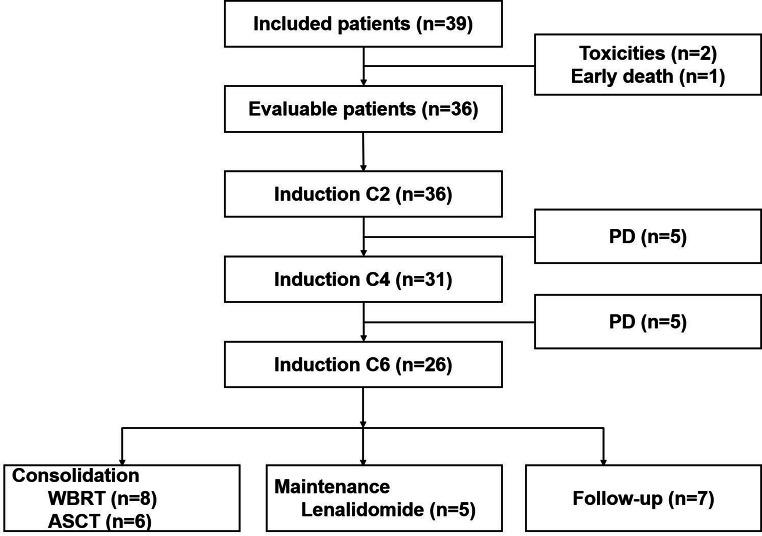
We conducted a retrospective analysis of 39 PCNSL patients treated with the R2-MTX regimen, focusing on treatment outcomes and adverse events (AEs).
RESULTS
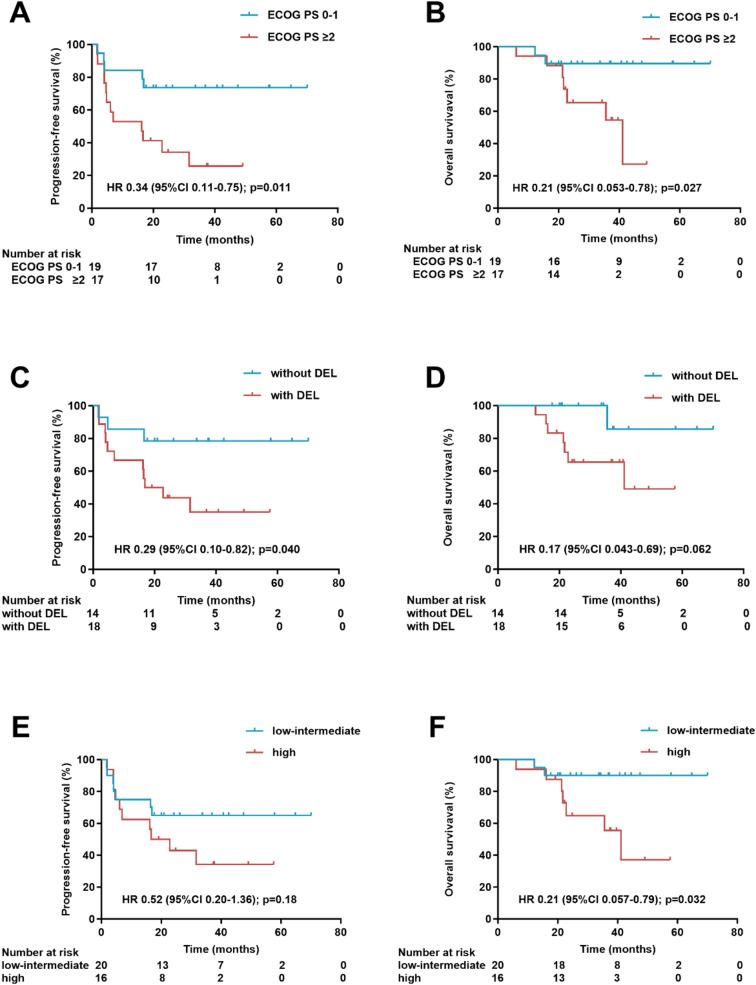
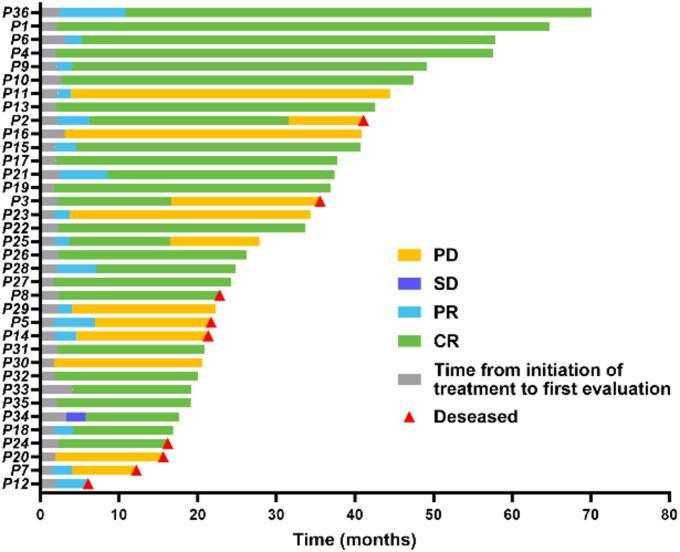
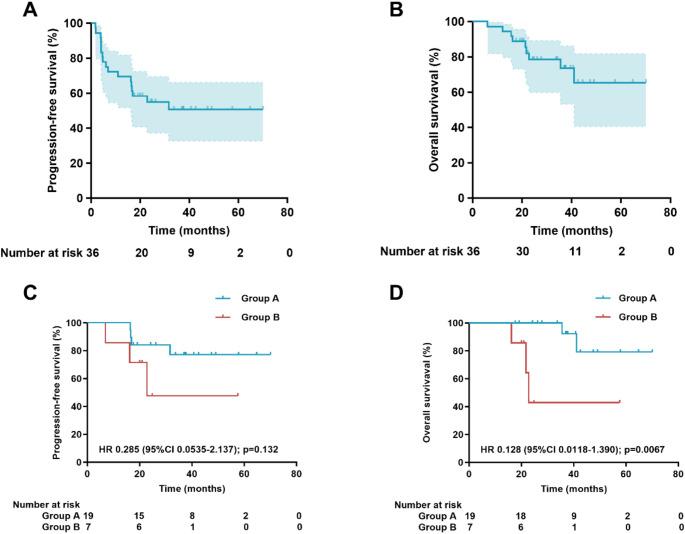
The overall response rate (ORR) was 72.2%, with a complete response (CR) rate of 69.4% and a partial response (PR) rate of 2.8%. With a median follow-up of 37.2 months (interquartile range [IQR] 24.2-47.5), the estimated 2-year progression-free survival (PFS) and overall survival (OS) rates were 54.9% (95% CI, 37.2-69.5%) and 78.5% (95% CI, 59.8-89.2%), respectively. The most common grade 3 or 4 AEs included neutropenia (33.3%), leukopenia (13.9%), anemia (2.8%), and thrombocytopenia (2.8%). Consolidation or maintenance therapy was associated with prolonged survival in PCNSL patients (2-year OS rates 100% vs. 42.9%, P = 0.067). Survival analysis revealed that clinicopathological factors, such as double-expressor lymphoma (DEL), ECOG PS ≥ 2, and high-risk classification based on the Memorial Sloan Kettering Cancer Center model (MSKCC), predicted poor survival.
CONCLUSIONS
Our results underscore the therapeutic potential of the R2-MTX regimen in managing newly diagnosed PCNSL patients. Further prospective studies with larger patient cohorts are imperative to solidify these preliminary findings.
目的
原发性中枢神经系统淋巴瘤(PCNSL)预后较差,主要是因为诱导化疗的疗效和耐受性面临重大挑战。本回顾性研究旨在评估R2-MTX方案治疗PCNSL患者的疗效和安全性。
方法
我们对39例接受R2-MTX方案治疗的PCNSL患者进行了回顾性分析,重点关注治疗结果和不良事件(AE)。
结果
总缓解率(ORR)为72.2%,完全缓解(CR)率为69.4%,部分缓解(PR)率为2.8%。中位随访37.2个月(四分位间距[IQR]24.2-47.5),估计2年无进展生存期(PFS)和总生存期(OS)率分别为54.9%(95%CI,37.2-69.5%)和78.5%(95%CI,59.8-89.2%)。最常见的3级或4级AE包括中性粒细胞减少(33.3%)、白细胞减少(13.9%)、贫血(2.8%)和血小板减少(2.8%)。巩固或维持治疗与PCNSL患者生存期延长相关(2年OS率100%对42.9%,P = 0.067)。生存分析显示,临床病理因素,如双表达淋巴瘤(DEL)、东部肿瘤协作组体能状态(ECOG PS)≥2以及基于纪念斯隆凯特琳癌症中心模型(MSKCC)的高危分类,提示生存期较差。
结论
我们的结果强调了R2-MTX方案在治疗新诊断PCNSL患者中的治疗潜力。必须开展更大患者队列的进一步前瞻性研究以巩固这些初步发现。
 Zotero 插件