
对康复、亚急性和老年护理环境中影响睡眠的护理环境因素测量的范围综述。
Scoping review of the measurement of care environment factors that impact sleep in the rehabilitation, subacute, and aged care settings.
作者信息
Ogilvy Dunstan Olivia B, Hanjani Leila Shafiee, Rodriguez Francisca, Garcia-Hansen Veronica, Hubbard Ruth E, Young Adrienne, Ellender Claire M
机构信息
Centre for Health Services Research, Faculty of Medicine, The University of Queensland, Brisbane, QLD, Australia.
Australian Frailty Network, The University of Queensland, Brisbane, QLD, Australia.
出版信息
Sleep Adv. 2025 May 5;6(2):zpaf011. doi: 10.1093/sleepadvances/zpaf011. eCollection 2025 Apr.
STUDY OBJECTIVES
Unfamiliar environments are often poorly conducive to quality sleep, especially for patients within health and aged care settings. This scoping review aims to map available evidence regarding the sleep environment in rehabilitation, subacute, and aged care settings. It examines how these factors are measured and seeks to identify any reported standard metrics, guidelines, or methodologies.
METHODS
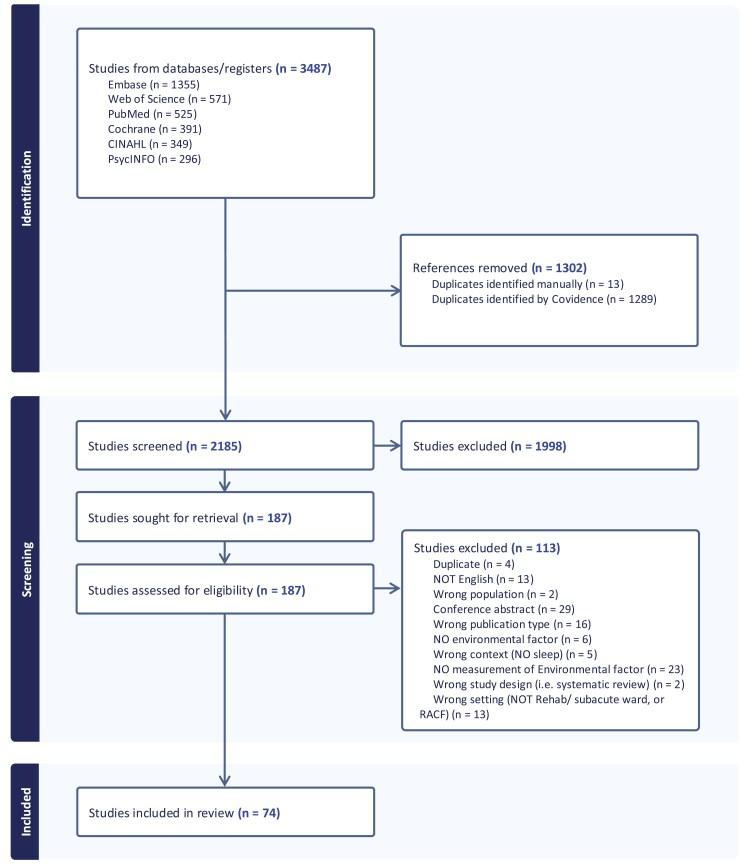
Searches were conducted within PubMed, EMBASE, Cochrane Library, Cumulated Index to Nursing and Allied Health Literature, PsycINFO, and Web of Science from database inception to May 2023. Eligibility criteria included original studies of any design reporting on the measurement properties of care environment factors affecting the sleep of adult patients admitted to rehabilitation, subacute wards, and aged care facilities.
RESULTS
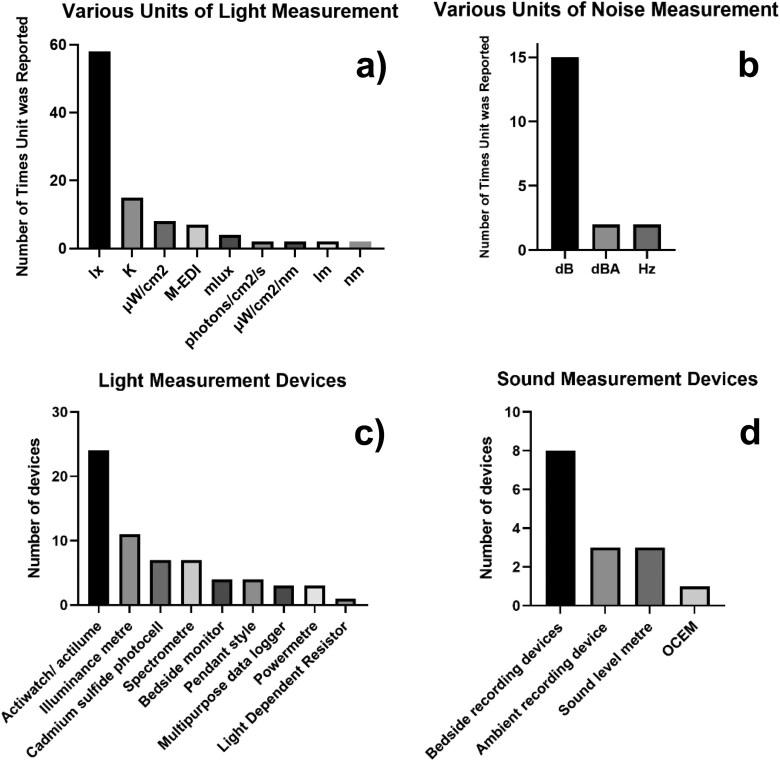
Seventy-four studies were reviewed that included 5055 participants, mostly (78.4%, 58/74) from aged care facilities. From 102 identified care environment factors, the spectral measurements of light were most reported (65.7%, 67/102), with methodologies varying from actigraphy and illuminance meters to pendant-style light monitors. Other environmental factors (sound, temperature, and air quality/humidity), room characteristics (mattress/bedding, room cohabitation), and hospital functioning (imposed schedules) were measured considerably less often and displayed similar variations in reported units and devices. Eighteen studies reported international, national, and methodological standards or guidelines.
CONCLUSIONS
This review provides a comprehensive overview of the care environment factors affecting sleep studied within rehabilitation, subacute, and aged care settings. Various units and devices were used in measuring these factors, and standard metrics and methodology were not consistently used. Future care environment studies incorporating interventions that employ standardized devices, units, and methodologies, will thereby enhance the reliability and comparability of findings within this field.
研究目的
陌生环境通常不利于高质量睡眠,尤其是对健康和老年护理机构中的患者而言。本综述旨在梳理有关康复、亚急性和老年护理机构睡眠环境的现有证据。它考察了这些因素是如何被测量的,并试图找出任何已报道的标准指标、指南或方法。
方法
在PubMed、EMBASE、Cochrane图书馆、护理及相关健康文献累积索引、PsycINFO和科学网中进行检索,检索时间范围从数据库建立至2023年5月。纳入标准包括任何设计的原始研究,这些研究报告了影响入住康复机构、亚急性病房和老年护理机构的成年患者睡眠的护理环境因素的测量特性。
结果
共审查了74项研究,包括5055名参与者,其中大多数(78.4%,58/74)来自老年护理机构。在102个已确定的护理环境因素中,光的光谱测量报道最多(65.7%,67/102),测量方法从活动记录仪、照度计到吊灯式光监测器各不相同。其他环境因素(声音、温度和空气质量/湿度)、房间特征(床垫/床上用品、房间同住情况)以及医院运行情况(强制时间表)的测量频率要低得多,并且在报告的单位和设备方面也有类似的差异。18项研究报告了国际、国家和方法学标准或指南。
结论
本综述全面概述了在康复、亚急性和老年护理机构中研究的影响睡眠的护理环境因素。在测量这些因素时使用了各种单位和设备,并且标准指标和方法并未得到一致使用。未来结合采用标准化设备、单位和方法的干预措施的护理环境研究,将提高该领域研究结果的可靠性和可比性。

 Zotero 插件