
大麻二酚在利血平诱导的帕金森病进行性模型中的预防性有益作用。
Preventive beneficial effects of cannabidiol in a reserpine-induced progressive model of parkinsonism.
作者信息
Lima Alvaro C, Bioni Vinicius S, Becegato Marcela S, Meier Ywlliane, Cunha Débora M G, Aguiar Natan A, Gonçalves Narriman, Peres Fernanda F, Zuardi Antônio W, Hallak Jaime E C, Crippa José A, Smaili Soraya S, Abilio Vanessa C, Silva Regina H
机构信息
Department of Pharmacology, Universidade Federal de São Paulo, São Paulo, Brazil.
National Institute for Translational Medicine, National Council for Scientific and Technological Development, Ribeirão Preto, Brazil.
出版信息
Front Pharmacol. 2025 May 8;16:1539783. doi: 10.3389/fphar.2025.1539783. eCollection 2025.
INTRODUCTION
Parkinson's disease (PD) is characterized by motor and non-motor symptoms such as tremors, difficulty in initiating movements, depression, and cognitive deficits. The pathophysiology of PD involves a gradual decrease in dopaminergic neurons in the substantia nigra, increased inflammatory parameters, and augmented oxidative stress in this region. Several new therapies aim to promote antioxidant and anti-inflammatory actions, including the use of cannabinoids, particularly cannabidiol (CBD). CBD is a non-psychotomimetic component of that acts broadly through several mechanisms.
OBJECTIVE
The objective of this study was to investigate the potential protective effect of CBD in mice subjected to a low-dose (0.1 mg/kg) repeated reserpine protocol, which encompasses behavioral and neuronal alterations compatible with the progressiveness of PD alterations.
MATERIALS AND METHODS
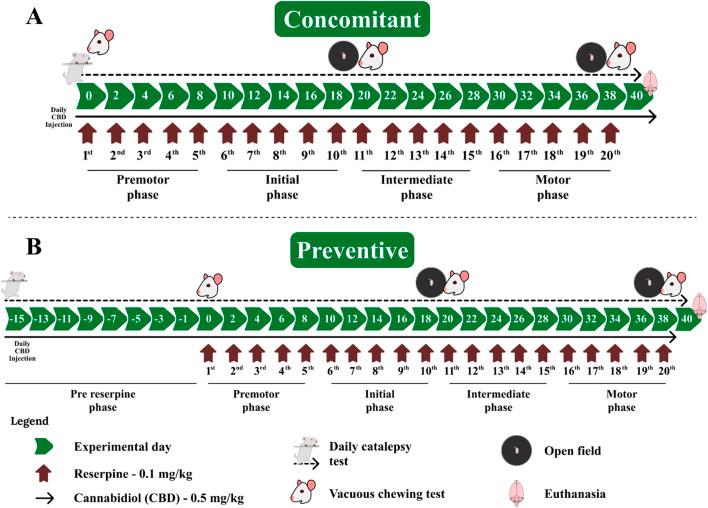
We used two approaches: (1) concurrent administration during the development of parkinsonism and (2) pre-administration to explore a possible preventive action. The effect of CBD (0.5 mg/kg) on reserpine-induced alterations was investigated on behavioral (catalepsy and vacuous chewing movements) and neuronal (immunolabeling for tyrosine hydroxylase - TH) parameters.
RESULTS
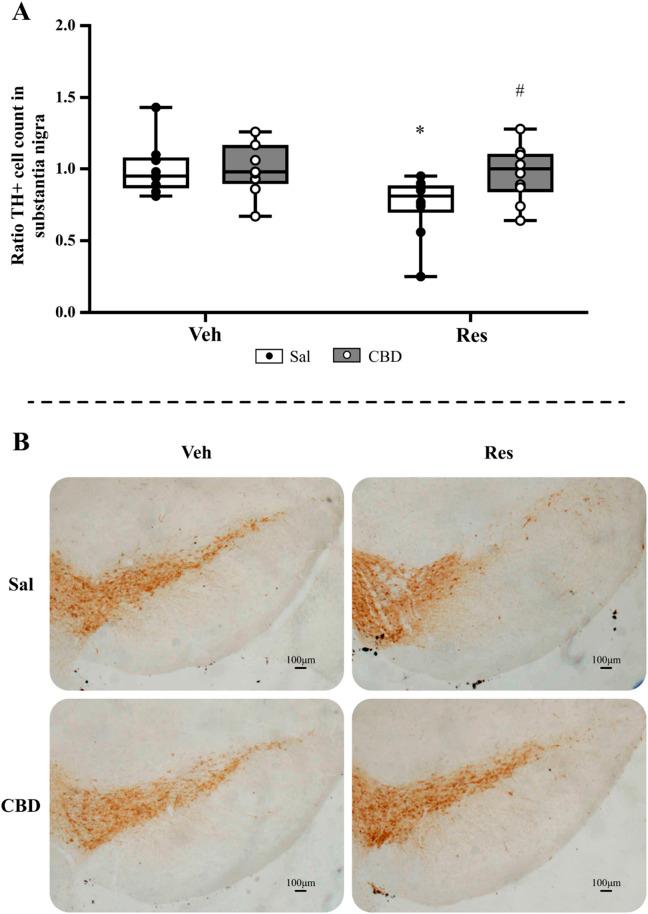
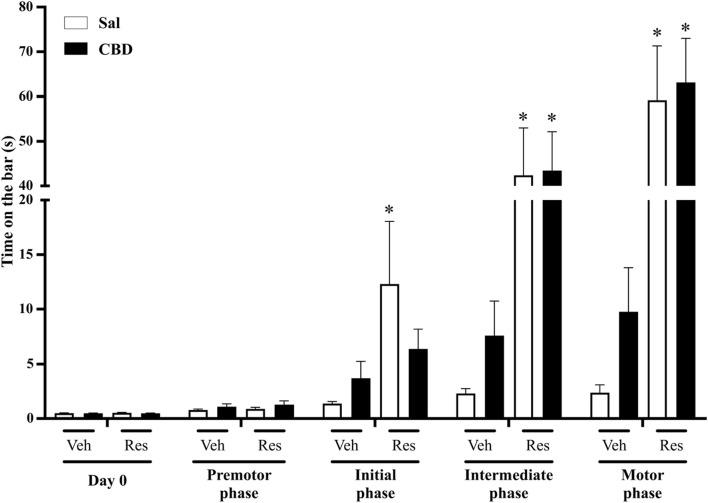
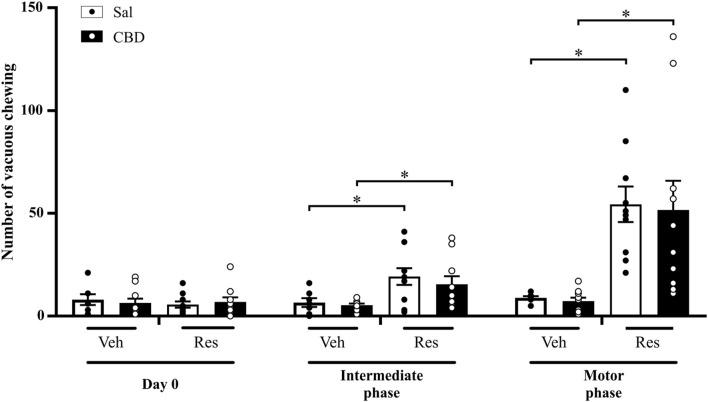
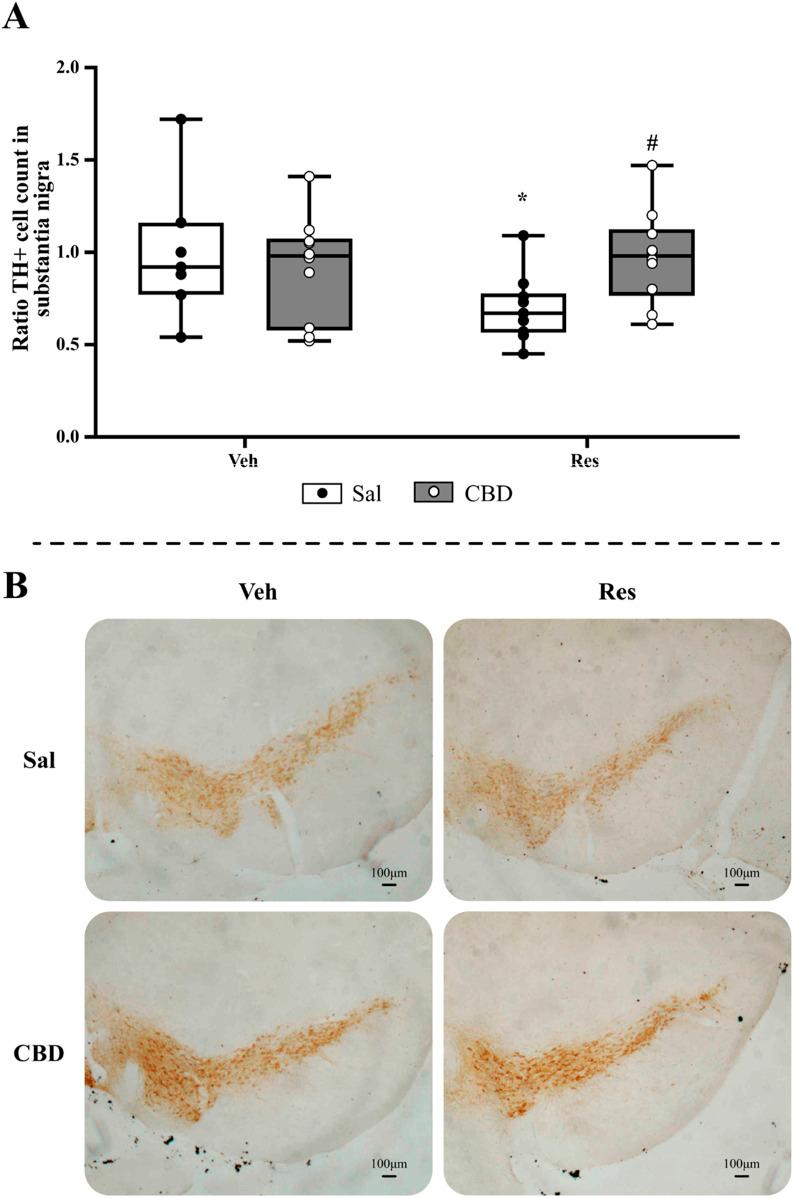
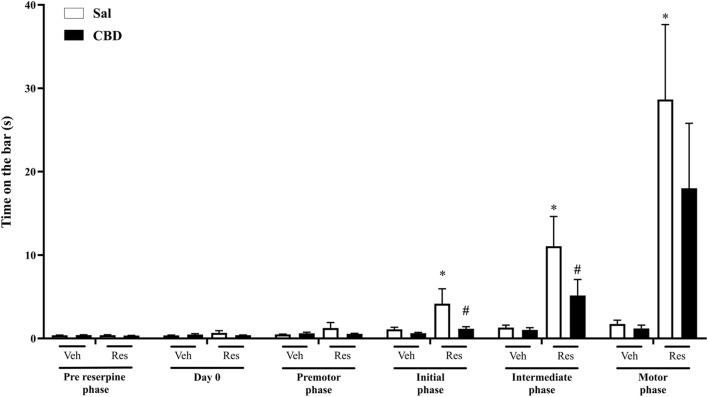
Overall, groups that were treated with CBD and reserpine presented motor alterations later during the protocol compared to the groups that received only reserpine (except for vacuous chewing evaluation in the concomitant treatment). Additionally, CBD attenuated reserpine-induced catalepsy (preventive treatment) and prevented the decrease in TH labeling in the substantia nigra pars compacta in both concurrent and preventive protocols.
CONCLUSION
Based on these data, we observed a beneficial effect of CBD in motor and neuronal alterations reserpine-induced progressive parkinsonism, particularly after preventive treatment.
引言
帕金森病(PD)的特征是运动和非运动症状,如震颤、运动启动困难、抑郁和认知缺陷。PD的病理生理学涉及黑质中多巴胺能神经元逐渐减少、炎症参数增加以及该区域氧化应激增强。几种新疗法旨在促进抗氧化和抗炎作用,包括使用大麻素,尤其是大麻二酚(CBD)。CBD是大麻的一种非致幻成分,通过多种机制广泛发挥作用。
目的
本研究的目的是调查CBD对接受低剂量(0.1mg/kg)重复利血平方案的小鼠的潜在保护作用,该方案包括与PD改变进展相一致的行为和神经元改变。
材料与方法
我们采用了两种方法:(1)在帕金森病发展过程中同时给药;(2)预先给药以探索可能的预防作用。研究了CBD(0.5mg/kg)对利血平诱导的行为(僵住症和空嚼运动)和神经元(酪氨酸羟化酶 - TH免疫标记)参数改变的影响。
结果
总体而言,与仅接受利血平的组相比,接受CBD和利血平治疗的组在实验过程中出现运动改变的时间较晚(伴随治疗中空嚼评估除外)。此外,CBD减轻了利血平诱导的僵住症(预防性治疗),并在同时给药和预防性方案中均防止了黑质致密部TH标记的减少。
结论
基于这些数据,我们观察到CBD对利血平诱导的进行性帕金森病的运动和神经元改变具有有益作用,尤其是在预防性治疗后。

 Zotero 插件