
用于筛选合成纳米抗体文库的PURE核糖体展示技术的验证与优化
Validation and Optimization of PURE Ribosome Display for Screening Synthetic Nanobody Libraries.
作者信息
Liu Bingying, Yang Daiwen
机构信息
Department of Biological Sciences, National University of Singapore, 14 Science Drive 4, Singapore 117543, Singapore.
出版信息
Antibodies (Basel). 2025 May 2;14(2):39. doi: 10.3390/antib14020039.
BACKGROUND/OBJECTIVES: PURE (Protein synthesis Using Recombinant Elements), an ideal system for ribosome display, has been successfully used for nanobody selection. However, its limitations in nanobody selection, especially for synthetic nanobody libraries, have not been clearly elucidated, thereby restricting its utilization.
METHODS
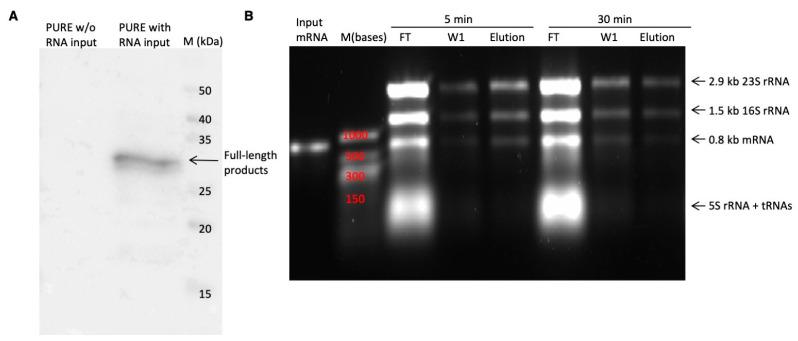
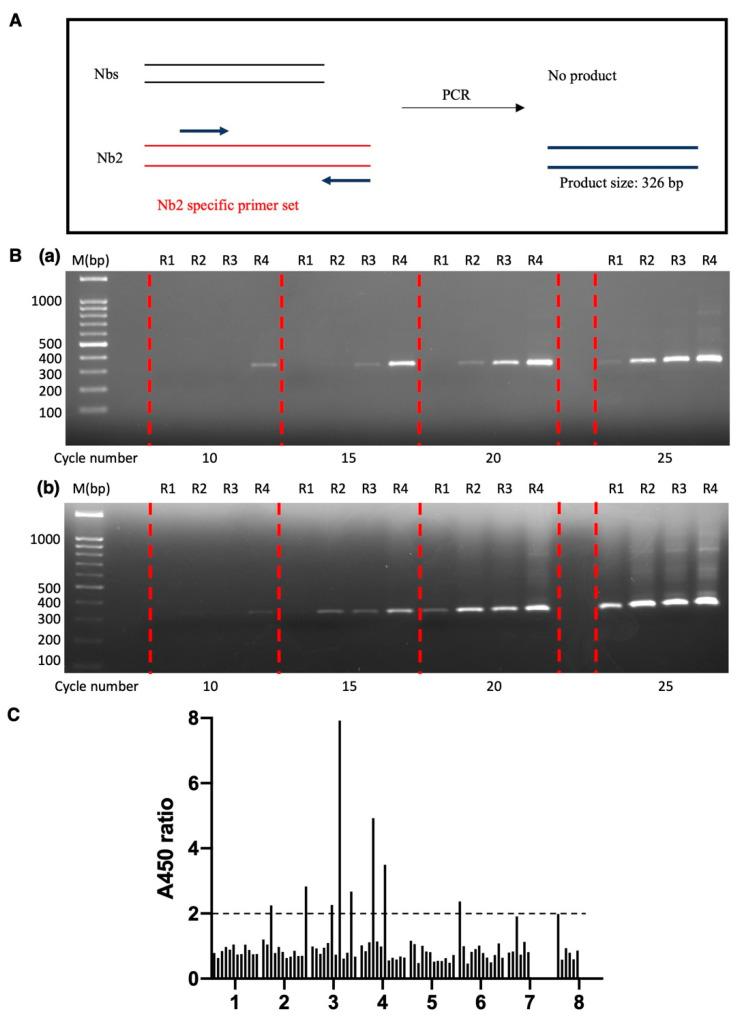
The PURE ribosome display selection process was closely monitored using RNA agarose gel electrophoresis to assess the presence of mRNA molecules in each fraction, including the flow-through, washing, and elution fractions. Additionally, a real-time validation method for monitoring each biopanning round was implemented, ensuring the successful enrichment of target protein-specific binders. The selection process was further optimized by introducing a target protein elution step prior to the EDTA-mediated disassembly, as well as by altering the immobilization surfaces. Finally, the efficiency of PURE ribosome display was enhanced by replacing the spacer gene.
RESULTS
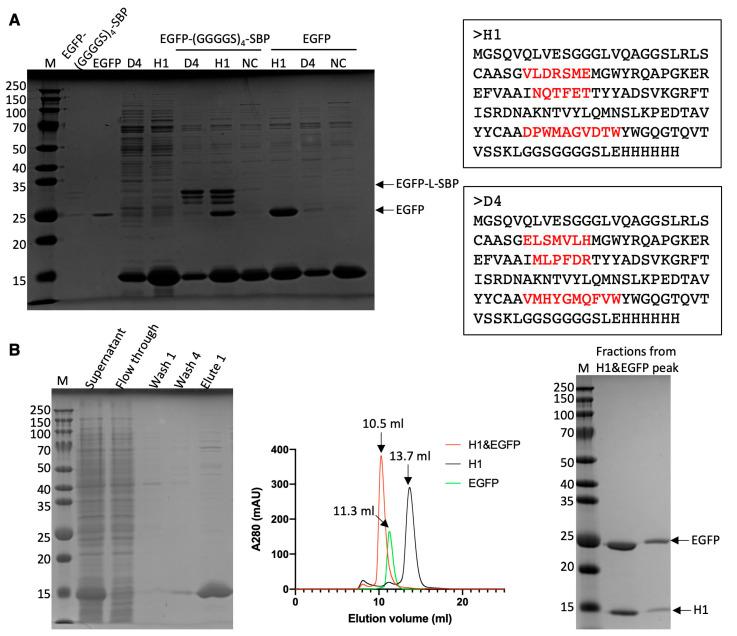
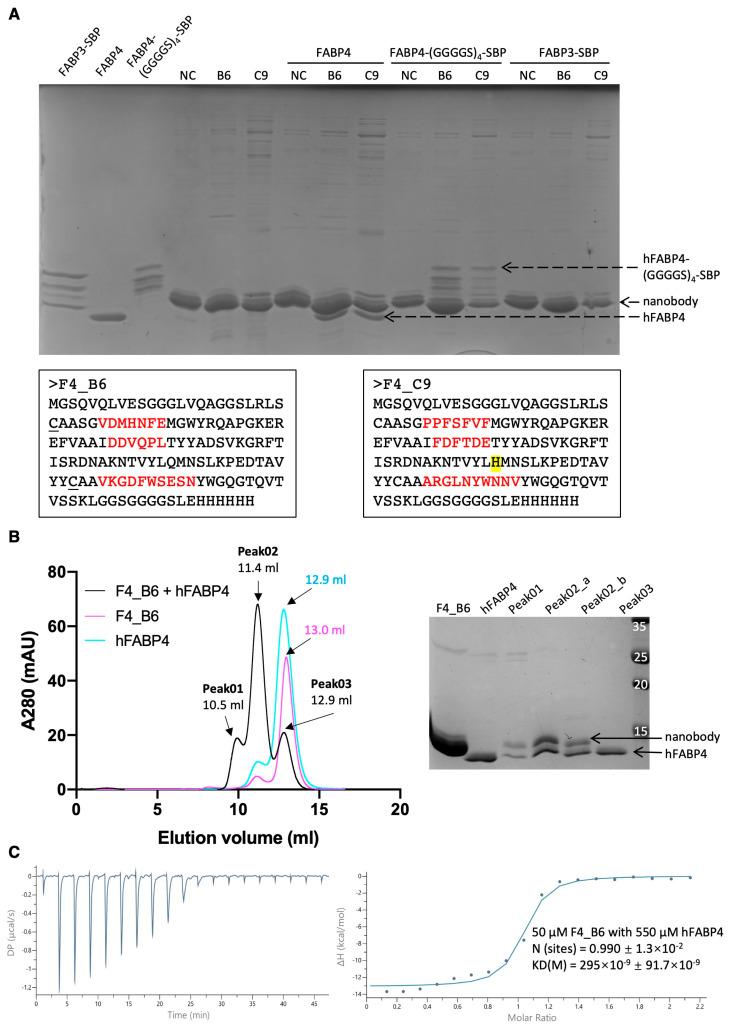
The efficiency of PURE ribosome display was merely 4% with an unfavourable spacer gene. Using this spacer gene, EGFP- and human fatty acid-binding protein 4-specific nanobodies from a synthetic nanobody library were we successfully identified through optimizing the selection process. Choosing a spacer gene less prone to secondary structure formation increased significantly its efficiency in displaying synthetic nanobody libraries.
CONCLUSIONS
Implementing a target protein elution step prior to EDTA-mediated disassembly and modifying the immobilization surfaces effectively increase selection efficiency. For PURE ribosome display, efficiency was further improved using a suitable spacer gene, enabling the display of large libraries.
背景/目的:PURE(利用重组元件进行蛋白质合成)是核糖体展示的理想系统,已成功用于纳米抗体筛选。然而,其在纳米抗体筛选中的局限性,尤其是对于合成纳米抗体文库的局限性,尚未得到明确阐明,从而限制了其应用。
方法
使用RNA琼脂糖凝胶电泳密切监测PURE核糖体展示筛选过程,以评估每个组分(包括流穿液、洗涤液和洗脱液)中mRNA分子的存在情况。此外,实施了一种用于监测每个淘选轮次的实时验证方法,以确保成功富集靶蛋白特异性结合物。通过在EDTA介导的解离之前引入靶蛋白洗脱步骤以及改变固定化表面,进一步优化了筛选过程。最后,通过替换间隔基因提高了PURE核糖体展示的效率。
结果
使用不利的间隔基因时,PURE核糖体展示的效率仅为4%。利用该间隔基因,通过优化筛选过程,我们成功从合成纳米抗体文库中鉴定出了针对EGFP和人脂肪酸结合蛋白4的纳米抗体。选择不易形成二级结构的间隔基因显著提高了其展示合成纳米抗体文库的效率。
结论
在EDTA介导的解离之前实施靶蛋白洗脱步骤并修饰固定化表面可有效提高筛选效率。对于PURE核糖体展示,使用合适的间隔基因可进一步提高效率,从而能够展示大型文库。

 Zotero 插件