
食物喜好对心血管代谢疾病的健康影响及遗传结构
The health impacts and genetic architecture of food liking in cardio-metabolic diseases.
作者信息
Jiang Wenbo, Wang Hang, Geng Yiding, Guo Meijuan, Zuo Yingdong, Han Sijia, Liu Zijie, Chen Shuaijun, Fan Shuzhen, Li Shangying, Qiao Conghui, Li Qianzhu, Li Bai, Zhang Yunpeng, Wei Wei, Han Tianshu
机构信息
Key Laboratory of Precision Nutrition and Health, Ministry of Education. Department of Nutrition and Food Hygiene, the National Key Discipline, School of Public Health, Harbin Medical University, Harbin, China.
Department of Cardiology, The First Affiliated Hospital of Harbin Medical University, Harbin, China.
出版信息
Nat Commun. 2025 May 23;16(1):4810. doi: 10.1038/s41467-025-59945-2.
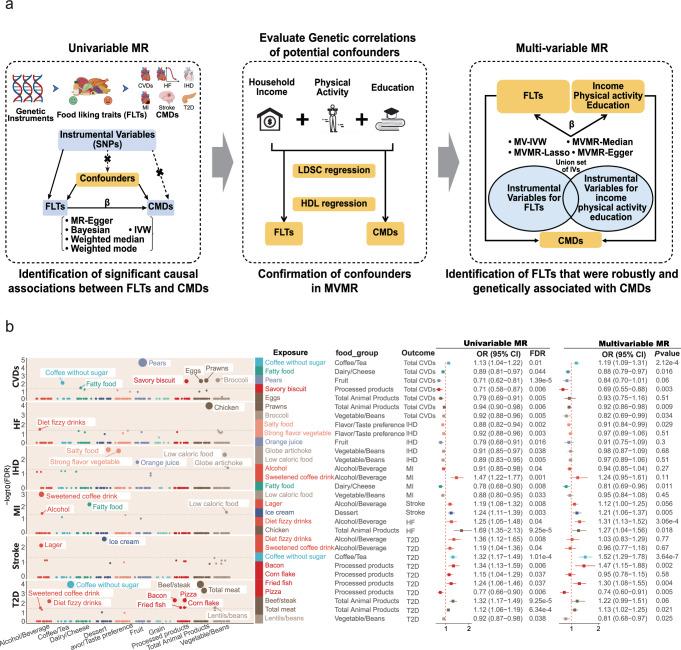
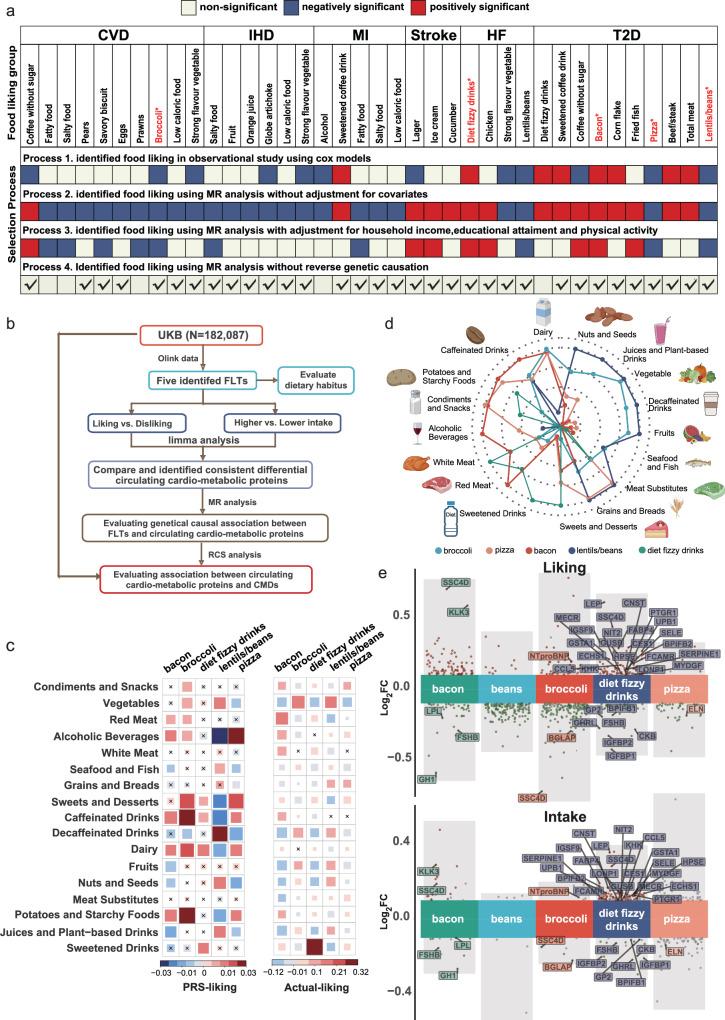
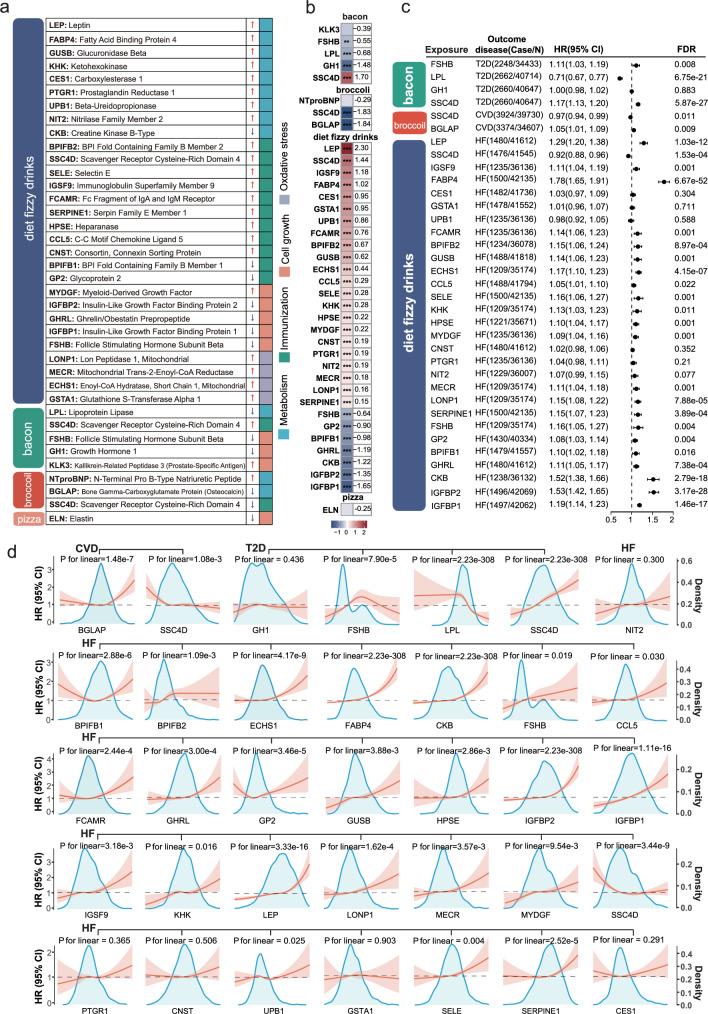
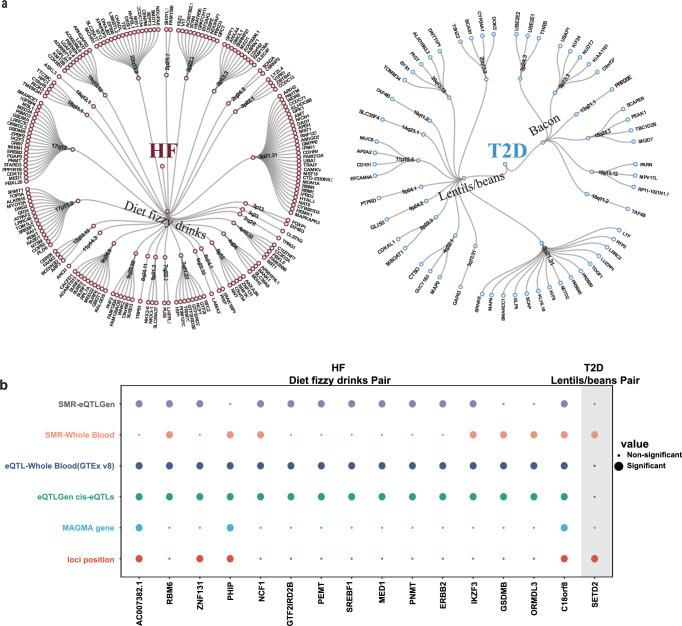
We evaluated temporal and genetic relationships between 176 food-liking-traits and cardio-metabolic diseases using data from the UK Biobank (N = 182,087) for observational analyses and summary-level GWAS data from FinnGen and other consortia (N = 406,565-977,323) for genetic analyses. Integrating observational and genetic results, we identified two detrimental food-liking-traits (bacon and diet-fizzy-drinks) and three protective food-liking-traits (broccoli, pizza, and lentils/beans). These food-liking-traits are associated with habitual food intake and influence cardio-metabolic proteins and biological processes. Notably, we found three genetic links: diet-fizzy-drinks with heart-failure, bacon with type-2-diabetes, and lentils/beans with type-2-diabetes, identifying 54 pleiotropic single-nucleotide-variants, impacting both phenotypes. Our data show the diet-fizzy-drinks and heart-failure link maybe not direct, as diet-fizzy-drinks liking correlates with sweet food consumption and shares variants linked to BMI, adiposity, platelet count and cardio-metabolic traits. The pleiotropic single-nucleotide-variants map to 251 tissue-specific genes, with four showing high druggability potential, highlighting personalized dietary strategies for cardio-metabolic diseases.
我们使用英国生物银行(N = 182,087)的数据进行观察性分析,以及来自芬兰基因库和其他联盟的汇总水平全基因组关联研究(GWAS)数据(N = 406,565 - 977,323)进行基因分析,评估了176种食物喜好特征与心血管代谢疾病之间的时间和遗传关系。综合观察性和基因分析结果,我们确定了两种有害的食物喜好特征(培根和无糖汽水)以及三种有益的食物喜好特征(西兰花、披萨和小扁豆/豆类)。这些食物喜好特征与习惯性食物摄入相关,并影响心血管代谢蛋白和生物学过程。值得注意的是,我们发现了三个基因关联:无糖汽水与心力衰竭、培根与2型糖尿病、小扁豆/豆类与2型糖尿病,共识别出54个多效性单核苷酸变异,影响两种表型。我们的数据表明,无糖汽水与心力衰竭之间的联系可能不是直接的,因为对无糖汽水的喜好与甜食消费相关,并且共享与体重指数、肥胖、血小板计数和心血管代谢特征相关的变异。这些多效性单核苷酸变异映射到251个组织特异性基因,其中四个显示出较高的药物开发潜力,突出了针对心血管代谢疾病的个性化饮食策略。




 Zotero 插件