
癌症护理中患者层面的模拟模型:一项系统综述。
Patient-level simulation models in cancer care: a systematic review.
作者信息
Busschaert Sara-Lise, Van Deynse Helena, De Ridder Mark, Putman Koen
机构信息
Department of Public Health, Vrije Universiteit Brussel, Brussels, Belgium.
出版信息
Front Public Health. 2025 May 9;13:1335300. doi: 10.3389/fpubh.2025.1335300. eCollection 2025.
BACKGROUND
Patient-level simulation (PLS) models overcome some major limitations of conventional cohort models and have broad applicability in healthcare, yet limited knowledge exists about their potential in cancer care.
OBJECTIVES
This systematic review aims to: (1) describe the application areas of PLS models in cancer care, (2) identify commonly used model structures, (3) evaluate the quality of reporting based on established guidelines, and (4) critically discuss the potential and limitations of PLS models in this context.
METHODS
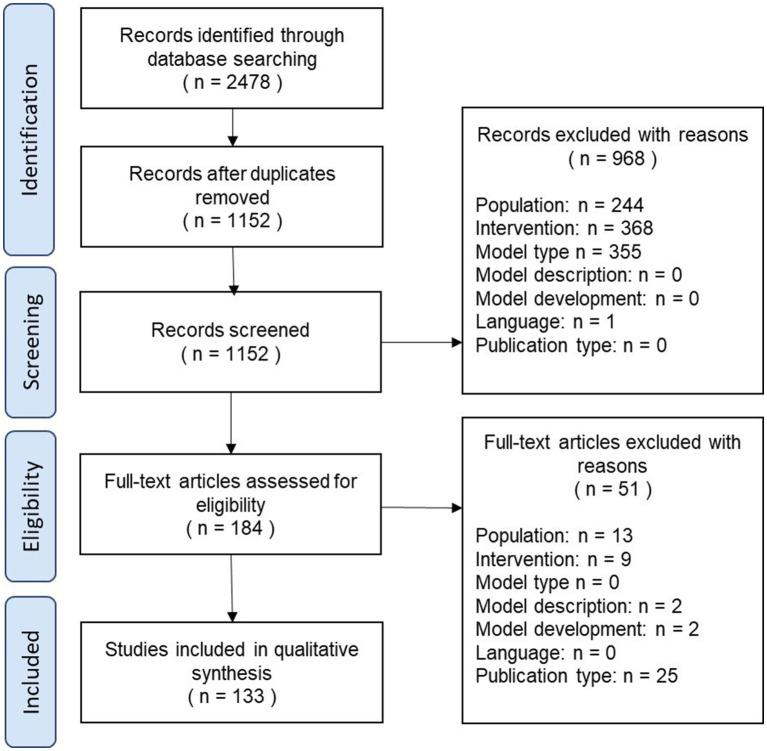
A systematic literature search was completed in Web of Science, PubMed, EMBASE and EconLit. Reasons underlying the use of PLS models were identified with a conventional inductive content analysis and reporting quality was assessed with an 18-item checklist based on the ISPOR-SMDM guidelines.
RESULTS
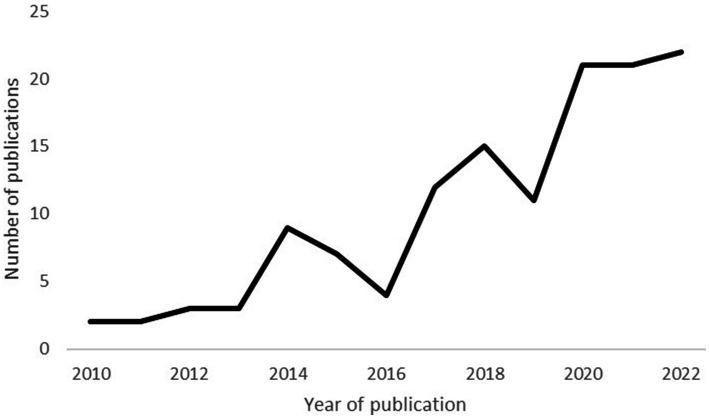
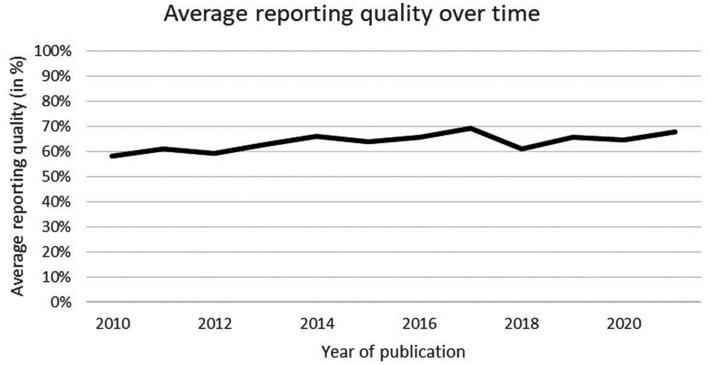
The number of publications increased over time and most studies used state-transition microsimulation (49.25%) or discrete event simulation (48.51%). Two main application areas could be discerned, namely disease progression modelling (DPM) (78.36%) and health and care systems operation (HCSO) (21.64%). In the DPM domain, the use of PLS models was mainly motivated by the need to represent patient heterogeneity and history. In the HCSO domain, PLS models were used to better understand and improve cancer care delivery. Average reporting quality was 65.2% and did not improve over time.
CONCLUSION
PLS models can be used to simulate the progression of cancer and to model cancer care delivery. In the DPM domain more direct comparisons with cohort models are required to establish the relative advantages of PLS models and in the HCSO domain the impact on clinical practice needs to be systematically assessed. Furthermore, adherence to the ISPOR-SMDM guidelines should be improved.
背景
患者层面模拟(PLS)模型克服了传统队列模型的一些主要局限性,在医疗保健领域具有广泛的适用性,但关于其在癌症护理中的潜力的了解有限。
目的
本系统评价旨在:(1)描述PLS模型在癌症护理中的应用领域,(2)识别常用的模型结构,(3)根据既定指南评估报告质量,以及(4)批判性地讨论PLS模型在此背景下的潜力和局限性。
方法
在Web of Science、PubMed、EMBASE和EconLit中完成了系统的文献检索。通过传统的归纳式内容分析确定使用PLS模型的潜在原因,并根据ISPOR-SMDM指南使用包含18个条目的清单评估报告质量。
结果
出版物数量随时间增加,大多数研究使用状态转换微观模拟(49.25%)或离散事件模拟(48.51%)。可以识别出两个主要应用领域,即疾病进展建模(DPM)(78.36%)和卫生保健系统运作(HCSO)(21.64%)。在DPM领域,使用PLS模型的主要动机是需要体现患者的异质性和病史。在HCSO领域,PLS模型用于更好地理解和改善癌症护理服务。平均报告质量为65.2%,且未随时间提高。
结论
PLS模型可用于模拟癌症进展和对癌症护理服务进行建模。在DPM领域,需要与队列模型进行更直接的比较,以确定PLS模型的相对优势,而在HCSO领域,需要系统评估其对临床实践的影响。此外,应提高对ISPOR-SMDM指南的遵守程度。

 Zotero 插件