
6个月后老年人对SARS-CoV-2感染的免疫反应降低。
Reduced immune response to SARS-CoV-2 infection in the elderly after 6 months.
作者信息
Luo Qin, Song Qinqin, Li Yan, Zong Kexin, Liu Ti, He Junming, Mei Guoyong, Du Haijun, Xia Zhiqiang, Liu Mi, Song Juan, Gao Chen, Xia Dong, Xue Guangyu, Tian Wenyan, Qu Yinli, Kou Zengqiang, Dong Zhongjun, Han Jun
机构信息
National Key Laboratory of Intelligent Tracking and Forecasting for Infectious Diseases, National Institute for Viral Disease Control and Prevention, Chinese Center for Disease Control and Prevention, Beijing, China.
Shandong Center for Disease Control and Prevention, Shandong Provincial Key Laboratory of Intelligent Monitoring, Early Warning, and Prevention and Control of Infectious Diseases, Shandong Institute of Preventive Medicine, Jinan, China.
出版信息
Front Immunol. 2025 May 9;16:1596065. doi: 10.3389/fimmu.2025.1596065. eCollection 2025.
OBJECTIVES
To evaluate the immune persistence and cross-immune response of elderly individuals after Omicron BA.5 infections.
METHOD
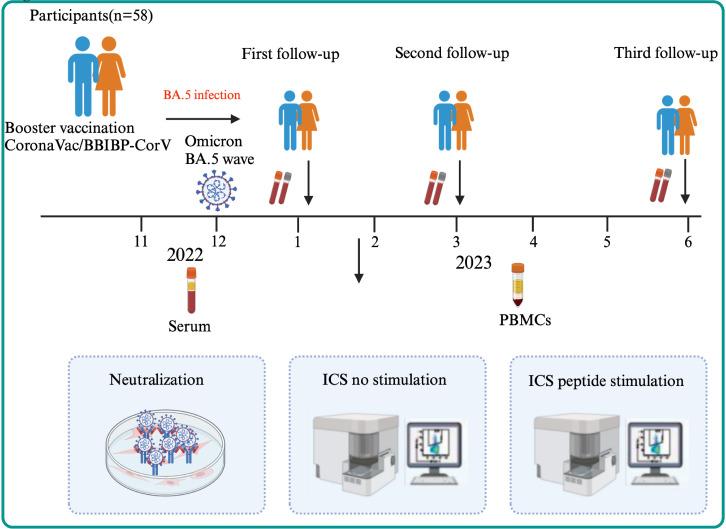
The neutralizing antibodies against WT, BA.5, XBB.1 and EG.5 strains were analyzed. The T/B-cell subsets' responses were tested through intracellular cytokine staining and flow cytometry.
RESULTS
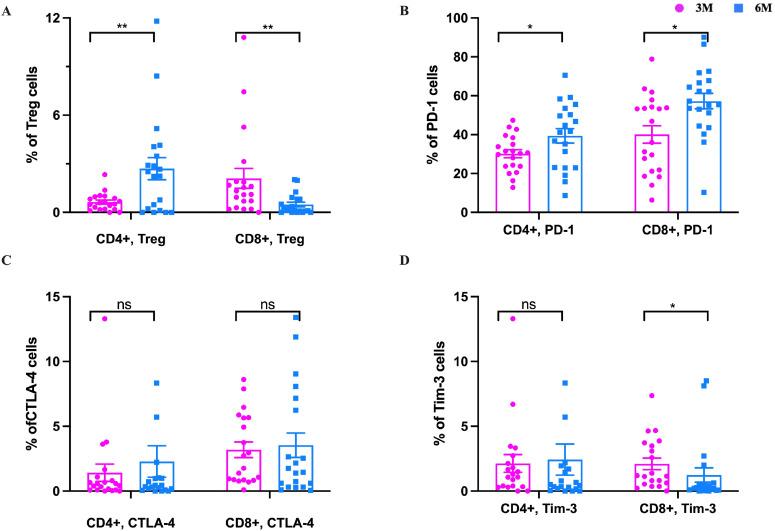
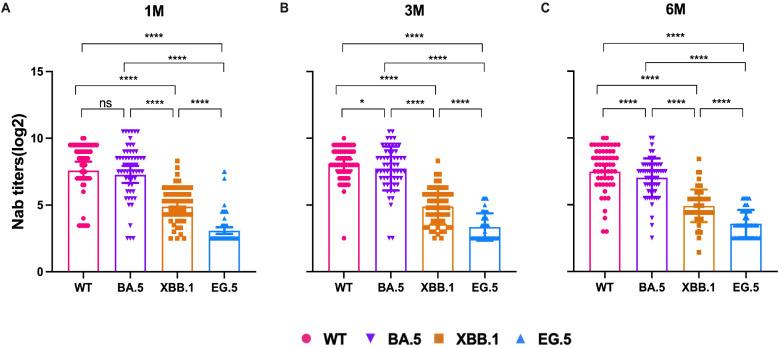
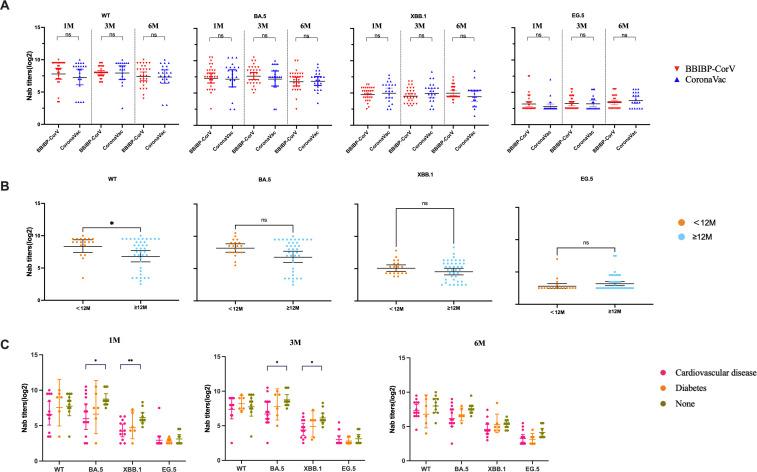
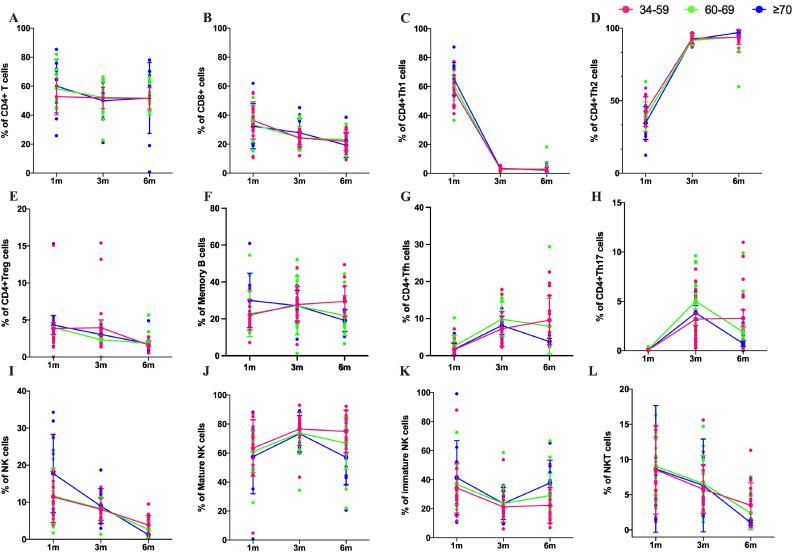
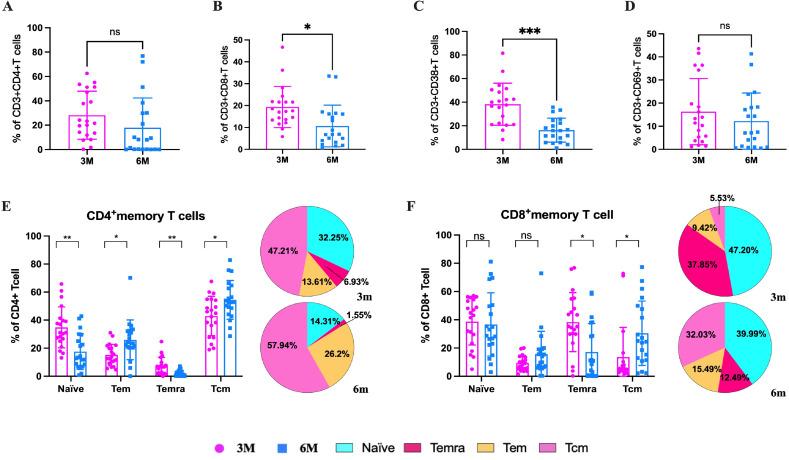
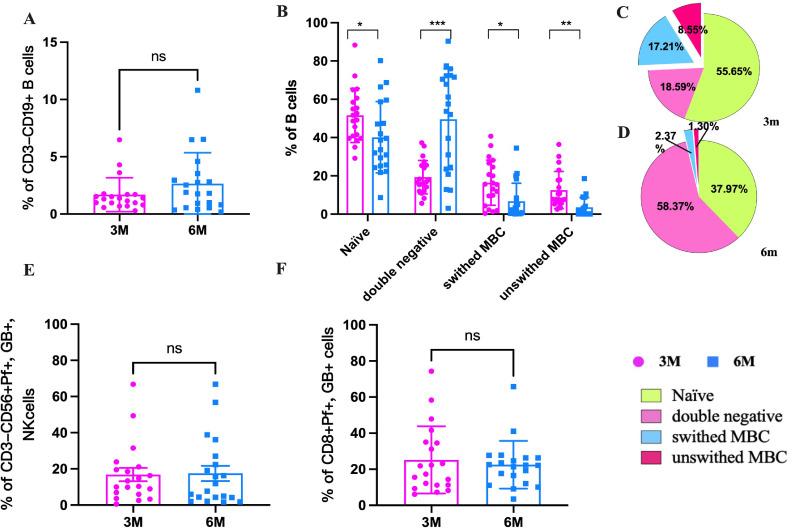
The neutralizing antibodies titers against WT and BA.5 strain, remaining high level for at least 6 months, were higher than that of both XBB.1 and EG.5 variants. The neutralizing antibodies of WT, BA.5, XBB.1, and EG.5 strains in the elderly were slightly lower than those in middle-age. The memory B cells decreased rapidly in the elderly, and Tfh, Th17 cells of the elderly continued to increase for only 3 months, while Tfh and Th17 cells increased in the middle-aged for over 6 months. For the elderly, after peptide stimulation, unswitched/switched memory B cells decreased, while double negative B cells displayed higher proliferation. The proportions of both naïve and Temra cells in CD4 and CD8 T cells declined, whereas those of Tcm and Tem cells elevated. In the meantime, both CD69 and CD38 T cells decreased, but the frequencies of PD-1 and CTLA-4 of CD4 and CD8 T cells showed an increasing trend. The proportions of PD-1 and CTLA-4 cells also increased in older people with long COVID symptoms at 3m post-infection.
CONCLUSIONS
Omicron BA.5 infection induced lower neutralizing antibodies against XBB.1 and EG.5 variant. The decrease of memory B cells, CD69 and CD38T cells, as well as the increase of PD-1, CTLA-4 of CD4/CD8T cells and double negative B cells, indicate that sustained immune responses against BA.5 infection may wane more rapidly in elderly populations.
目的
评估老年人感染奥密克戎BA.5后免疫持久性和交叉免疫反应。
方法
分析针对野生型、BA.5、XBB.1和EG.5毒株的中和抗体。通过细胞内细胞因子染色和流式细胞术检测T/B细胞亚群反应。
结果
针对野生型和BA.5毒株的中和抗体滴度至少6个月保持高水平,高于XBB.1和EG.5变体。老年人中野生型、BA.5、XBB.1和EG.5毒株的中和抗体略低于中年人。老年人记忆B细胞迅速减少,老年人的滤泡辅助性T细胞(Tfh)、辅助性T细胞17(Th17)仅持续增加3个月,而中年人中Tfh和Th17细胞增加超过6个月。对于老年人,肽刺激后,未转换/转换记忆B细胞减少,而双阴性B细胞增殖更高。CD4和CD8 T细胞中初始和终末分化效应记忆T细胞(Temra)比例下降,而中央记忆T细胞(Tcm)和效应记忆T细胞(Tem)比例升高。同时,CD69和CD38 T细胞减少,但CD4和CD8 T细胞的程序性死亡受体1(PD-1)和细胞毒性T淋巴细胞相关蛋白4(CTLA-4)频率呈上升趋势。感染后3个月有长期新冠症状的老年人中PD-1和CTLA-4细胞比例也增加。
结论
奥密克戎BA.5感染诱导产生的针对XBB.1和EG.5变体的中和抗体较低。记忆B细胞、CD69和CD38 T细胞减少,以及CD4/CD8 T细胞的PD-1、CTLA-4和双阴性B细胞增加,表明老年人群体中针对BA.5感染的持续免疫反应可能衰退更快。
 Zotero 插件