
利用废弃纤维素织物产生太阳能蒸汽:利用合成但丰富且经济高效的资源。
Generating Solar Steam Using Waste Cellulose Fabric: Harnessing Synthetic Yet Plentiful and Cost-Effective Resources.
作者信息
Jeong Hyeondeok, Jang Dawon, Kim Sung-Soo, Kim Yeong Jae, Lee Sungho
机构信息
RAMP Convergence Research Center, Korea Institute of Science and Technology (KIST), 92 Chudong-ro, Bongdong-eup, Wanju-gun, Jeollabuk-do, 55324, Republic of Korea.
Ceramic Total Solution Center, Korea Institute of Ceramic Engineering and Technology, Icheon, Gyeonggi-do, 17303, Republic of Korea.
出版信息
ChemSusChem. 2025 Jul 27;18(15):e202500693. doi: 10.1002/cssc.202500693. Epub 2025 Jun 13.
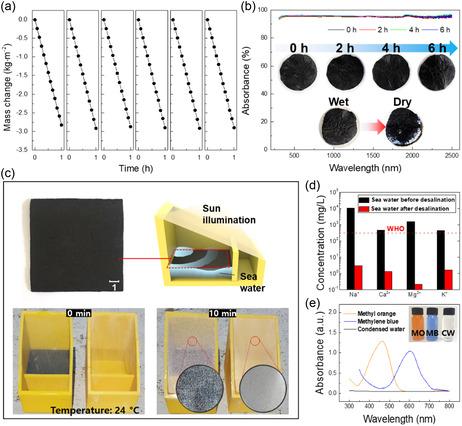
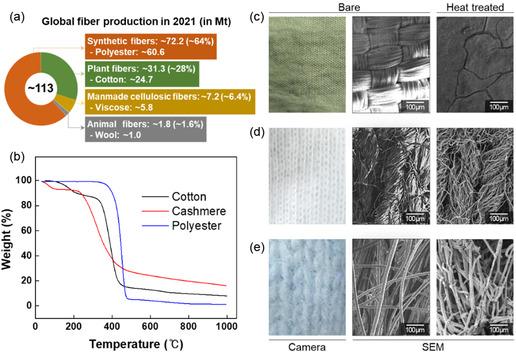
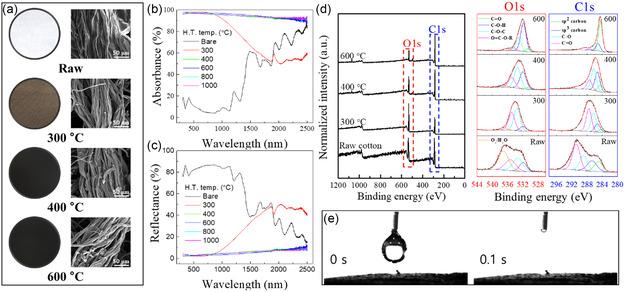
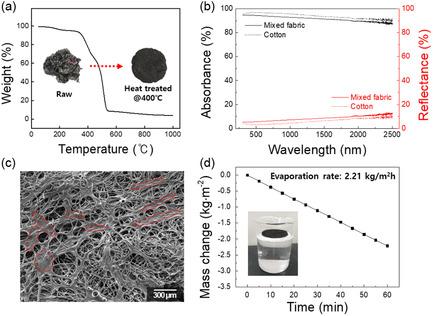
Numerous studies have been conducted into the reuse of such waste fabric; however, diversity in fiber type and the dyes used limits their potential applications. Therefore, innovative methods for recycling waste fiber need to be developed. This study explores the use of waste fabric as the primary raw material for the development of solar steam generators (SSGs) by harnessing abundant and affordable artificial 3D structures to deliver an efficient and cost-effective steam-generation solution. The limitations associated with conventional steam-generation methods, such as high costs and the limited availability of suitable materials, are addressed by combining waste fabric with readily available artificial 3D structures. This investigation encompasses the design and fabrication of waste-fabric-based SSGs and evaluated performance, with an emphasis on viability, affordability, and scalability. Cotton fabric heat treated at 400 °C for 1 h exhibits a high light absorbance of 94.7%. In addition, an SSG fabricated using this cotton fabric delivers a high evaporation rate of 2.66 kg (m h). These findings contribute to the advancement of sustainable and accessible applications in a variety of domains by leveraging the potential of affordable artificial 3D structures for use in SSG applications.
已经对这种废弃织物的再利用进行了大量研究;然而,纤维类型和所用染料的多样性限制了它们的潜在应用。因此,需要开发创新的废纤维回收方法。本研究探索利用丰富且价格低廉的人工三维结构,将废弃织物用作开发太阳能蒸汽发生器(SSG)的主要原材料,以提供一种高效且经济高效的蒸汽发生解决方案。通过将废弃织物与现成的人工三维结构相结合,解决了传统蒸汽发生方法所存在的局限性,如成本高和合适材料供应有限等问题。这项研究包括基于废弃织物的SSG的设计与制造,并对其性能进行评估,重点关注可行性、可承受性和可扩展性。在400 °C下热处理1小时的棉织物具有94.7%的高光吸收率。此外,使用这种棉织物制造的SSG具有2.66 kg /(m² h)的高蒸发速率。这些发现通过利用价格低廉的人工三维结构在SSG应用中的潜力,推动了可持续且易于实现的应用在各个领域的发展。

 Zotero 插件