
姜黄素可逆转肠出血性大肠杆菌的抗生素耐药性并下调志贺毒素表达
Curcumin Reverses Antibiotic Resistance and Downregulates Shiga Toxin Expression in Enterohemorrhagic .
作者信息
Zermeño-Ruiz Martin, Cobos-Vargas Mirian, Saucedo-Plascencia Mauro Donaldo, Cortés-Zárate Rafael, Hernandez-Hernandez Leonardo, Garcia-Cobian Teresa Arcelia, Estrada-Garcia Teresa, Castillo-Romero Araceli
机构信息
Departamento de Farmacobiología, Centro Universitario de Ciencias Exactas e Ingenierías, Universidad de Guadalajara, Blvd. Marcelino García Barragán #1421, Guadalajara 44430, Mexico.
Departamento de Microbiología y Patología, Centro Universitario de Ciencias de la Salud, Universidad de Guadalajara, Calle Sierra Mojada 950, Independencia Oriente, Guadalajara 44340, Mexico.
出版信息
Diseases. 2025 May 17;13(5):154. doi: 10.3390/diseases13050154.
BACKGROUND
Enterohemorrhagic (EHEC) is a considerable public health concern associated with several foodborne outbreaks of bloody diarrhea (BD) and the potentially lethal hemolytic uremic syndrome (HUS), the pathophysiology of which is attributable to the Shiga toxin (Stx) produced by this bacterium. In most patients, supportive treatment will be sufficient; however, in some cases, antibiotic treatment may be necessary. Most antibiotics are not recommended for EHEC infection treatment, particularly those that kill the bacteria, since this triggers the release of Stx in the body, inducing or worsening HUS. Azithromycin, which prevents the release of Stx and is a weaker inducer of the SOS system, has been successfully used to reduce EHEC shedding. It is necessary to identify compounds that eliminate EHEC without inducing Stx release. The use of natural compounds such as curcumin (CUR), a polyphenol derived from turmeric, has been highlighted as an alternative bactericidal treatment approach.
OBJECTIVE
The objective of this study was to establish the effect of CUR and its interactions with selected antibiotics on resistant EHEC O157/H7/EDL933.
METHODS
Bacterial cultures were exposed to CUR at three different concentrations (110, 220, and 330 µg/mL) and 1.2% DMSO, and the antimicrobial activity of CUR was assessed by measuring the optical density at 600 nm (OD600). The synergy of CUR and the antibiotics was determined with the FIC method. RT-PCR was performed to determine the expression levels of the , , , and genes.
RESULTS
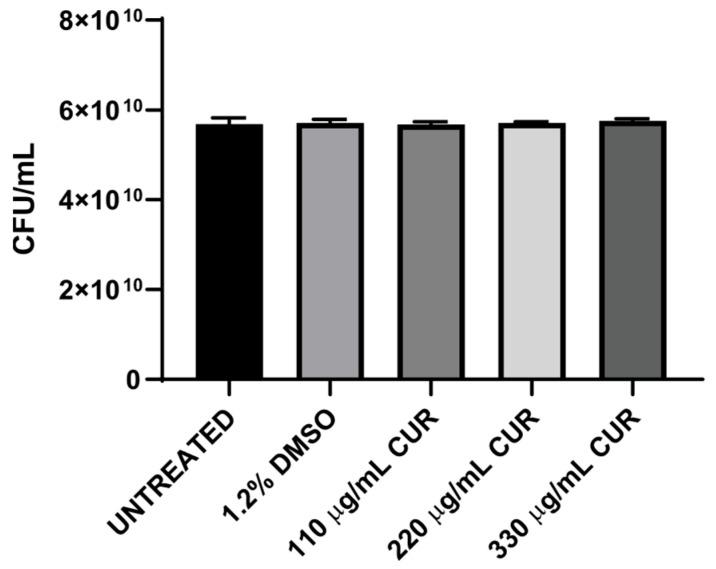
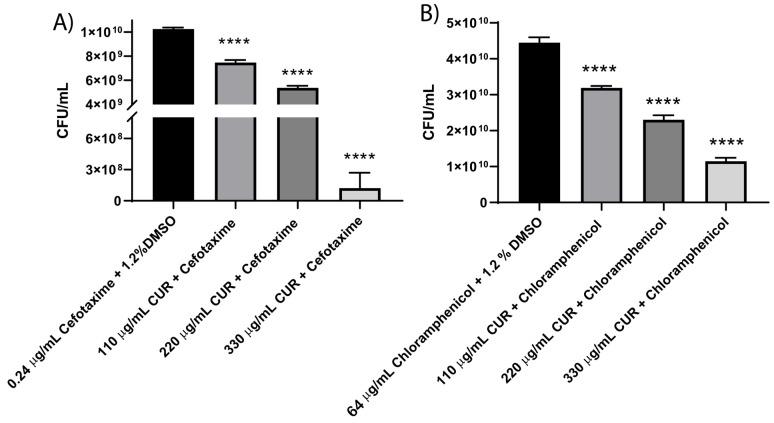
Our data indicate that CUR did not affect the growth of EHEC, but when combined with the antibiotics, it acted as a bacterial resistance breaker. Synergistic combinations of CUR and cefotaxime or chloramphenicol significantly reduced colony counts.
CONCLUSIONS
Our findings support the potential of CUR as a sensitizer or in combination therapy against EHEC.
背景
肠出血性大肠杆菌(EHEC)是一个重大的公共卫生问题,与多起食源性血性腹泻(BD)暴发以及潜在致命的溶血性尿毒症综合征(HUS)相关,其病理生理学归因于该细菌产生的志贺毒素(Stx)。在大多数患者中,支持性治疗就足够了;然而,在某些情况下,可能需要抗生素治疗。大多数抗生素不推荐用于EHEC感染的治疗,特别是那些会杀死细菌的抗生素,因为这会触发体内Stx的释放,诱发或加重HUS。阿奇霉素可阻止Stx的释放,且是SOS系统较弱的诱导剂,已成功用于减少EHEC的排出。有必要鉴定出能消除EHEC而不诱导Stx释放的化合物。使用天然化合物如姜黄素(CUR),一种从姜黄中提取的多酚,已被视为一种替代性杀菌治疗方法。
目的
本研究的目的是确定CUR及其与选定抗生素的相互作用对耐药性EHEC O157/H7/EDL933的影响。
方法
将细菌培养物暴露于三种不同浓度(110、220和330μg/mL)的CUR以及1.2%二甲基亚砜(DMSO)中,通过测量600nm处的光密度(OD600)评估CUR的抗菌活性。采用FIC法确定CUR与抗生素的协同作用。进行逆转录聚合酶链反应(RT-PCR)以确定 、 、 和 基因的表达水平。
结果
我们的数据表明,CUR不影响EHEC的生长,但与抗生素联合使用时,它起到了细菌耐药性破坏剂的作用。CUR与头孢噻肟或氯霉素的协同组合显著减少了菌落计数。
结论
我们的研究结果支持CUR作为EHEC致敏剂或联合治疗药物的潜力。



 Zotero 插件