
抗感染:疫苗研发的最新进展
Against Infection: An Update on Vaccine Development.
作者信息
Wang Jingyao, Ma Qianquan, Tian Songhai
机构信息
State Key Laboratory of Natural and Biomimetic Drugs, Department of Molecular and Cellular Pharmacology, School of Pharmaceutical Sciences, Peking University, 38 Xueyuan Road, Beijing 100191, China.
Department of Neurosurgery, Peking University Third Hospital, Beijing 100191, China.
出版信息
Toxins (Basel). 2025 May 1;17(5):222. doi: 10.3390/toxins17050222.
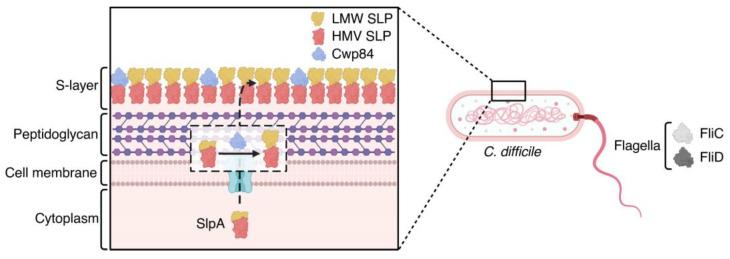
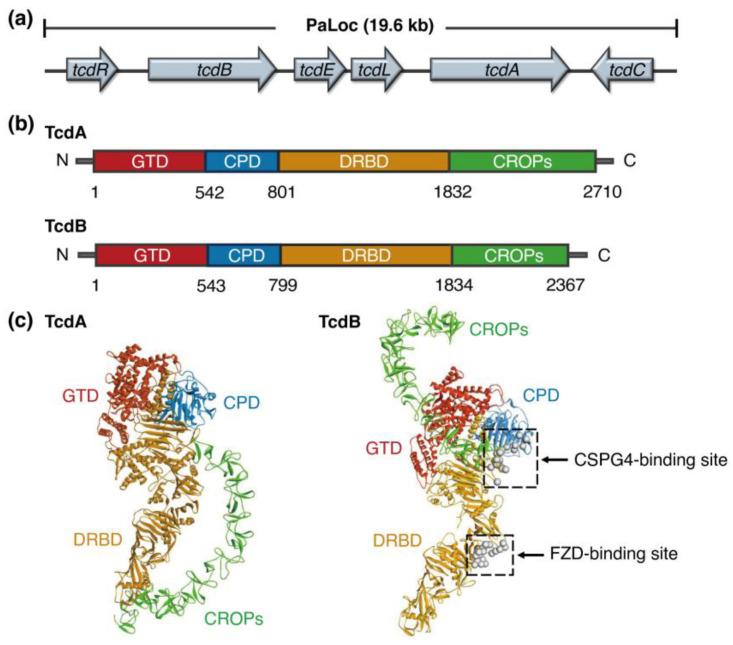
() is a major pathogen responsible for antibiotic-associated diarrhea, frequently observed in hospital settings. Due to the widespread use of antibiotics, the incidence and severity of infection (CDI) are rising across the world. CDI is primarily driven by two homologous protein exotoxins, toxin A (TcdA) and toxin B (TcdB). Other putative virulence factors include binary toxin CDT, surface layer proteins, phosphorylated polysaccharides, and spore coat proteins. These virulence factors are potential targets for vaccine development. Although several vaccines have entered clinical trials, there is currently no approved vaccine on the market. This review outlines the intoxication mechanism during CDI, emphasizing the potential antigens that can be used for vaccine development. We aim to provide a comprehensive overview of the current status of research and development of vaccines.
()是导致抗生素相关性腹泻的主要病原体,在医院环境中经常出现。由于抗生素的广泛使用,艰难梭菌感染(CDI)的发病率和严重程度在全球范围内都在上升。CDI主要由两种同源蛋白外毒素,即毒素A(TcdA)和毒素B(TcdB)驱动。其他假定的毒力因子包括二元毒素CDT、表层蛋白、磷酸化多糖和芽孢衣蛋白。这些毒力因子是疫苗开发的潜在靶点。尽管有几种疫苗已进入临床试验阶段,但目前市场上尚无获批的疫苗。本综述概述了CDI期间的中毒机制,强调了可用于疫苗开发的潜在抗原。我们旨在全面概述疫苗研发的现状。


 Zotero 插件