
通过遗传学改善猪肉生产环境可持续性的机会。
Opportunities to improve environmental sustainability of pork production through genetics.
作者信息
Dekkers Jack C M
机构信息
Department of Animal Science, College of Agriculture and Life Sciences, Iowa State University, Ames, IA 50011-3150, USA.
出版信息
J Anim Sci. 2025 Jan 4;103. doi: 10.1093/jas/skaf042.
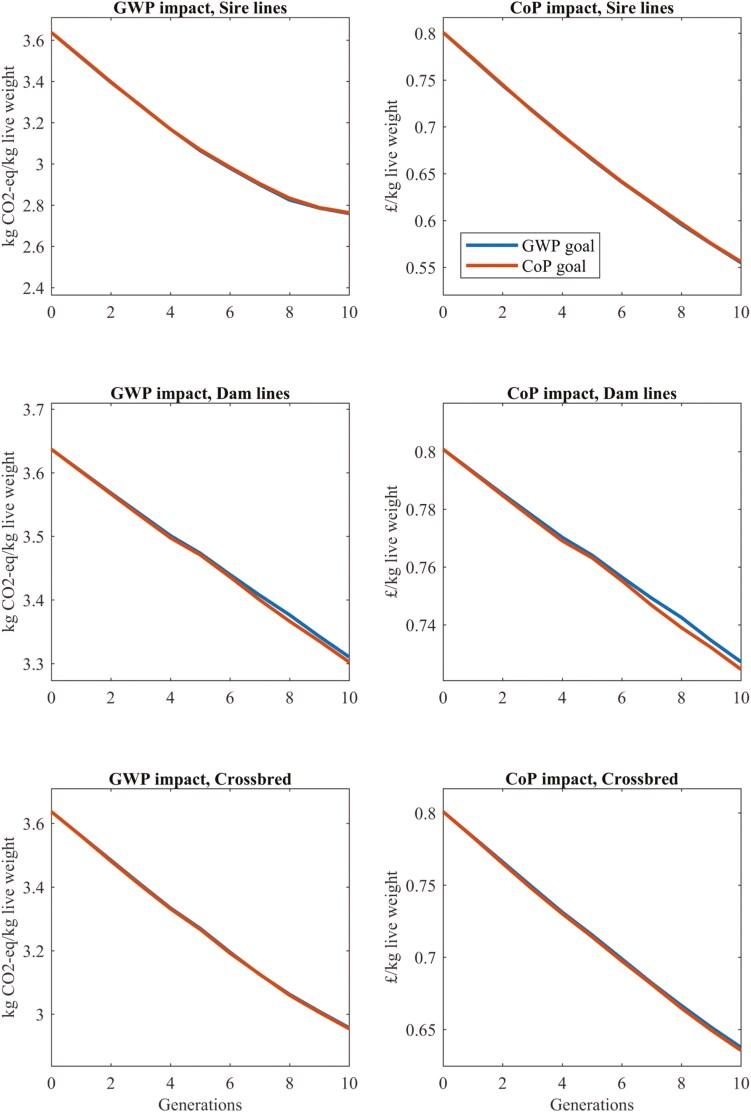
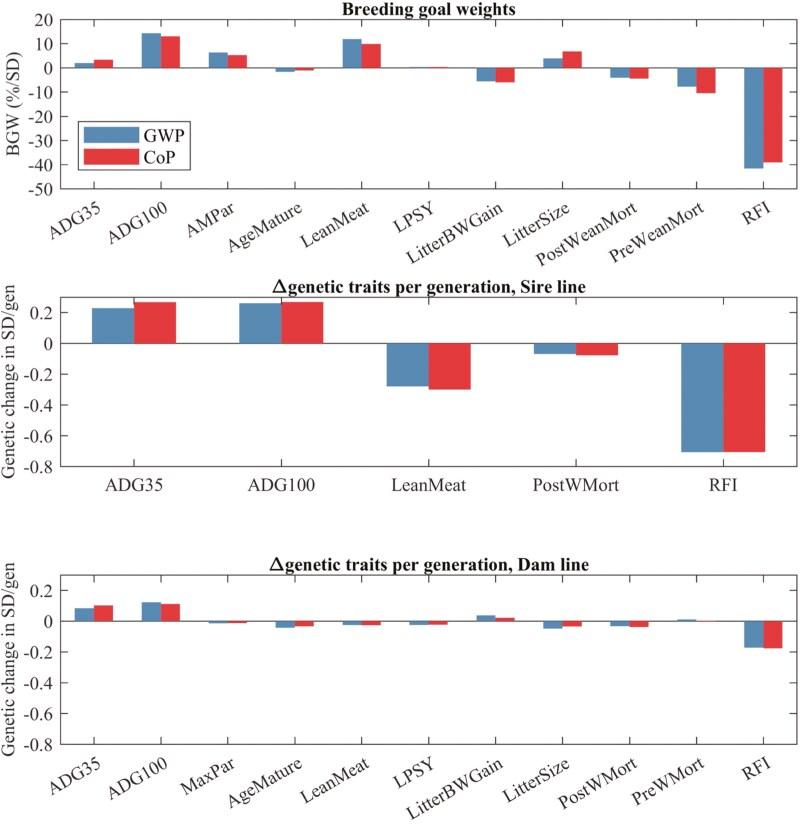
Breeding programs in pigs primarily aim to reduce the cost of production but, because of the strong parallel effects of traits on the cost of production and environmental impacts, current breeding programs also substantially reduce the environmental impacts of pork production, although these reductions may be overestimated if the possible use of manure as a source of fertilizer is not accounted for. The purpose of this review is to summarize and explore opportunities that exist to further enhance these impacts by 1) changing the emphasis on traits in breeding programs, 2) including new traits, 3) integrating genetics and nutrition, and 4) transgenics and gene editing. Apart from accelerating rates of gain for productivity and efficiency at the commercial level, limited opportunities exist to further enhance reductions in environmental impacts by changing the emphasis on traits that are currently under selection, because of the high correlation between the impacts of these traits on cost of production and environmental impacts. However, opportunities exist to include traits related to resilience to disease and heat stress, methane emission (enteric and manure), and the efficient use of dietary nitrogen (N), phosphorus (P), and other ingredients, which all appear to have a genetic component. The limited research available to date suggests that genetic differences in efficiency and environmental impacts are smaller when pigs are fed diets that are tailored to their nutritional requirements, suggesting fewer genotype by diet interactions under such nutritional strategies. Selection for performance when fed diets that are tailored to meet the specific nutritional requirements of the line, or even the individual pig, can direct selection pressure to improvement of efficiency of the use of specific diet components. The effectiveness of this approach, however, depends on the accuracy of the nutritional models that are employed to determine nutrient requirements, as well as the accuracy with which these requirements can be characterized at the genetic level. Opportunities also exist to use transgenics or gene editing to provide solutions for anti-nutritional factors that many feedstuffs contain. Most emphasis on further reducing the environmental impact of pork production through genetics should focus on the grow-finish phase because it has the largest environmental impact and mitigation opportunities. Although this is expected to translate into additional reductions in environmental impacts of the reproduction phase, research into genetic selection or interventions that are specific to this phase is also needed.
猪的育种计划主要旨在降低生产成本,但由于性状对生产成本和环境影响具有强烈的并行效应,当前的育种计划也大幅降低了猪肉生产的环境影响。不过,如果未考虑粪便作为肥料来源的可能用途,这些减少量可能被高估。本综述的目的是总结并探索通过以下方式进一步增强这些影响的机会:1)改变育种计划中对性状的重视程度;2)纳入新性状;3)整合遗传学与营养;4)转基因和基因编辑。除了在商业层面加快生长速度以提高生产力和效率外,由于这些性状对生产成本和环境影响之间的高度相关性,通过改变对当前所选性状的重视程度来进一步增强环境影响的机会有限。然而,存在纳入与抗病和耐热应激能力、甲烷排放(肠道和粪便)以及日粮氮(N)、磷(P)和其他成分的高效利用相关性状的机会,这些性状似乎都具有遗传成分。迄今为止有限的研究表明,当猪食用根据其营养需求定制的日粮时,效率和环境影响方面的遗传差异较小,这表明在这种营养策略下基因型与日粮的相互作用较少。选择在食用根据品系甚至个体猪的特定营养需求定制的日粮时的性能,可以将选择压力导向提高特定日粮成分的利用效率。然而,这种方法的有效性取决于用于确定营养需求的营养模型的准确性,以及这些需求在遗传水平上能够被表征的准确性。利用转基因或基因编辑为许多饲料中含有的抗营养因子提供解决方案的机会也存在。通过遗传学进一步降低猪肉生产环境影响的大部分重点应放在育肥阶段,因为该阶段对环境的影响最大且减排机会最多。尽管预计这将转化为繁殖阶段环境影响的进一步降低,但也需要针对该阶段的遗传选择或干预措施进行研究。
 Zotero 插件