
喜马拉雅兀鹫的全基因组微卫星特征分析与分子标记开发
Genome-Wide Microsatellite Characterization and Molecular Marker Development of Himalayan Griffon ().
作者信息
Guo Weibin, Ke Dianhua, Wang Changcao, Fan Haiying
机构信息
School of Life Sciences, Jinggangshan University, Ji'an 343009, China.
State Key Laboratory of Biocatalysis and Enzyme Engineering, School of Life Sciences, Hubei University, Wuhan 430062, China.
出版信息
Animals (Basel). 2025 May 16;15(10):1438. doi: 10.3390/ani15101438.
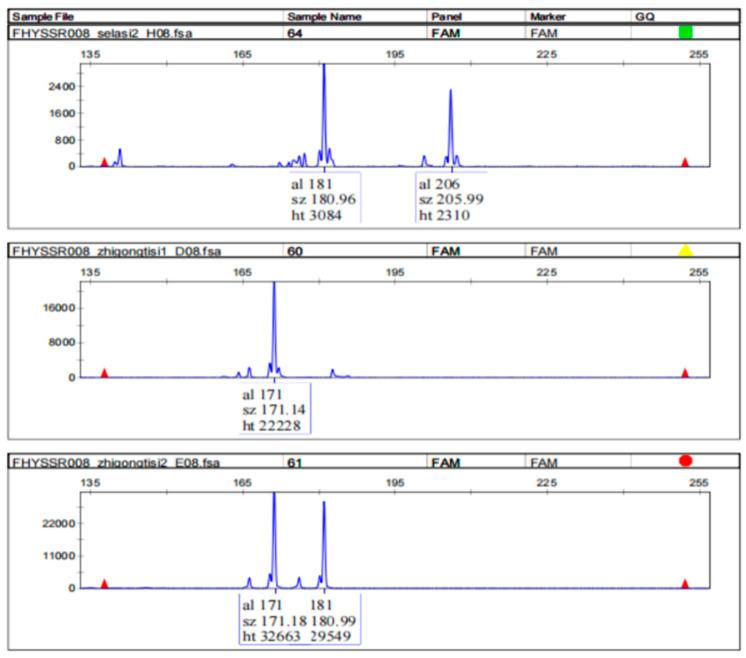
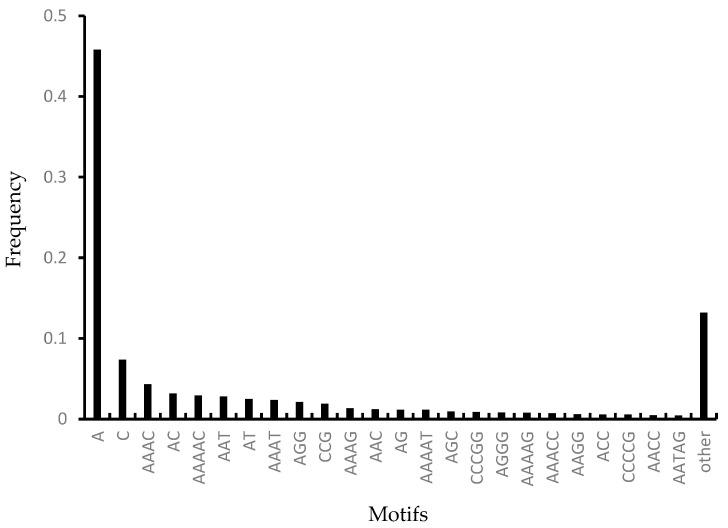
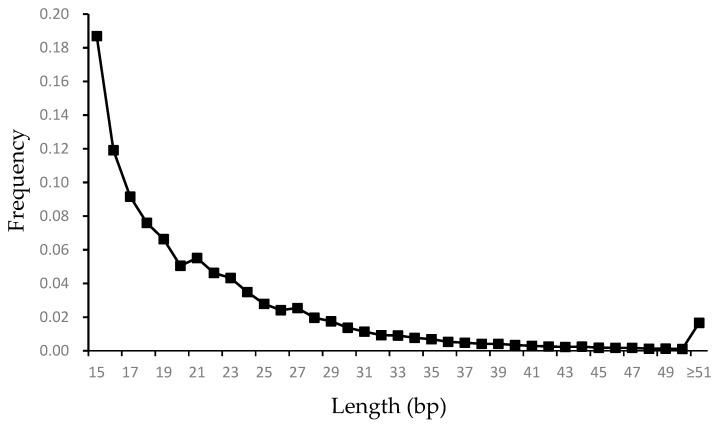
The Himalayan griffon (), an obligate scavenging bird in the Qinghai-Tibet Plateau, provides significant ecological services but is currently listed as near threatened. Despite their importance for conservation, genome-wide screening for microsatellites (or SSRs) in and the development of corresponding molecular markers have been lacking. This study presents the first in-depth characterization of genome-wide microsatellites in and the successful development of polymorphic SSR markers. A total of 240,741 microsatellite loci were detected in the genome, with an average density of 202.2 SSRs per Mb, accounting for 0.44% of the genome. Mononucleotide repeats (53.2%) were the most prevalent among the different microsatellite motif types. Additionally, 100 primer pairs were initially identified, with 17 found to be polymorphic markers. These loci hold significant potential for revealing genotypic diversity in , thereby laying a foundation for the conservation of this species.
喜马拉雅兀鹫是青藏高原上的一种专性食腐鸟类,提供重要的生态服务,但目前被列为近危物种。尽管它们对保护工作很重要,但此前一直缺乏对其进行全基因组微卫星(或简单序列重复,SSRs)筛选以及开发相应分子标记的研究。本研究首次对喜马拉雅兀鹫全基因组微卫星进行了深入表征,并成功开发出多态性SSR标记。在喜马拉雅兀鹫基因组中共检测到240,741个微卫星位点,平均密度为每兆碱基202.2个SSR,占基因组的0.44%。在不同的微卫星基序类型中,单核苷酸重复(53.2%)最为普遍。此外,最初鉴定出100对引物,其中17对被发现是多态性标记。这些位点在揭示喜马拉雅兀鹫基因型多样性方面具有巨大潜力,从而为该物种的保护奠定了基础。
 Zotero 插件