
运动疗法和教育后,膝关节骨关节炎患者的身体活动、疼痛及生活质量的变化是否超出正常波动范围?一项对比研究。
Are Changes in Physical Activity, Pain, and Quality of Life in Patients with Knee Osteoarthritis After Exercise Therapy and Education Beyond Normal Fluctuations? A Comparative Study.
作者信息
Rafiei Mahdie, Das Supratim, Roos Ewa M, Skou Søren T, Baumbach Jan, Baumbach Linda
机构信息
Institute for Computational Systems Biology, University of Hamburg, 22761 Hamburg, Germany.
Department of Health Economics and Health Services Research, University Medical Center Hamburg-Eppendorf, 20246 Hamburg, Germany.
出版信息
J Clin Med. 2025 May 13;14(10):3406. doi: 10.3390/jcm14103406.
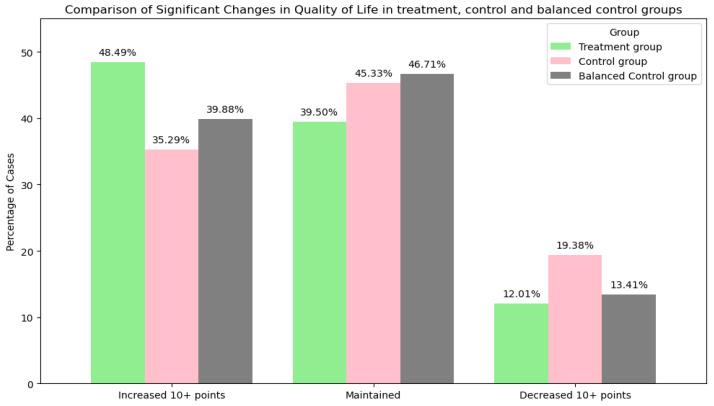
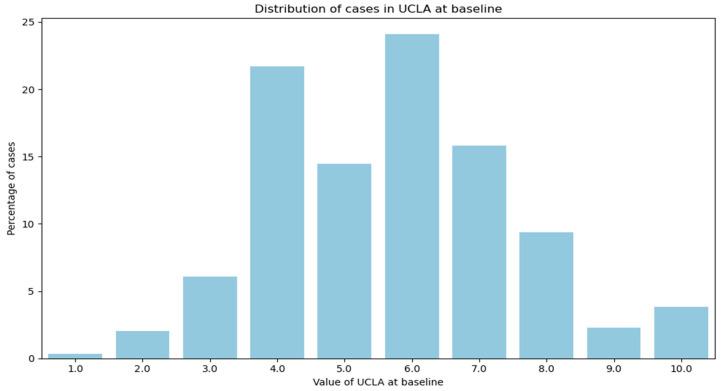
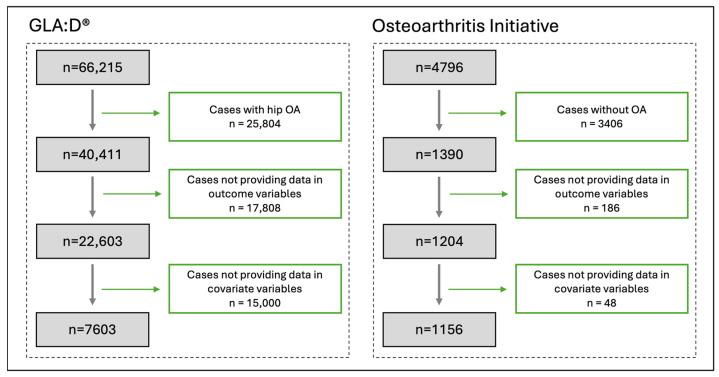
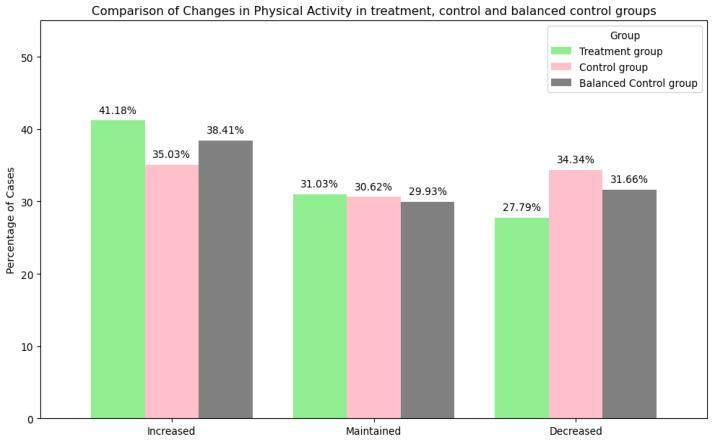
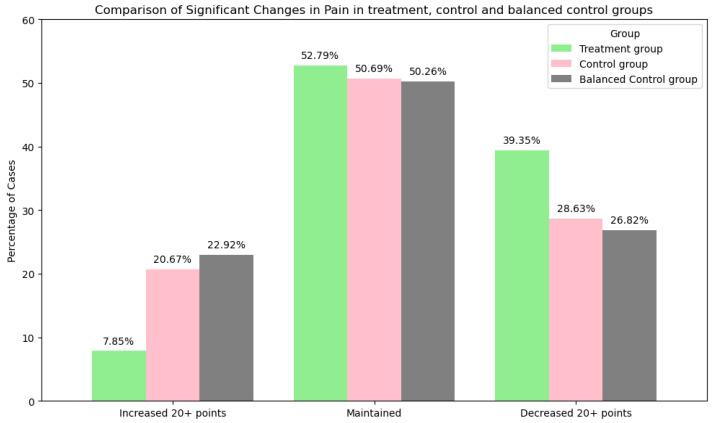
: This study evaluates whether one-year changes in physical activity (PA), pain intensity, and quality of life (QOL) after exercise therapy and education are larger than normal fluctuations over time in individuals with knee osteoarthritis. : Patients with knee osteoarthritis participating in the Good Life with Osteoarthritis in Denmark (GLA:D) exercise therapy and education program (n = 7603) and participants from the Osteoarthritis Initiative (OAI) who received no specific treatment (n = 1156) were included. PA was measured using the UCLA PA scale (1-10) in the GLA:D group and the PASE (0-531) in the OAI group. PASE scores were mapped to the UCLA distribution. Pain intensity was measured using a standardized visual analog scale (VAS, 0-100), and QOL was assessed via the KOOS QOL scale (0-100). Changes were categorized as increased, maintained, and decreased. To ensure comparability between GLA:D and OAI participants, we used entropy balancing, considering the covariables age, gender, BMI, depression, employment status, and our outcome variables at baseline. : At one year, 41% of GLA:D participants showed increased PA compared to 38% in the balanced OAI group ( = 0.015). Pain intensity decreased by ≥20 mm on the VAS in 39% of GLA:D and 27% of OAI participants ( < 0.001). QOL improved by ≥ 10 mm on the KOOS scale in 48% of GLA:D and 40% of OAI participants ( < 0.001). Additionally, for PA, pain, and QOL, 6%, 13%, and 7% more patients in the control group experienced worsening in these outcomes, respectively. : Twelve percent more participants experienced clinically relevant pain reductions in the GLA:D group compared to OAI participants, and 3% and 8% more reported improvements in PA and QOL, respectively. Additionally, more patients in the control group experienced worsening in these outcomes. These differences indicate that clinically relevant pain improvements following exercise therapy and education may exceed normal fluctuations in patients with knee osteoarthritis.
本研究评估了运动疗法和教育后,膝关节骨关节炎患者的身体活动(PA)、疼痛强度和生活质量(QOL)在一年内的变化是否大于随时间的正常波动。纳入了参与丹麦骨关节炎美好生活(GLA:D)运动疗法和教育项目的膝关节骨关节炎患者(n = 7603)以及骨关节炎倡议(OAI)中未接受特定治疗的参与者(n = 1156)。在GLA:D组中使用加州大学洛杉矶分校PA量表(1 - 10)测量PA,在OAI组中使用PASE(0 - 531)测量PA。将PASE分数映射到加州大学洛杉矶分校的分布上。使用标准化视觉模拟量表(VAS,0 - 100)测量疼痛强度,并通过KOOS QOL量表(0 - 100)评估生活质量。变化分为增加、维持和减少。为确保GLA:D和OAI参与者之间的可比性,我们使用熵平衡法,考虑协变量年龄、性别、BMI、抑郁、就业状况以及基线时的结果变量。一年时,41%的GLA:D参与者PA增加,而在平衡后的OAI组中这一比例为38%(P = 0.015)。39%的GLA:D参与者和27%的OAI参与者VAS上的疼痛强度降低≥20 mm(P < 0.001)。48%的GLA:D参与者和40%的OAI参与者KOOS量表上的生活质量提高≥10 mm(P < 0.001)。此外,对于PA、疼痛和生活质量,对照组中分别有6%、13%和7%的患者在这些结果方面出现恶化。与OAI参与者相比,GLA:D组中经历临床相关疼痛减轻的参与者多12%,报告PA和生活质量改善的分别多3%和8%。此外,对照组中更多患者在这些结果方面出现恶化。这些差异表明,运动疗法和教育后临床上相关的疼痛改善可能超过膝关节骨关节炎患者的正常波动。

 Zotero 插件