
传染性支气管炎病毒S1亚基中的五个氨基酸替换是增强其对Vero细胞适应性的关键决定因素。
Five Amino Acid Substitutions in the S1 Unit of Infectious Bronchitis Virus Are Critical Determinants Enhancing Its Adaptation to Vero Cells.
作者信息
Cai Zhichao, Zhang Mingjing, Fang Shouguo
机构信息
College of Agriculture, Yangtze University, Jingzhou 434025, China.
出版信息
Vet Sci. 2025 Apr 22;12(5):394. doi: 10.3390/vetsci12050394.
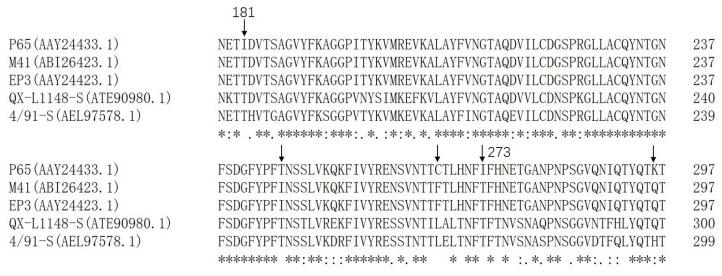
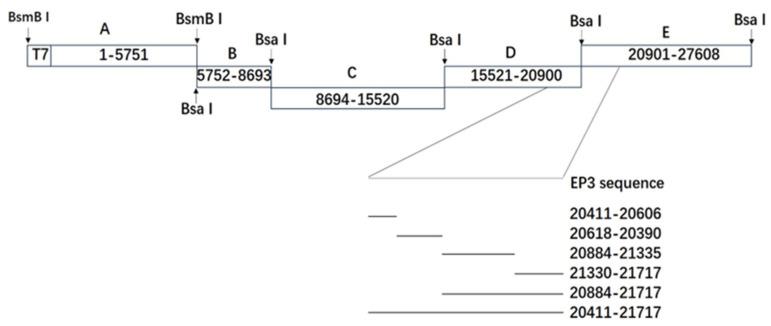
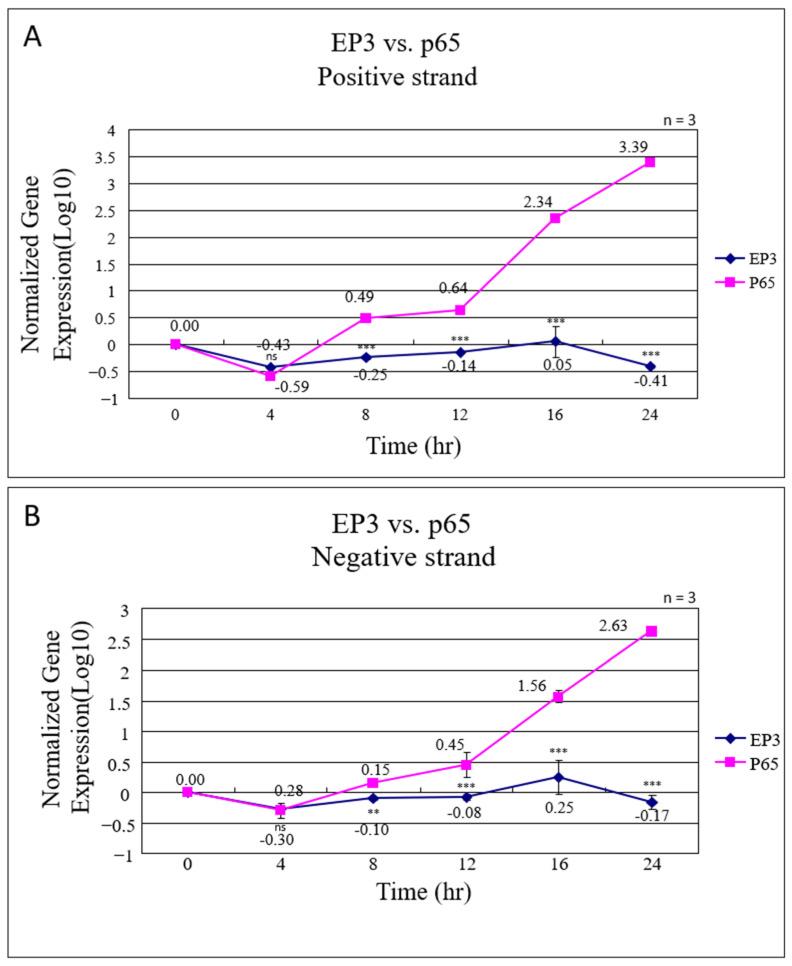
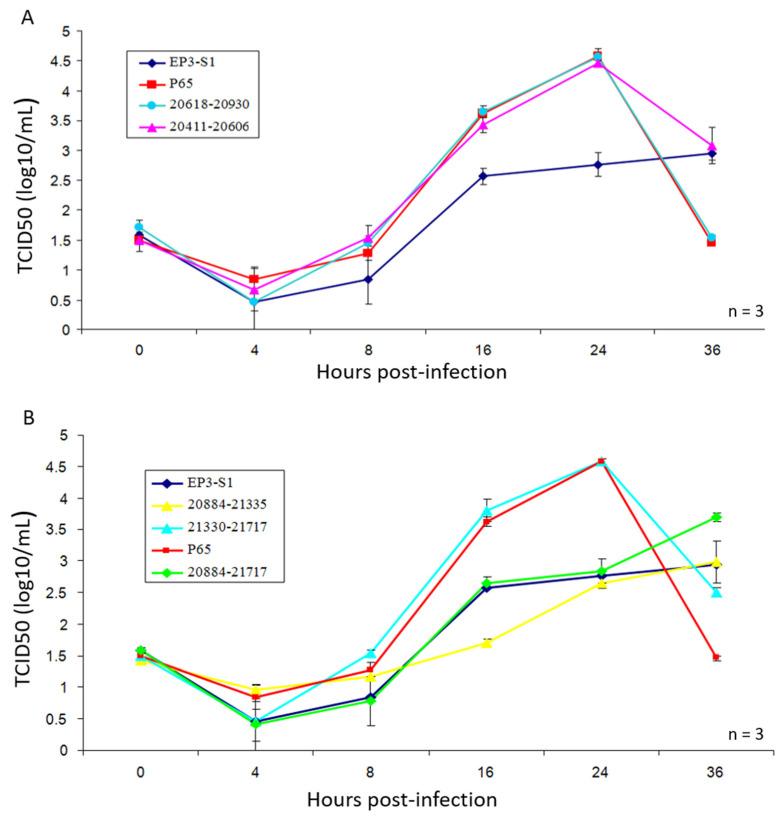
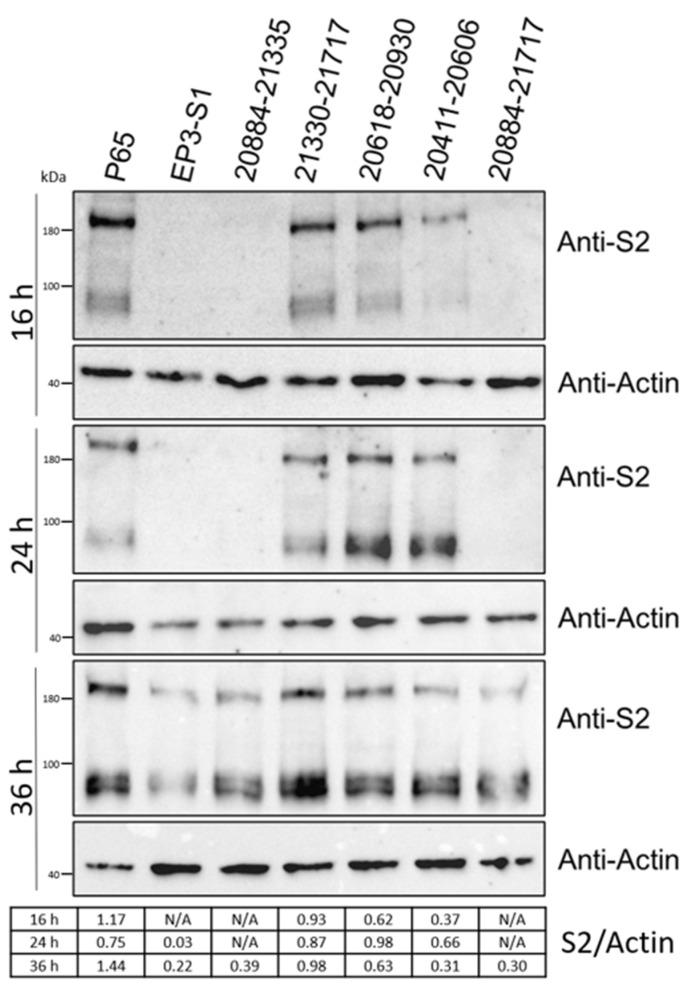
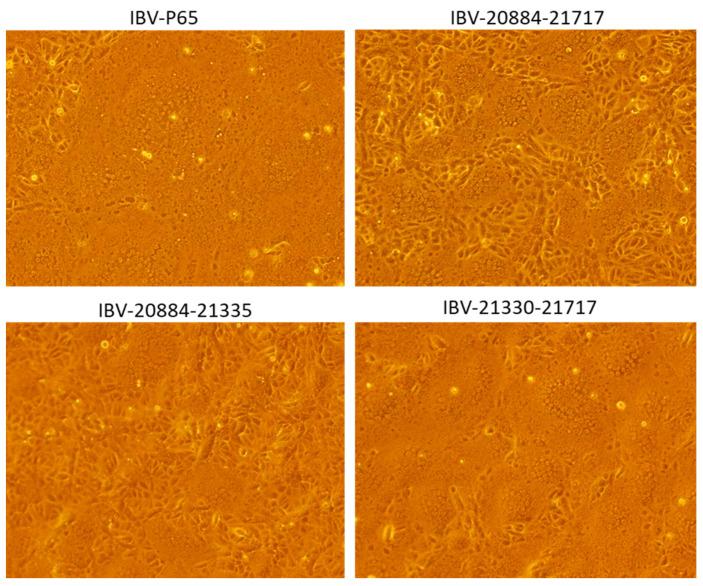
The S1 subunit of the spike protein of avian infectious bronchitis virus (IBV) plays a crucial role in determining its host range and cell and tissue tropism. Following the continuous passage of IBV-EP3 through Vero cells over up to 65 generations, a total of 19 amino acid mutations accumulated in the S1 region of IBV-P65. To investigate the impact of these mutations on the adaptability of IBV to Vero cells, six recombinant viruses carrying either a subset or all of the identified mutations were constructed and obtained via a reverse genetics system. Analyses on the growth characteristics of these recombinant viruses and Western blot detection of the expression levels of their spike proteins indicated that the IBV mutant obtained by replacing the amino acid sequence from positions 179 to 323 in the S1 region of IBV-P65 with the corresponding segment from IBV-EP3 S1 significantly impaired viral growth and exhibited a lower replication efficiency in Vero cells, suggesting that five amino acid substitutions (T181I, I246T, F267C, T273I, Q296K) within this region could enhance the adaptation of IBV to Vero cells.
禽传染性支气管炎病毒(IBV)刺突蛋白的S1亚基在决定其宿主范围以及细胞和组织嗜性方面起着关键作用。在IBV-EP3在Vero细胞中连续传代多达65代后,IBV-P65的S1区域总共积累了19个氨基酸突变。为了研究这些突变对IBV适应Vero细胞的影响,通过反向遗传学系统构建并获得了六种携带部分或所有已鉴定突变的重组病毒。对这些重组病毒生长特性的分析以及对其刺突蛋白表达水平的蛋白质印迹检测表明,用IBV-EP3 S1的相应片段替换IBV-P65 S1区域中第179至323位氨基酸序列所获得的IBV突变体显著损害了病毒生长,并在Vero细胞中表现出较低的复制效率,这表明该区域内的五个氨基酸取代(T181I、I246T、F267C、T273I、Q296K)可增强IBV对Vero细胞的适应性。
 Zotero 插件