
一种多重耐药菌导致了中华鳖的死亡()。 你提供的原文似乎不太完整,括号里内容缺失,你可以补充完整后继续让我翻译。
A Multidrug-Resistant Caused the Death of the Chinese Soft-Shelled Turtle ().
作者信息
Xue Mingyang, Hu Xiaowei, Jiang Nan, Liu Wei, Xiao Zidong, Zhang Chunjie, Wu Yeying, Liang Tianwang, Zhang Huixuan, Fan Yuding, Meng Yan, Zhou Yong
机构信息
Yangtze River Fisheries Research Institute, Chinese Academy of Fishery Sciences, Wuhan 430223, China.
Freshwater Fisheries Research Center, Chinese Academy of Fishery Sciences, Wuxi 214081, China.
出版信息
Vet Sci. 2025 May 14;12(5):473. doi: 10.3390/vetsci12050473.
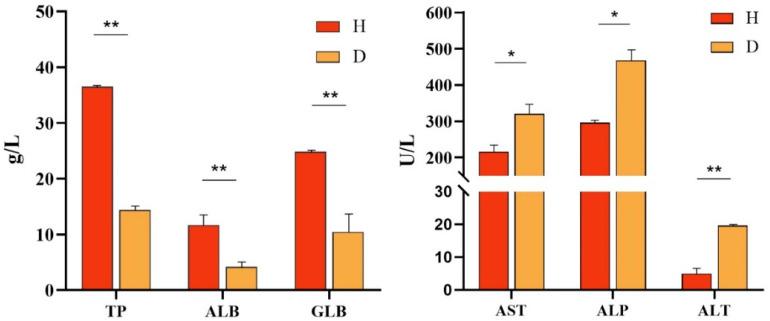
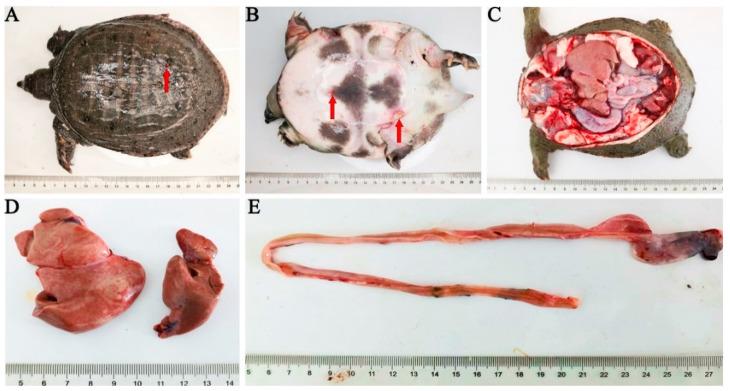
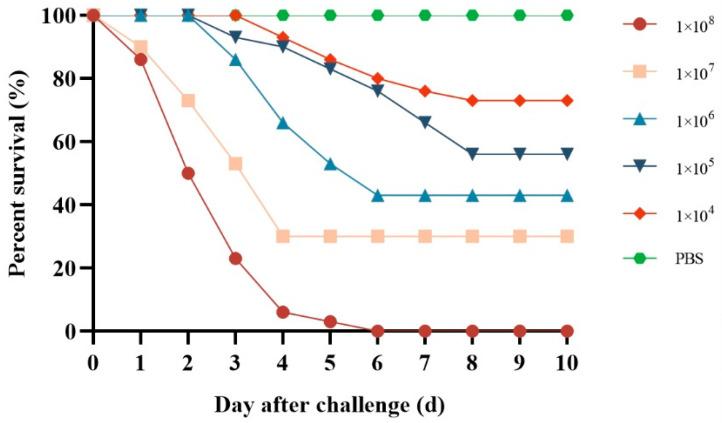
The rapid increase in drug resistance in recent years has become a significant global public health concern. are ubiquitous bacteria, widely distributed in various environments. This study isolated a bacterial strain (HD-593) from diseased Chinese soft-shelled turtles (). The bacterium was identified based on morphology, biochemical tests, and 16S rRNA sequencing, confirming it as . Drug susceptibility tests revealed that the HD-593 strain was highly resistant to ceftriaxone, enrofloxacin, doxycycline, sulfadiazine, gentamicin, neomycin, florfenicol, carbenicillin, cefradine, erythromycin, penicillin, ampicillin, midecamycin, and streptomycin. Resistance gene analysis confirmed the presence of quinolone resistance genes ( and ), aminoglycoside resistance genes ( and ), a β-lactam resistance gene (), and an acylaminol resistance gene () in HD-593. The median lethal dose (LD50) of HD-593 for was 6.53 × 10 CFU/g. Biochemical analysis of serum revealed that HD-593 infection caused a significant reduction in total protein, albumin, and globulin levels, while markedly increasing the levels of aspartate aminotransferase, alanine aminotransferase, and alkaline phosphatase. Histopathological analysis revealed severe intestinal damage characterized by villi detachment and muscle cell necrosis. Additionally, extensive splenocyte necrosis with nuclear marginalization, glomerular swelling, and pronounced hepatic steatosis accompanied by distended sinusoids were observed. This study identified a multidrug-resistant strain from deceased , suggesting that drug resistance genes may circulate in aquaculture ecosystems, posing potential risks to aquaculture.
近年来耐药性的迅速增加已成为全球重大的公共卫生问题。[细菌名称]是无处不在的细菌,广泛分布于各种环境中。本研究从患病的中华鳖([中华鳖学名])中分离出一株细菌(HD - 593)。基于形态学、生化试验和16S rRNA测序对该细菌进行鉴定,确认其为[细菌名称]。药敏试验表明,HD - 593菌株对头孢曲松、恩诺沙星、强力霉素、磺胺嘧啶、庆大霉素、新霉素、氟苯尼考、羧苄青霉素、头孢拉定、红霉素、青霉素、氨苄青霉素、麦迪霉素和链霉素高度耐药。耐药基因分析证实HD - 593中存在喹诺酮耐药基因([基因名称1]和[基因名称2])、氨基糖苷类耐药基因([基因名称3]和[基因名称4])、β - 内酰胺耐药基因([基因名称5])和酰胺醇类耐药基因([基因名称6])。HD - 593对[实验动物名称]的半数致死剂量(LD50)为6.53×10[具体指数]CFU/g。血清生化分析表明,HD - 593感染导致总蛋白、白蛋白和球蛋白水平显著降低,而天冬氨酸转氨酶、丙氨酸转氨酶和碱性磷酸酶水平明显升高。组织病理学分析显示肠道严重损伤,特征为绒毛脱落和肌细胞坏死。此外,还观察到广泛的脾细胞坏死伴核边缘化、肾小球肿胀以及明显的肝脂肪变性并伴有窦状隙扩张。本研究从死亡的[中华鳖学名]中鉴定出一株多重耐药的[细菌名称]菌株,表明耐药基因可能在水产养殖生态系统中传播,对水产养殖构成潜在风险。


 Zotero 插件