
使用免疫调节剂调节重症新型冠状病毒肺炎的过度炎症反应:托珠单抗联合类固醇使用的评估
Use of Immune Modulating Agents to Regulate Hyperinflammation in Severe COVID 19: Assessment of Tocilizumab Use in Combination with Steroids.
作者信息
Sadeghi Somayeh, Naderi Zohre, Arezoomandi Nima, Saghaei Mozhdeh, Tavakoli Fereshteh, Hajizadeh Mahsa
机构信息
Immunodeficiency Diseases Research Center, Isfahan University of Medical Sciences, Isfahan, Iran.
Department of Pulmonary and Critical Care, Isfahan University of Medical Sciences, Isfahan, Iran.
出版信息
J Res Pharm Pract. 2025 Apr 24;13(4):111-118. doi: 10.4103/jrpp.jrpp_2_25. eCollection 2024 Oct-Dec.
OBJECTIVE
In severe cases, COVID-19 can lead to a hyperinflammatory state, resulting in devastating outcomes. Immune modulation using steroids or other immune modulators can regulate the intensity of the inflammatory response; however, this theory has not been adequately assessed in practice. The current study aims to investigate the use of corticosteroids alone or in combination with tocilizumab to treat patients with severe COVID-19.
METHODS
This cross-sectional study was conducted on 166 Iranian patients with severe COVID-19 infection at Al-Zahra Hospital, who were treated with the standard treatment for severe COVID-19 infection, as per the 11 version of the Iranian guideline for COVID-19 treatment. Patients were categorized into three treatment groups based on the dose of corticosteroid treatment and tocilizumab therapy: (a) high-dose methylprednisolone (>1 mg/kg) alone, (b) low-dose methylprednisolone (<1 mg/kg) followed by one dose of tocilizumab (8 mg/kg); and (c) high-dose methylprednisolone (>1 mg/kg) followed by one dose of tocilizumab (8 mg/kg). Mortality of patients as our primary outcome, laboratory parameters, length of hospitalization, intensive care unit (ICU) admission requirement, and drug-related adverse events were compared between groups.
FINDINGS
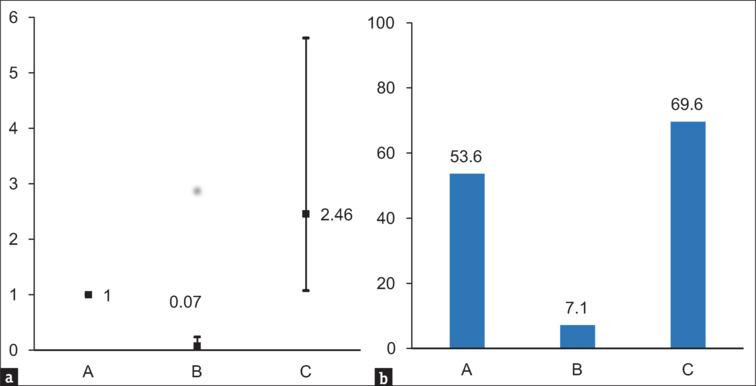
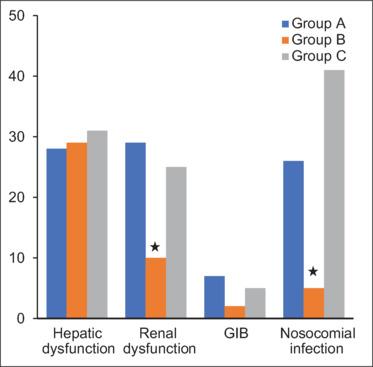
The second group showed significantly better outcomes, including shorter ICU stays, lower C-reactive protein and lactate dehydrogenase levels, and higher oxygen saturation and platelet counts than the other groups. Logistic regression revealed increased risks of mortality, nosocomial infection, and adverse effects, including hepatic and renal dysfunction and gastrointestinal bleeding, in Groups B and C compared with Group A.
CONCLUSION
In all evaluated parameters, a low-dose steroid followed by tocilizumab was superior to a high-dose steroid alone or combined with tocilizumab. Although this combination treatment has been assessed worldwide, few studies have focused on its application in Iranian patients with severe COVID-19.
目的
在重症病例中,新型冠状病毒肺炎(COVID-19)可导致炎症风暴,从而产生灾难性后果。使用类固醇或其他免疫调节剂进行免疫调节可调控炎症反应的强度;然而,这一理论在实际中尚未得到充分评估。本研究旨在探讨单独使用皮质类固醇或联合托珠单抗治疗重症COVID-19患者的效果。
方法
本横断面研究针对在阿尔扎赫拉医院就诊的166例伊朗重症COVID-19感染患者开展,这些患者均按照伊朗COVID-19治疗指南第11版接受重症COVID-19感染的标准治疗。根据皮质类固醇治疗剂量和托珠单抗治疗情况,将患者分为三个治疗组:(a)单独使用高剂量甲泼尼龙(>1 mg/kg);(b)低剂量甲泼尼龙(<1 mg/kg)后给予一剂托珠单抗(8 mg/kg);(c)高剂量甲泼尼龙(>1 mg/kg)后给予一剂托珠单抗(8 mg/kg)。比较各组患者的死亡率(作为主要结局指标)、实验室参数、住院时间、入住重症监护病房(ICU)的需求以及药物相关不良事件。
研究结果
第二组的治疗效果显著更好,包括ICU住院时间更短、C反应蛋白和乳酸脱氢酶水平更低、氧饱和度和血小板计数更高。逻辑回归分析显示,与A组相比,B组和C组的死亡率、医院感染风险以及包括肝肾功能障碍和胃肠道出血在内的不良反应风险增加。
结论
在所有评估参数中,低剂量类固醇后使用托珠单抗优于单独使用高剂量类固醇或联合使用托珠单抗。尽管这种联合治疗已在全球范围内进行评估,但很少有研究关注其在伊朗重症COVID-19患者中的应用。

 Zotero 插件