
采用先进预浓缩器增强的衬底集成中空波导的中红外丙酮气体传感器。
Mid-infrared acetone gas sensors using substrate-integrated hollow waveguides augmented by advanced preconcentrators.
作者信息
Barreto Diandra Nunes, Schreiber Carmen, da Silveira Petruci João Flávio, Mizaikoff Boris, Kokoric Vjekoslav
机构信息
Institute of Analytical and Bioanalytical Chemistry, Ulm University, 89081, Ulm, Germany.
Institute of Chemistry, Federal University of Uberlândia (UFU), Uberlândia, MG, Brazil.
出版信息
Sci Rep. 2025 May 29;15(1):18855. doi: 10.1038/s41598-025-02514-w.
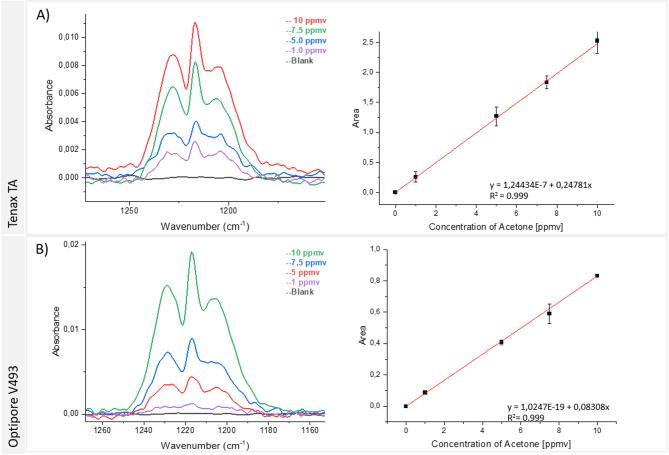
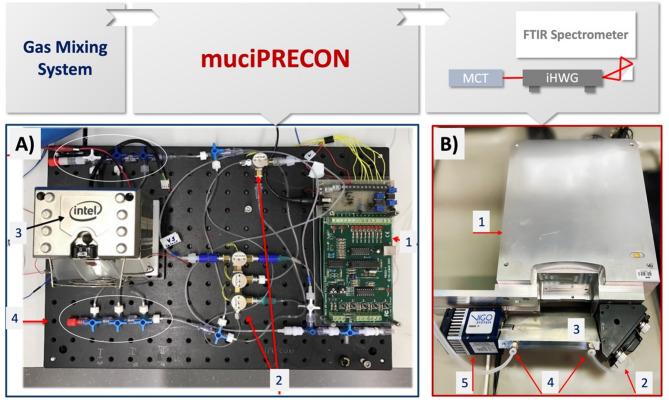
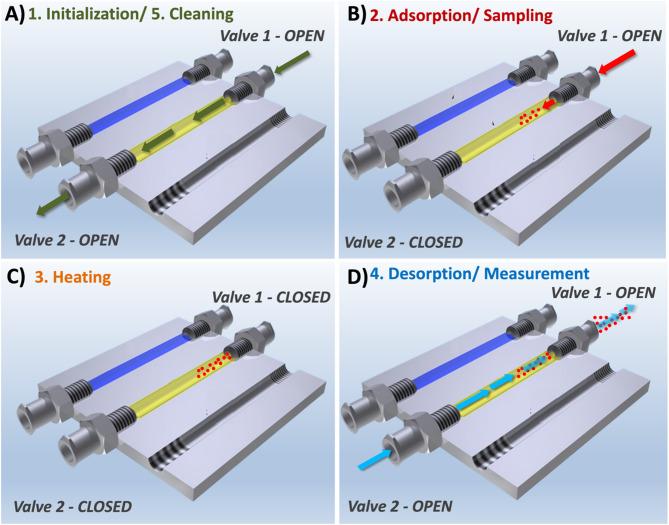
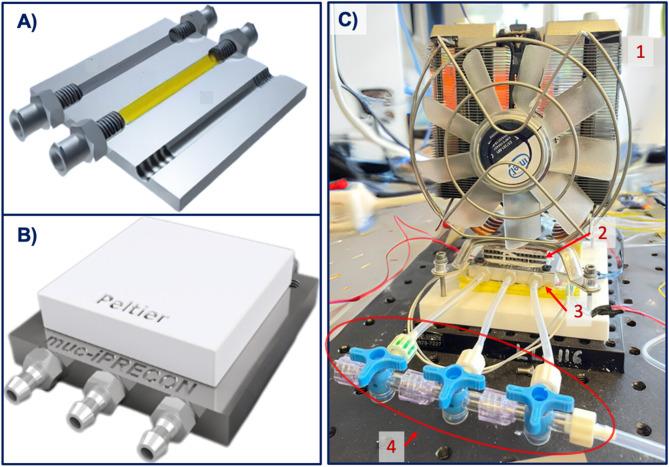
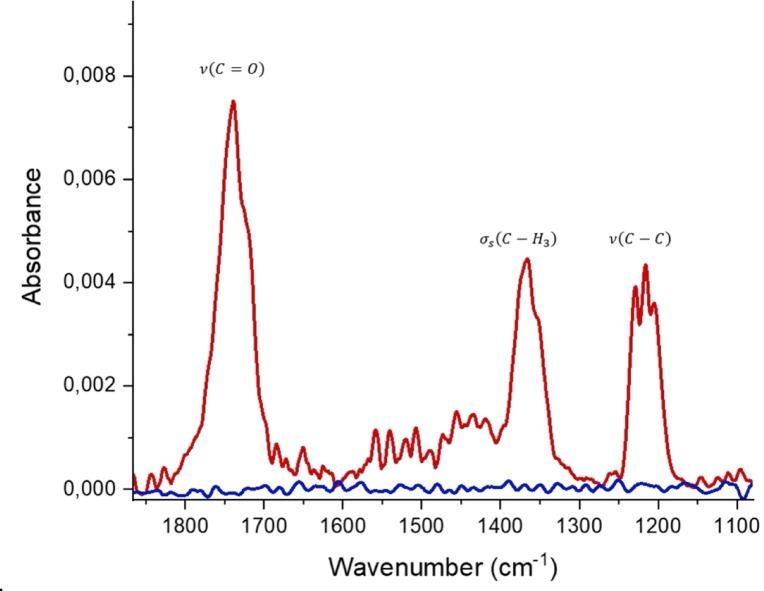
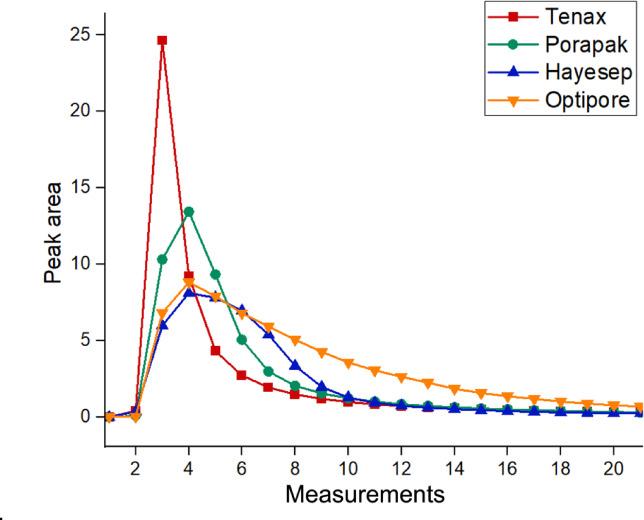
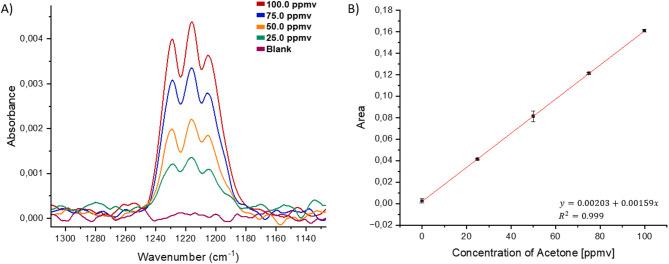
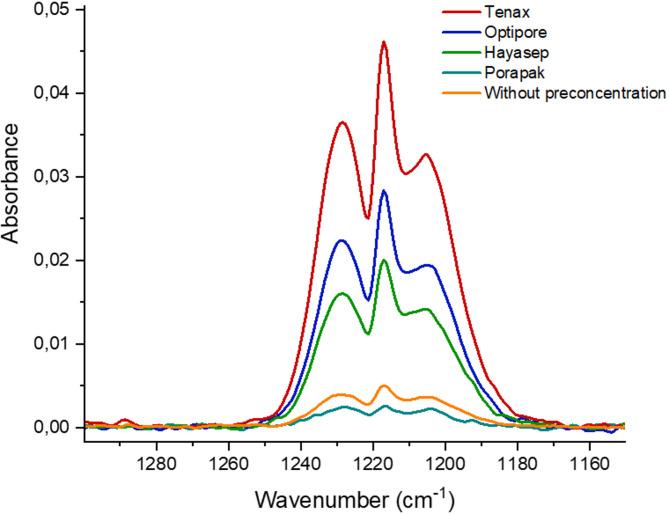
The identification of volatile organic compounds (VOC) such as acetone, a relevant biomarker for diabetes mellitus in exhaled human breath has become essential for early disease diagnostics, prognosis, and monitoring of metabolic responses to pharmacological interventions. Gas chromatography coupled with mass spectrometry (GC-MS) is considered as the gold standard for breath analysis. However, its inability to offer point-of-care monitoring limits its applicability in clinical environments. Optical techniques based on absorption in the mid-infrared range (2.5 to 25 μm) appear as promising alternatives due to their inherent selectivity, potential for miniaturization, portability, and direct analysis with rapid response. Relevant biomarkers present in exhaled breath, are usually observed in the ppb to ppm (v/v) concentration regime. For sensitivity enhancement of optical sensing techniques, appropriate preconcentration schemes are required prior to the optical detection. The present study describes a method combining a multi-channel substrate-integrated preconcentration module (a.k.a., muciPRECON) for enhancing and optimizing the detection of acetone via a mid-infrared photonic sensing system. The sensor system comprises a compact Fourier Transform Infrared (FTIR) spectrometer, a technique that enables detailed infrared spectral analysis, coupled to a substrate-integrated hollow waveguide (iHWG) simultaneously acting as a gas cell and as a photon conduit. Preconcentation experiments were from acetone/nitrogen gas mixtures in the concentration range of 5-100 ppm at - 10 °C followed by desorption at a temperature of 100 °C and direct injection into the IR sensing system Thus obtained acetone spectra were quantified evaluating a molecule-specific vibrational absorption peak area in the spectral window 1260-1170 cm. After extensive screening, Tenax was identified as superior sorbent material providing an enrichment factor of up to 153-times, a limit of detection (LOD) of 0.118 ppm, and a limit of quantification (LOQ) of 0.393 ppm. These results are indeed promising for practical applications, especially since acetone concentrations usually vary between 0.3 and 0.9 ppmv within the exhaled breath of healthy individuals, and in individuals with diabetes, acetone concentrations are typically around 1.7 to 3.0 ppmv. Consequently, the developed systems have the necessary sensitivity and accuracy to detect acetone levels that are in the relevant physiological range indicating their potential use in future real-world scenarios.
呼出的人体气息中存在的挥发性有机化合物(VOC),如丙酮,是糖尿病的一种相关生物标志物,其识别对于疾病的早期诊断、预后以及对药物干预的代谢反应监测至关重要。气相色谱-质谱联用(GC-MS)被认为是呼吸分析的金标准。然而,其无法提供即时检测限制了它在临床环境中的适用性。基于中红外范围(2.5至25μm)吸收的光学技术因其固有的选择性、小型化潜力、便携性以及快速响应的直接分析能力,似乎是很有前景的替代方法。呼出气体中存在的相关生物标志物,通常在十亿分之一至百万分之一(体积/体积)的浓度范围内被观测到。为了提高光学传感技术的灵敏度,在光学检测之前需要适当的预浓缩方案。本研究描述了一种方法,该方法结合了一个多通道衬底集成预浓缩模块(也称为muciPRECON),用于通过中红外光子传感系统增强和优化丙酮的检测。该传感器系统包括一个紧凑的傅里叶变换红外(FTIR)光谱仪,这是一种能够进行详细红外光谱分析的技术,它与一个同时作为气室和光子导管的衬底集成中空波导(iHWG)相连。预浓缩实验是在-10°C下对浓度范围为5 - 100 ppm的丙酮/氮气混合物进行的,随后在100°C温度下解吸并直接注入红外传感系统。如此获得的丙酮光谱通过评估光谱窗口1260 - 1170 cm内特定分子的振动吸收峰面积进行定量。经过广泛筛选,Tenax被确定为性能优越的吸附剂材料,其富集因子高达153倍,检测限(LOD)为0.118 ppm,定量限(LOQ)为0.393 ppm。这些结果对于实际应用确实很有前景,特别是因为健康个体呼出气体中的丙酮浓度通常在0.3至0.9 ppmv之间变化,而糖尿病患者的丙酮浓度通常在1.7至3.0 ppmv左右。因此,所开发的系统具有检测相关生理范围内丙酮水平所需的灵敏度和准确性,表明它们在未来实际场景中的潜在用途。
 Zotero 插件