
MLN9708(伊沙佐米)在实验性自身免疫性重症肌无力及重症肌无力患者产生抗乙酰胆碱受体的原发性胸腺细胞培养物中的疗效。
Efficacy of MLN9708 (ixazomib) in experimental autoimmune myasthenia gravis and in anti-AChR producing primary thymic cell cultures from myasthenia gravis patients.
作者信息
Mané-Damas Marina, Saxena Abhishek, Nogales-Gadea Gisela, Stevens Jo, Vincken Shannen, van Beek Maarten, van den Hoogen Nynke J, Joosten Elbert A J, Willcox Nick, Duimel Hans, Maessen Jos G, Molenaar Peter C, De Baets Marc H, Losen Mario, Martinez-Martinez Pilar
机构信息
Department of Psychiatry and Neuropsychology, Mental Health and Neuroscience Research Institute, Faculty of Health, Medicine and Life Sciences, Maastricht University, Maastricht, Netherlands.
Advanced Biologics Design Group, Center for Translational Research, Shenzhen Bay Laboratory, Shenzhen, China.
出版信息
Front Immunol. 2025 May 15;16:1521432. doi: 10.3389/fimmu.2025.1521432. eCollection 2025.
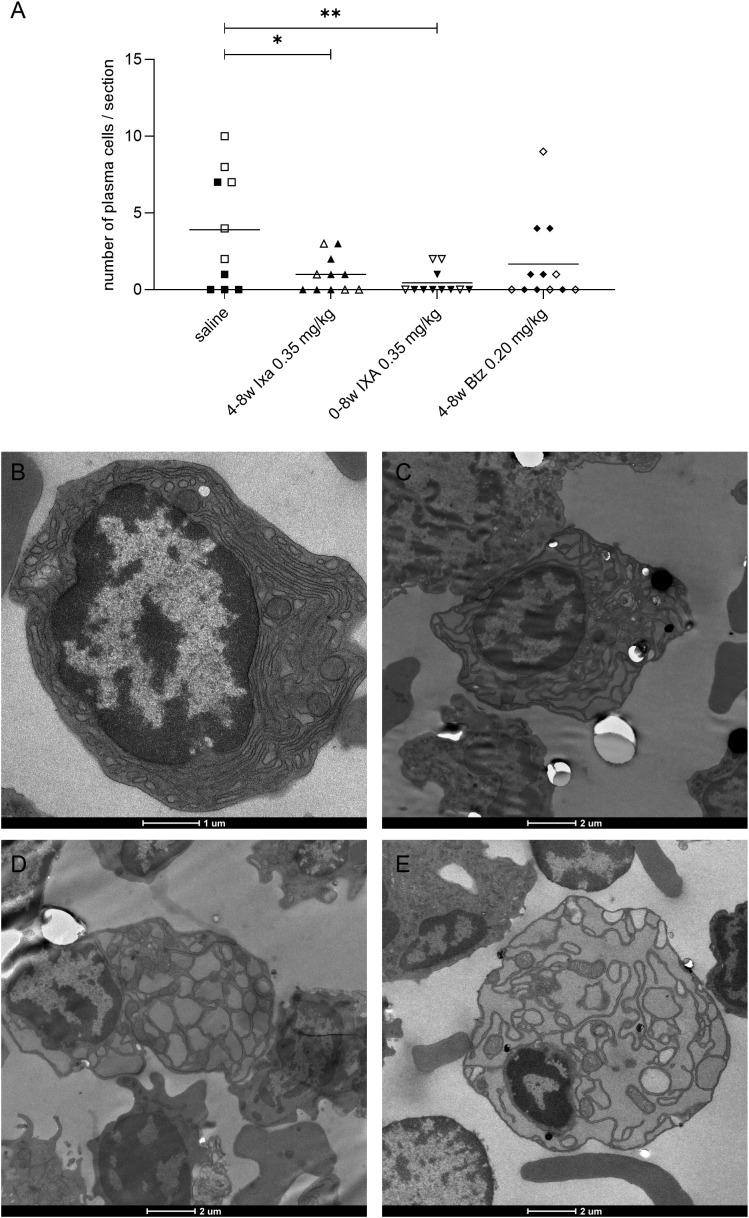
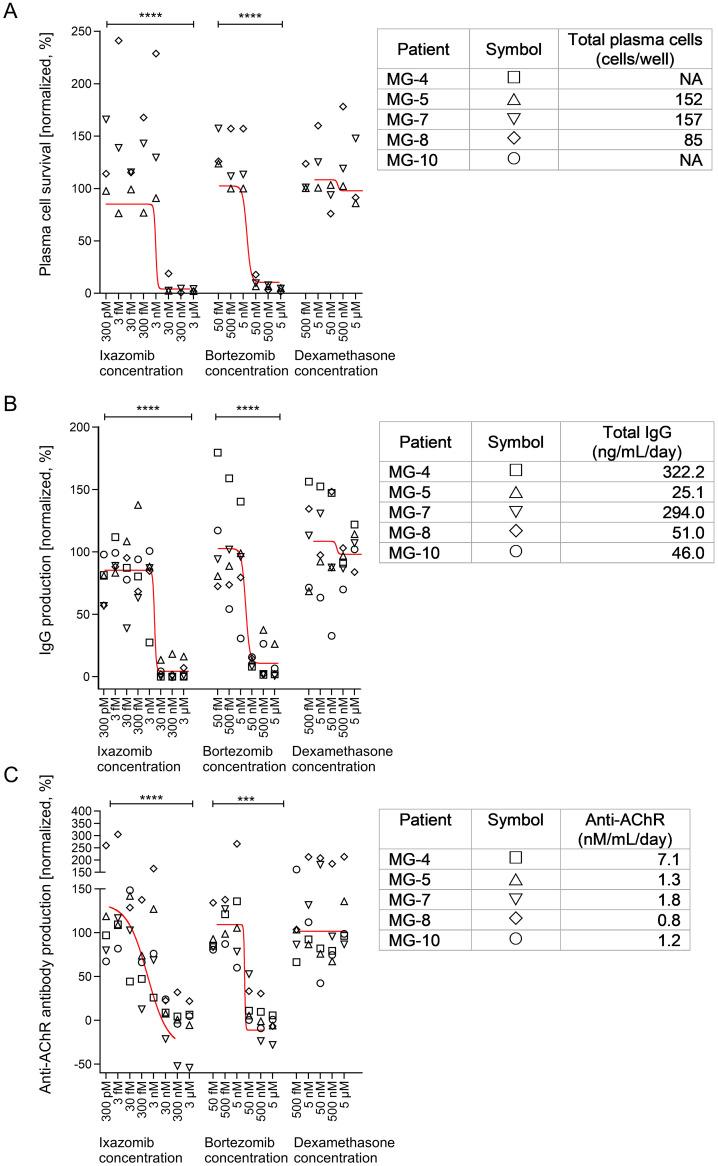
Proteasome inhibitors can eliminate malignant, alloreactive, or autoreactive plasma cells. These cells are key players in antibody-mediated autoimmune disorders and thus suitable therapeutic targets for these drugs. However, certain proteasome inhibitors cause toxic peripheral neuropathy in patients. Ixazomib (MLN9708, Ninlaro), an oral proteasome inhibitor, has a more favorable safety profile in multiple myeloma patients. Here we tested its efficacy in preventing and treating experimental autoimmune myasthenia gravis (EAMG). Female Lewis rats were treated with two subcutaneous doses of 0.35 mg/kg of ixazomib per week, starting either 4 weeks before or at disease onset; both substantially lowered final total IgG and rat acetylcholine receptor (AChR) autoantibody levels. Interestingly, two weekly doses of 0.20 mg/kg of ixazomib for the last 4 weeks did not reduce autoantibody levels. A single dose of 0.50 mg/kg was acutely toxic in rats. In cultures of thymic cells from early-onset myasthenia gravis (EOMG) patients, 30 nM ixazomib or higher almost completely eliminated plasma cells and halted their IgG and AChR antibody production. We conclude that proteasome inhibition with ixazomib effectively depletes plasma cells from MG patients and in a rat model . These results encourage further investigations into therapeutic plasma cell targeting for MG patients.
蛋白酶体抑制剂可清除恶性、同种异体反应性或自身反应性浆细胞。这些细胞是抗体介导的自身免疫性疾病的关键参与者,因此是这些药物合适的治疗靶点。然而,某些蛋白酶体抑制剂会导致患者出现毒性周围神经病变。伊沙佐米(MLN9708,Ninlaro)是一种口服蛋白酶体抑制剂,在多发性骨髓瘤患者中具有更良好的安全性。在此,我们测试了其在预防和治疗实验性自身免疫性重症肌无力(EAMG)中的疗效。雌性Lewis大鼠每周皮下注射两剂0.35 mg/kg伊沙佐米,在疾病发作前4周或疾病发作时开始给药;两者均显著降低了最终的总IgG和大鼠乙酰胆碱受体(AChR)自身抗体水平。有趣的是,在最后4周每周两次给予0.20 mg/kg伊沙佐米并未降低自身抗体水平。单剂量0.50 mg/kg对大鼠具有急性毒性。在早发型重症肌无力(EOMG)患者的胸腺细胞培养物中,30 nM或更高浓度的伊沙佐米几乎完全清除了浆细胞,并停止了它们的IgG和AChR抗体产生。我们得出结论,伊沙佐米抑制蛋白酶体可有效耗尽重症肌无力患者和大鼠模型中的浆细胞。这些结果鼓励进一步研究针对重症肌无力患者的治疗性浆细胞靶向治疗。


 Zotero 插件