
循环肿瘤DNA动态变化预测索托拉西布对KRAS p.G12C突变的晚期非小细胞肺癌的疗效。
Circulating tumor DNA dynamic variation predicts sotorasib efficacy in KRASp.G12C-mutated advanced non-small cell lung cancer.
作者信息
Passiglia Francesco, Pepe Francesco, Russo Gianluca, Garbo Edoardo, Listì Angela, Benso Federica, Scimone Claudia, Palumbo Lucia, Pluchino Monica, Minari Roberta, Bordi Paola, Cani Massimiliano, Ungaro Antonio, Ambrogio Chiara, Taulli Riccardo, Capelletto Enrica, Balbi Maurizio, Righi Luisella, Tiseo Marcello, Giannarelli Diana, Troncone Giancarlo, Novello Silvia, Malapelle Umberto
机构信息
Department of Oncology, University of Turin, S. Luigi Gonzaga Hospital-Orbassano, Turin, Italy.
Department of Public Health, University Federico II of Naples, Naples, Italy.
出版信息
Cancer. 2025 Jun 1;131(11):e35917. doi: 10.1002/cncr.35917.
BACKGROUND
The objective of this study was to investigate the correlation between circulating tumor DNA (ctDNA) KRAS G12C-mutation dynamic variations and treatment outcomes in patients with advanced non-small cell lung cancer (NSCLC) receiving sotorasib therapy in a real-world setting.
METHODS
Peripheral blood samples were prospectively collected from 32 patients at baseline, at cycle 3, and then at each radiologic assessment during sotorasib treatment. Both tissue and plasma samples were analyzed by using ultra-deep, customized next-generation sequencing (NGS) assays. Plasma samples from 27 of 32 patients also were analyzed by digital polymerase chain reaction analysis, and ctDNA dynamic variations were correlated with radiologic responses and patients' clinical outcomes.
RESULTS
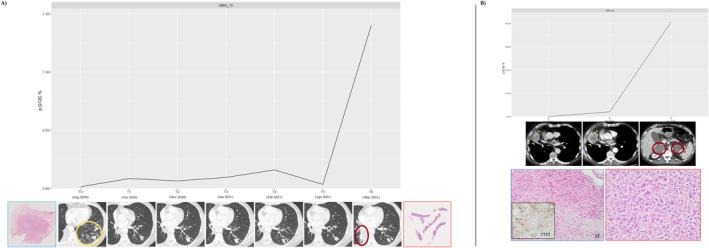
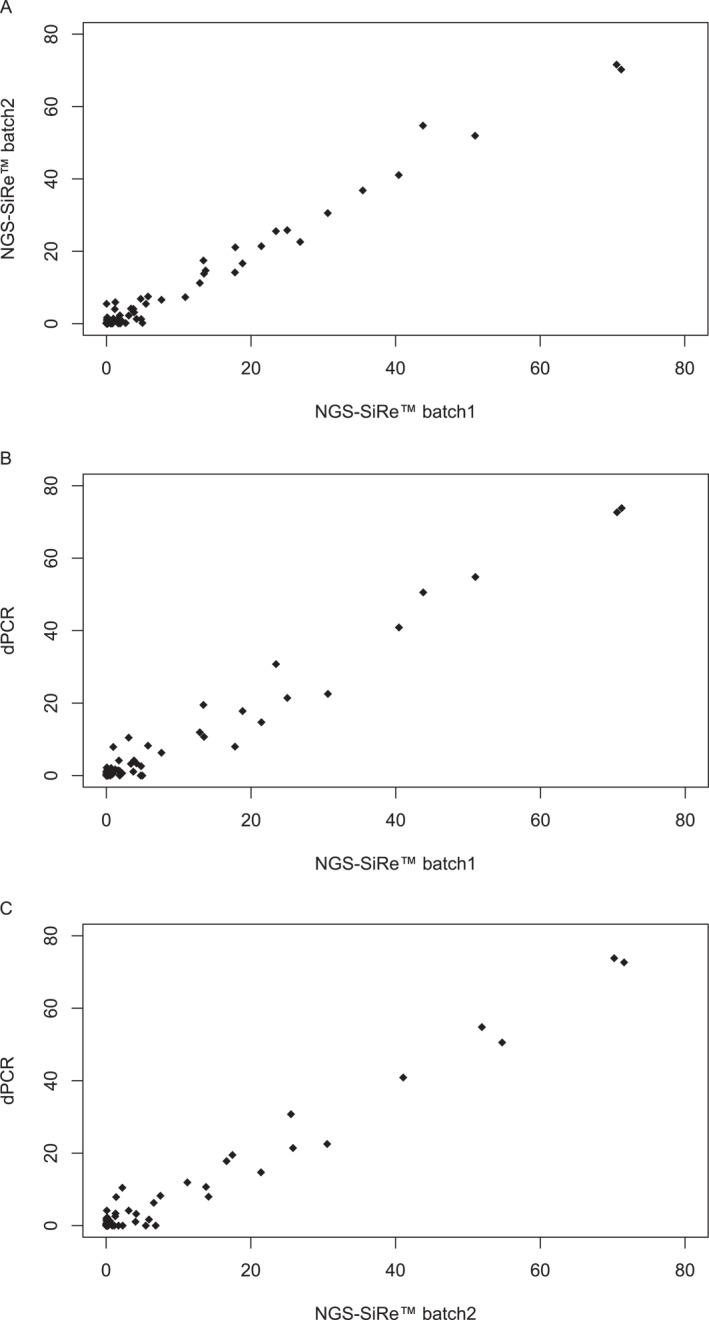
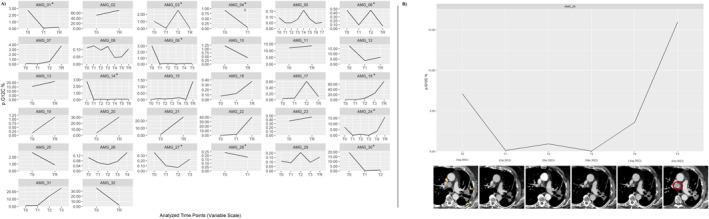
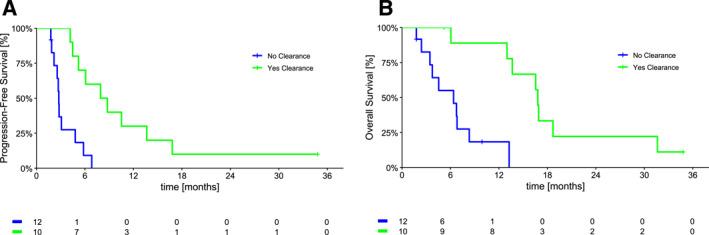
A significant correlation between NGS and digital polymerase chain reaction-detected KRAS G12C variant allelic fractions (p < .001) was observed. Patients who achieved clearance of KRAS G12C-mutant ctDNA levels had a significant improvement in the objective response rate (80% vs. 8%; p < .001), median progression-free survival (7.9 vs. 2.8 months; p < .001), and median overall survival (16.8 vs. 6.4 months; p < .001) compared with those who did not achieve clearance. The clearance of ctDNA was the only prognostic factor significantly associated with both median progression-free survival (hazard ratio, 0.15; 95% confidence interval, 0.04-0.48) and median overall survival (hazard ratio, 0.09; 95% confidence interval, 0.02-0.45) in multivariable analysis. Moreover, a dynamic increase in the KRAS G12C median variant allele fraction anticipated radiologic disease progression in 70% of patients who were evaluable at the resistance time point.
CONCLUSIONS
This study demonstrated that early clearance of KRAS G12C-mutant ctDNA predicted the clinical benefit of sotorasib in patients with advanced NSCLC, suggesting that dynamic monitoring of ctDNA levels also may anticipate sotorasib resistance.
背景
本研究的目的是在真实世界中,调查接受索托拉西布治疗的晚期非小细胞肺癌(NSCLC)患者循环肿瘤DNA(ctDNA)中KRAS G12C突变的动态变化与治疗结果之间的相关性。
方法
前瞻性收集32例患者在基线、第3周期以及索托拉西布治疗期间每次影像学评估时的外周血样本。组织和血浆样本均采用超深度定制的二代测序(NGS)检测方法进行分析。对32例患者中的27例的血浆样本也进行了数字聚合酶链反应分析,并将ctDNA的动态变化与影像学反应和患者的临床结局相关联。
结果
观察到NGS与数字聚合酶链反应检测到的KRAS G12C变异等位基因分数之间存在显著相关性(p <.001)。与未实现清除的患者相比,实现KRAS G12C突变ctDNA水平清除的患者在客观缓解率(80%对8%;p <.001)、中位无进展生存期(7.9对2.8个月;p <.001)和中位总生存期(16.8对6.4个月;p <.001)方面有显著改善。在多变量分析中,ctDNA的清除是唯一与中位无进展生存期(风险比,0.15;95%置信区间,0.04 - 0.48)和中位总生存期(风险比,0.09;95%置信区间,0.02 - 0.45)均显著相关的预后因素。此外,在耐药时间点可评估的70%患者中,KRAS G12C中位变异等位基因分数的动态增加预示着影像学疾病进展。
结论
本研究表明,KRAS G12C突变ctDNA的早期清除可预测索托拉西布对晚期NSCLC患者的临床获益,提示对ctDNA水平的动态监测也可能预测索托拉西布耐药。
 Zotero 插件