
与病理生理学相关的双酚S暴露通过破坏棕色脂肪组织调节的能量代谢加速衰老。
Pathophysiologically relevant bisphenol S exposure accelerates aging by disrupting brown adipose tissue-regulated energy metabolism.
作者信息
Zhu Man, Wang Ru, Yi Wei, Wu Beiyi, Deng Zhizhong, Zhang Zheng, Wang Chen, Zhang Dingkun, Zhang Tongtong, Wen Xue
机构信息
Department of Laboratory Medicine, West China Hospital, Sichuan University, Chengdu 610041, China.
Department of Aging Research, School of Medicine, University of Electronic Science and Technology of China, Chengdu 610050, China.
出版信息
Proc Natl Acad Sci U S A. 2025 Jun 10;122(23):e2420437122. doi: 10.1073/pnas.2420437122. Epub 2025 Jun 2.
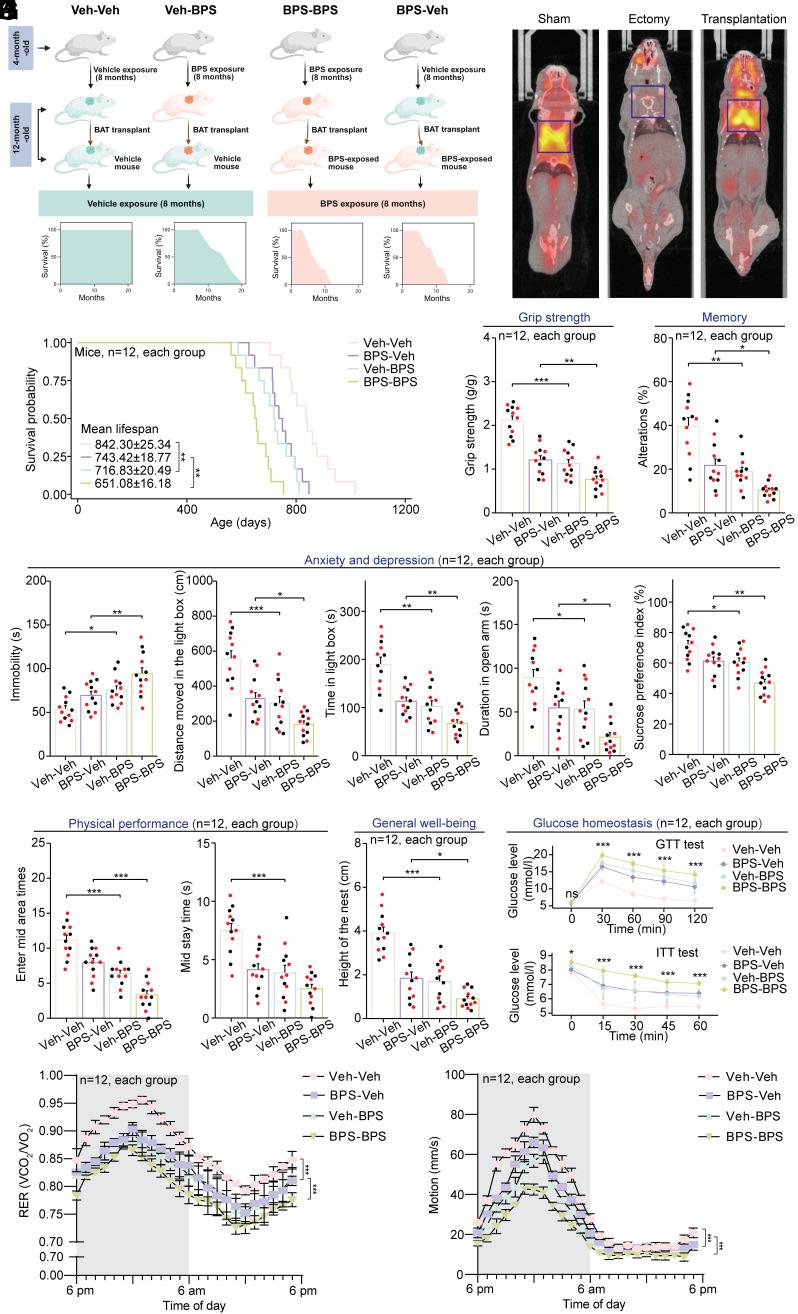
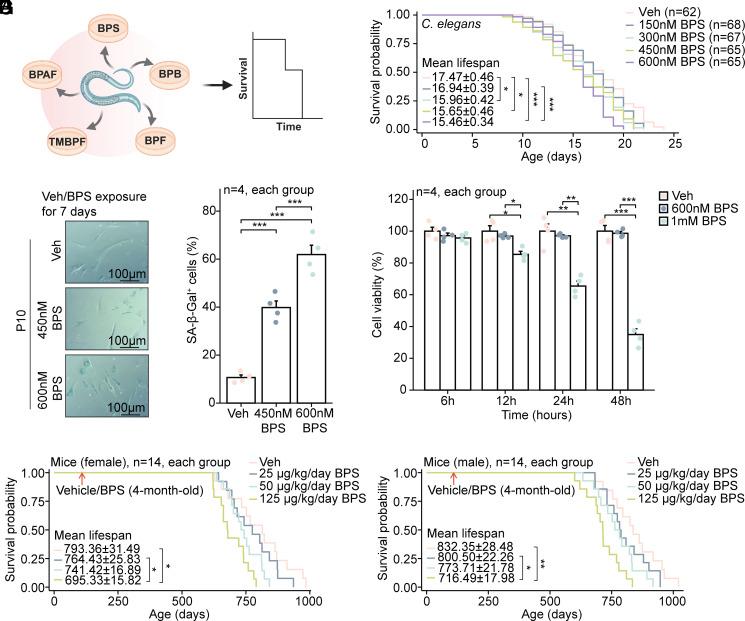
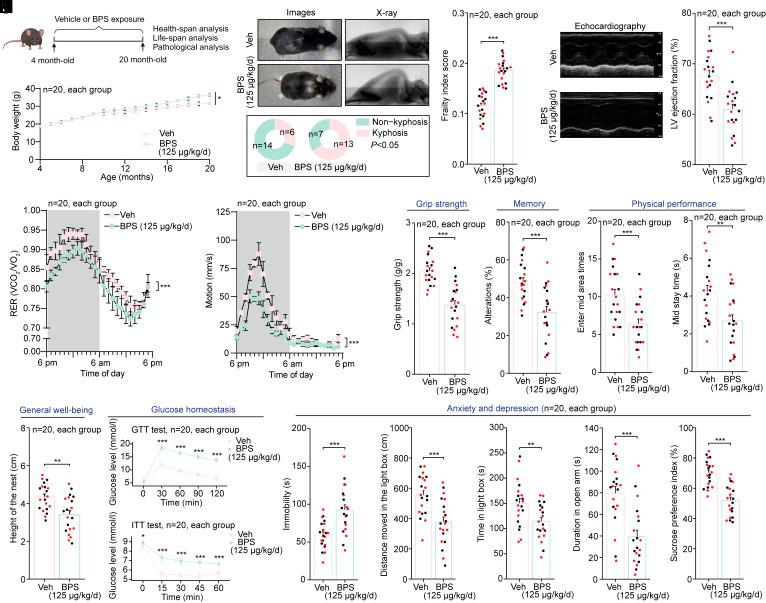
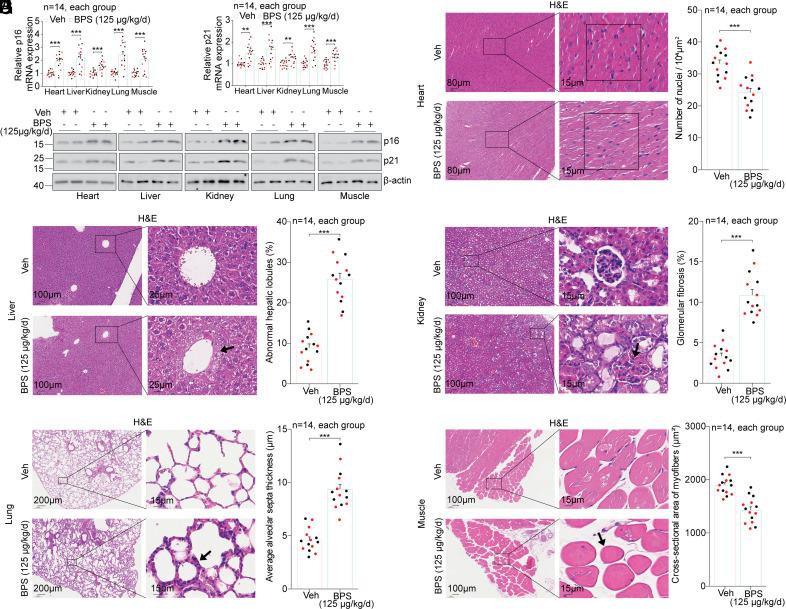
Bisphenol A (BPA) substitutes are widely used as food contact materials and consumer products, while the effects of pathophysiologically relevant concentrations of BPA substitutes on aging remain unclear. In this study, we used () to investigate the effects of five BPA substitutes [bisphenol S (BPS), bisphenol B, bisphenol F (BPF), tetramethyl BPF, and 4,4'-(Perfluoropropane-2,2-diyl)diphenol] at pathophysiologically relevant exposure levels during aging and examined the underlying mechanisms using a mouse model. Our results indicated that, among the five BPA substitutes, exposure to pathophysiologically relevant concentrations of BPS (300, 450, and 600 nM) accelerated aging in . In mice, exposure to a pathophysiologically relevant concentration of BPS (125 μg/kg/day, from 4 to 20 mo of age) similarly reduces the life and health span and accelerates aging phenotypes in multiple tissues. Further investigations demonstrated that long-term BPS exposure resulted in a significantly higher accumulation of BPS in brown adipose tissue (BAT) than in other organs. RNA sequencing analysis of BAT revealed that BPS accelerates BAT aging through multiple pathways. Importantly, transplantation of BAT from BPS-exposed mice into BPS-naive mice accelerated aging in recipients. Conversely, transplantation of BAT from unexposed mice into BPS-exposed mice significantly improved their metabolic status and delayed aging. These findings elucidate the impact of pathophysiologically relevant concentrations of BPS on the aging process and suggest that these effects are likely mediated through the disruption of BAT function.
双酚A(BPA)替代品被广泛用作食品接触材料和消费品,然而,与病理生理学相关浓度的BPA替代品对衰老的影响仍不清楚。在本研究中,我们使用()来研究五种BPA替代品[双酚S(BPS)、双酚B、双酚F(BPF)、四甲基BPF和4,4'-(全氟丙烷-2,2-二基)二酚]在衰老过程中与病理生理学相关暴露水平下的影响,并使用小鼠模型研究其潜在机制。我们的结果表明,在这五种BPA替代品中,暴露于与病理生理学相关浓度的BPS(300、450和600 nM)会加速()的衰老。在小鼠中,暴露于与病理生理学相关浓度的BPS(125μg/kg/天,从4月龄到20月龄)同样会缩短寿命和健康跨度,并加速多个组织的衰老表型。进一步的研究表明,长期暴露于BPS会导致棕色脂肪组织(BAT)中BPS的积累显著高于其他器官。对BAT的RNA测序分析表明,BPS通过多种途径加速BAT衰老。重要的是,将暴露于BPS的小鼠的BAT移植到未接触过BPS的小鼠中会加速受体的衰老。相反,将未暴露小鼠的BAT移植到暴露于BPS的小鼠中可显著改善其代谢状态并延缓衰老。这些发现阐明了与病理生理学相关浓度的BPS对衰老过程的影响,并表明这些影响可能是通过破坏BAT功能介导的。
 Zotero 插件