
将传统治疗方法与精神疾病生物医学护理相结合的挑战与机遇:从治疗师角度进行的范围综述
Challenges and opportunities for integrating traditional healing approaches with biomedical care for mental illness: A scoping review from healers' perspectives.
作者信息
Wollie Alemayehu Molla, Usher Kim, Rice Kylie, Islam Md Shahidul
机构信息
School of Health, Faculty of Medicine and Health, University of New England, Armidale, New South Wales, Australia.
Department of Psychiatry, College of Medicine and Health Sciences, Injibara University, Injibara, Ethiopia.
出版信息
PLoS One. 2025 Jun 3;20(6):e0325353. doi: 10.1371/journal.pone.0325353. eCollection 2025.
BACKGROUND
A considerable number of people receive care from traditional healers for mental illness. Integrating traditional healing practices with modern treatment may improve the outcomes for people with the symptoms of mental illness. However, there has been limited joint efforts toward integration of the two approaches. Therefore, this review is intended to summarize the challenges and opportunities of integrating traditional treatment approaches with biomedical treatment for mental illness from the perspective of traditional healers.
METHODS
Asksey and O'Malley's framework and the Preferred Reporting Items for Systematic Review and Meta-Analysis Extension for Scoping Review (PRISM-ScR) guidelines were followed to conduct this scoping review. Searches of databases, including PubMed/Medline, PsycINFO, CINAHL, Scopus, and the Web of Sciences were conducted. Additionally, Google and Google Scholar were searched for other information, including grey literature. All articles published between January 2014 and June 2024 were considered. Themes and subthemes were created using Nvivo-12 software. A thematic synthesis was used to report the evidence.
RESULT
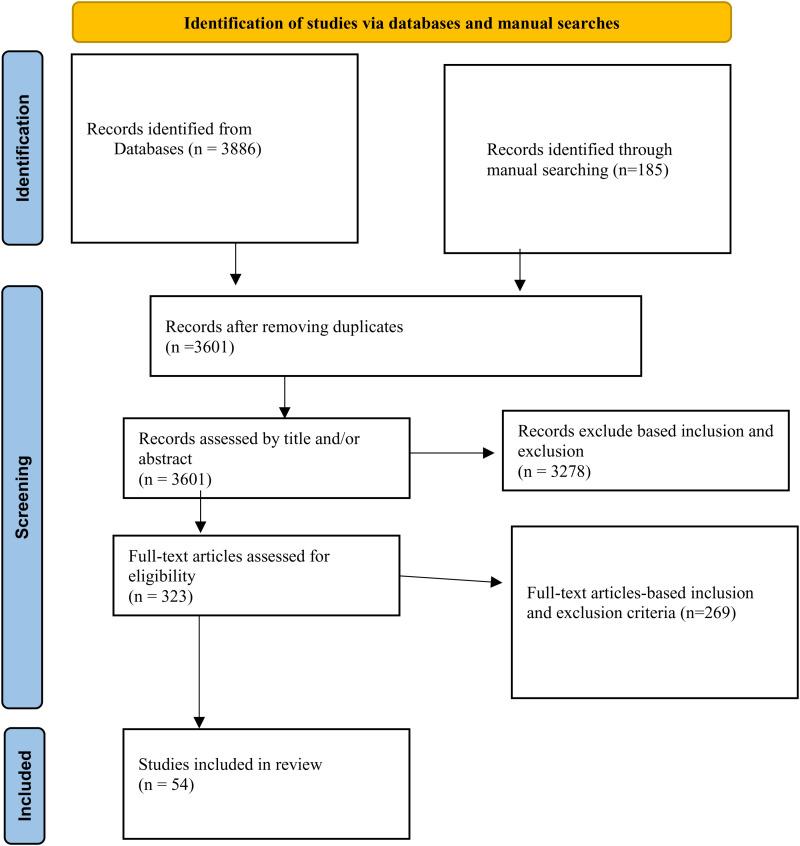
Based on the eligibility criteria, 54 of the 4071 initially identified articles were included. From the healers' perspectives, governmental policy (guidelines, recognition, education, training, and financial issues), intellectual property issues, attitude, disease understanding differences, and referral are the major challenges for the integration of traditional healing approaches with biomedical treatment for mental illness. Healers' willingness for integration, the effectiveness of the healing approaches, and the World Health Organization's recognition of traditional healing are identified as enablers for integration.
CONCLUSION
Integrative work between traditional healing approaches and biomedical services presents an opportunity to assist in addressing the treatment gap for mental illness. This review presents a synthesis of the major challenges that hinder the integration of traditional healing approaches with biomedical care, and enablers that may facilitate integration. This review of the evidence can support policymakers and other stakeholders in reducing the major challenges of integration noted by healers and maximising opportunities for collaboration. The review also highlights the need to design culturally appropriate guidelines for integration and referral between the two systems.
背景
相当多的人因精神疾病接受传统治疗师的治疗。将传统治疗方法与现代治疗相结合可能会改善有精神疾病症状者的治疗效果。然而,在将这两种方法结合起来方面,共同努力一直有限。因此,本综述旨在从传统治疗师的角度总结将传统治疗方法与生物医学治疗相结合治疗精神疾病的挑战和机遇。
方法
遵循Asksey和O'Malley的框架以及系统评价与Meta分析扩展的范围综述首选报告项目(PRISM-ScR)指南进行本范围综述。对包括PubMed/Medline、PsycINFO、CINAHL、Scopus和科学网在内的数据库进行了检索。此外,还在谷歌和谷歌学术上搜索了其他信息,包括灰色文献。考虑了2014年1月至2024年6月期间发表的所有文章。使用Nvivo-12软件创建主题和子主题。采用主题综合法报告证据。
结果
根据纳入标准,最初确定的4071篇文章中有54篇被纳入。从治疗师的角度来看,政府政策(指南、认可、教育、培训和资金问题)、知识产权问题、态度、对疾病理解的差异以及转诊是将传统治疗方法与生物医学治疗相结合治疗精神疾病的主要挑战。治疗师对整合的意愿、治疗方法的有效性以及世界卫生组织对传统治疗的认可被确定为整合的推动因素。
结论
传统治疗方法与生物医学服务之间的整合工作为解决精神疾病治疗差距提供了一个机会。本综述总结了阻碍传统治疗方法与生物医学护理整合的主要挑战以及可能促进整合的推动因素。对证据的这一综述可以支持政策制定者和其他利益相关者减少治疗师指出的整合主要挑战,并最大限度地扩大合作机会。该综述还强调需要设计适合文化的两种系统之间整合和转诊的指南。

 Zotero 插件