
使用不同采血管对游离DNA自动提取指标的评估
Evaluation of automatic cell free DNA extraction metrics using different blood collection tubes.
作者信息
Andersson Daniel, Kristiansson Helena, Luna Santamaría Manuel, Zafar Huma, Mijakovic Ivan, Torinsson Naluai Åsa, Ståhlberg Anders
机构信息
Sahlgrenska Center for Cancer Research, Department of Laboratory Medicine, Institute of Biomedicine, Sahlgrenska Academy, University of Gothenburg, 413 90, Gothenburg, Sweden.
Department of Clinical Genetics and Genomics, Sahlgrenska University Hospital, 413 45, Gothenburg, Sweden.
出版信息
Sci Rep. 2025 Jun 3;15(1):19364. doi: 10.1038/s41598-025-03508-4.
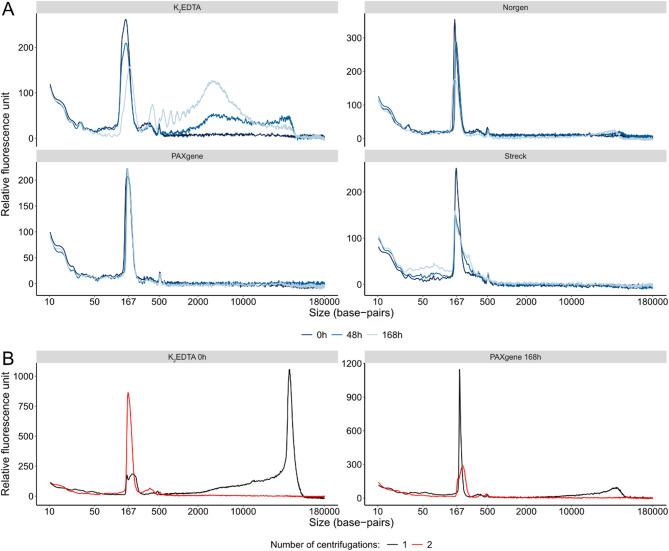
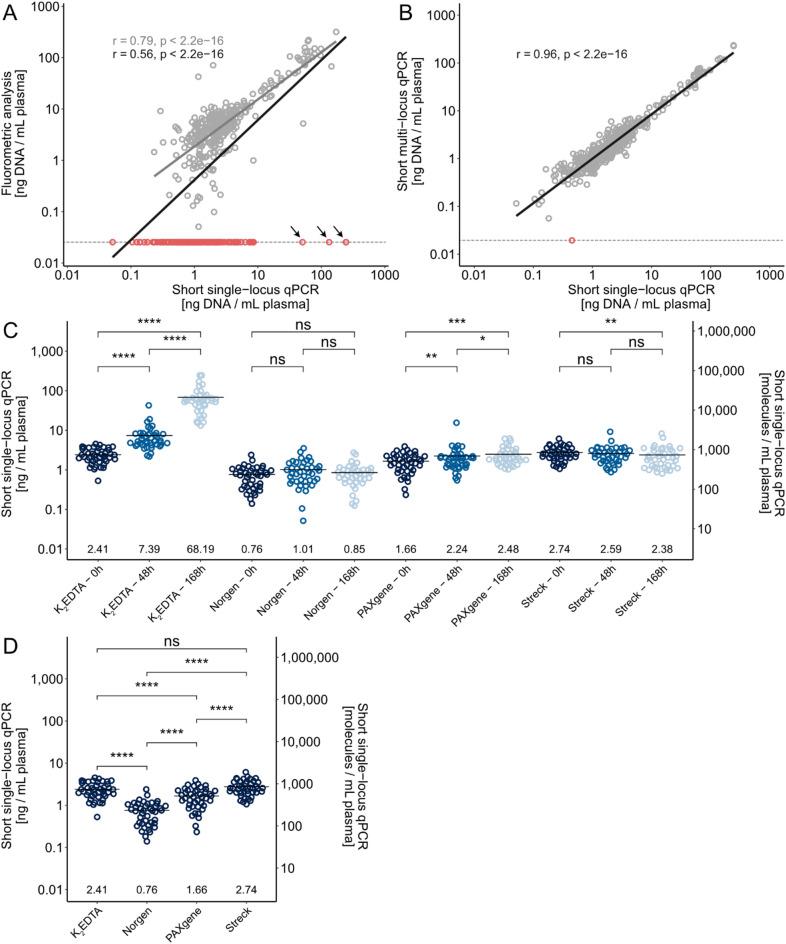
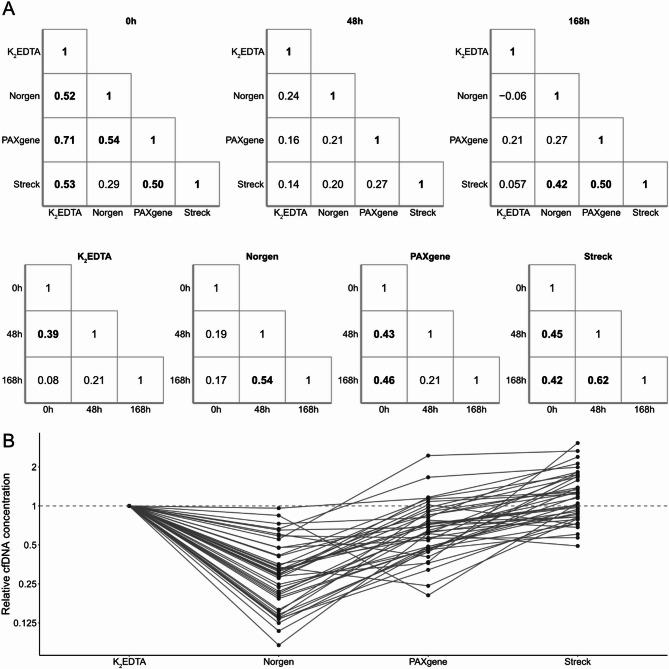
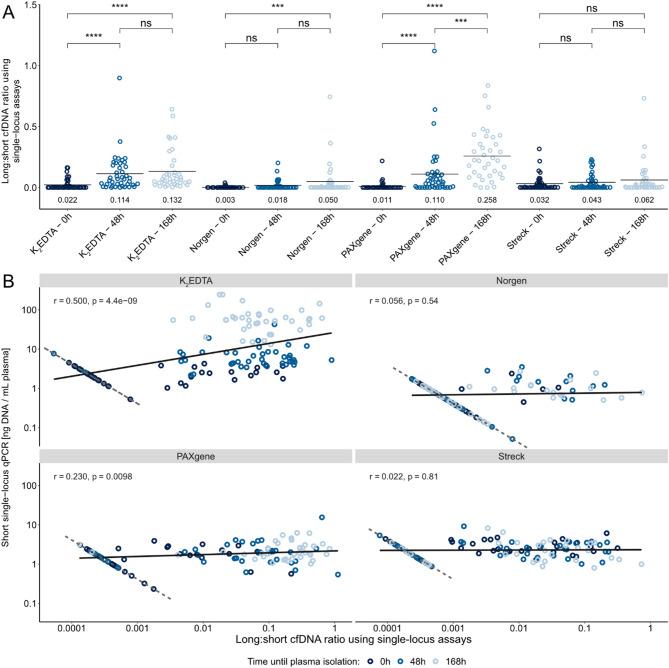
Liquid biopsies and cell-free DNA (cfDNA) analysis are used in numerous clinical applications. The amount of cfDNA is generally limited and many approaches require assessment of individual molecules. Optimized pre-analytical steps are therefore fundamental for accurate interpretation. Here, we established an automated extraction approach providing cfDNA of high yield and quality. We analyzed 649 blood plasma samples collected from 23 healthy individuals and assessed the performance of four different blood collection tubes, time between sampling and plasma isolation and number of centrifugation steps. CfDNA was quantified by fluorometric analysis and quantitative polymerase chain reaction, while contaminating cellular DNA was assessed by quantitative polymerase chain reaction and parallel capillary electrophoresis. Data showed that cfDNA yield depends on both choice of blood collection tube and time between sampling and plasma isolation. Plasma isolated directly after sampling in KEDTA tubes and plasma isolated within one week from preservative Streck tubes provided high cfDNA yield. We demonstrate that contaminating cellular DNA may be challenging to detect and that quantitative polymerase chain reaction and parallel capillary electrophoresis provide complementary information. In summary, reliable cfDNA analysis requires optimized experimental workflows, where the effects of pre-analytical factors should be considered in study designs and in clinical implementations.
液体活检和游离DNA(cfDNA)分析被用于众多临床应用中。cfDNA的量通常有限,许多方法需要对单个分子进行评估。因此,优化分析前步骤对于准确解读至关重要。在此,我们建立了一种自动化提取方法,可提供高产率和高质量的cfDNA。我们分析了从23名健康个体采集的649份血浆样本,并评估了四种不同采血管、采样与血浆分离之间的时间以及离心步骤数的性能。通过荧光分析和定量聚合酶链反应对cfDNA进行定量,同时通过定量聚合酶链反应和平行毛细管电泳评估污染的细胞DNA。数据表明,cfDNA产量取决于采血管的选择以及采样与血浆分离之间的时间。在采样后直接在KEDTA管中分离的血浆以及在防腐剂Streck管中一周内分离的血浆提供了高cfDNA产量。我们证明,检测污染的细胞DNA可能具有挑战性,并且定量聚合酶链反应和平行毛细管电泳提供了互补信息。总之,可靠的cfDNA分析需要优化的实验工作流程,在研究设计和临床实施中应考虑分析前因素的影响。

 Zotero 插件