
H5N1 2.3.4.4b:哺乳动物适应性及大流行出现风险综述
H5N1 2.3.4.4b: a review of mammalian adaptations and risk of pandemic emergence.
作者信息
Capelastegui Fernando, Goldhill Daniel H
机构信息
Department of Pathobiology and Population Sciences, Royal Veterinary College, Hatfield, UK.
出版信息
J Gen Virol. 2025 Jun;106(6). doi: 10.1099/jgv.0.002109.
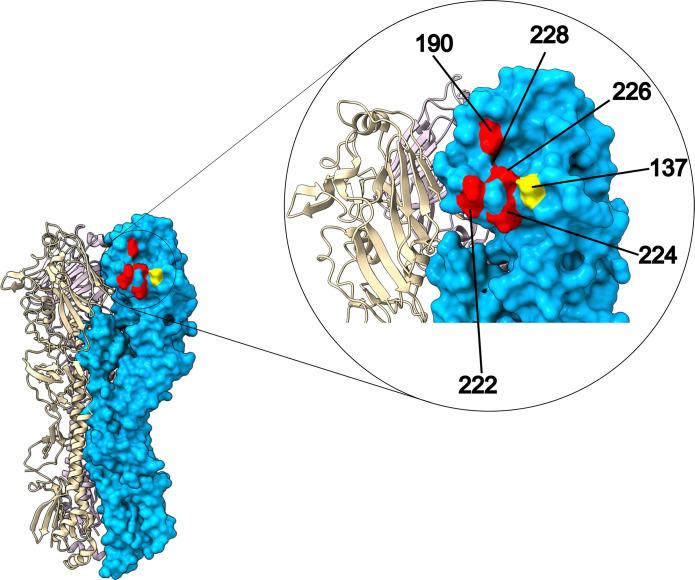
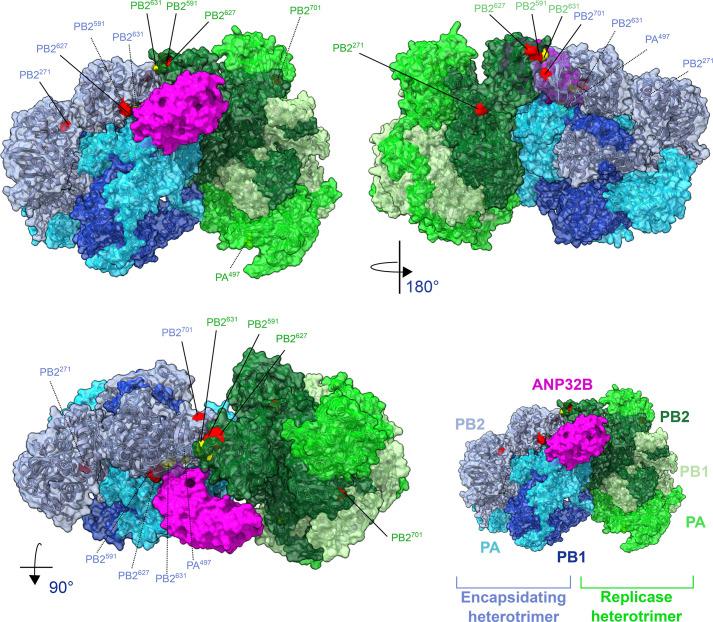
Avian influenza viruses can cause severe disease when they spill over into mammalian and human hosts. H5N1 clade 2.3.4.4b has spread globally since 2021, decimating avian species, and has spilled over into mammalian species, causing sporadic infections and fatal outbreaks in sea lions, cats, mink and dairy cattle. Increased human cases of H5N1 are fuelling concern that H5N1 could soon adapt to become a new pandemic virus. Adaptive mutations have emerged following spillover, which support H5N1 outbreaks in mammalian populations and include changes to the PB2 such as E627K, D701N, M631L and T271A. Further changes to haemagglutinin, altering binding preference to human-like 2,6 sialic acid receptors have yet to be seen. Here, we review the adaptations that have emerged in mammals throughout the 2.3.4.4b outbreak and the molecular mechanisms behind these mutations to assess the pandemic risk of this virus.
禽流感病毒传播到哺乳动物和人类宿主时可引发严重疾病。H5N1进化分支2.3.4.4b自2021年以来已在全球传播,致使禽类大量死亡,还传播到了哺乳动物物种,在海狮、猫、水貂和奶牛中引发了散发性感染和致命疫情。H5N1人类病例的增加引发了人们对H5N1可能很快适应成为一种新的大流行病毒的担忧。病毒溢出后出现了适应性突变,这些突变支持H5N1在哺乳动物种群中爆发,包括PB2基因的变化,如E627K、D701N、M631L和T271A。血凝素尚未出现进一步变化,改变其对类人2,6唾液酸受体的结合偏好。在此,我们回顾了在2.3.4.4b疫情期间哺乳动物中出现的适应性变化以及这些突变背后的分子机制,以评估该病毒的大流行风险。


 Zotero 插件