
野生小菊头蝠对人造光的行为和转录组反应。
Behavioral and transcriptomic responses of wild least horseshoe bats to artificial light.
作者信息
Deng Yingchun, Luo Bo, Liu Wenqin, Zhu Yicheng, Wang Hui, Wang Jing, Li Feng, Gao Huimin, He Mengzhouran, Zhang Hanyu, Jiang Yunke, Feng Jiang
机构信息
Jilin Provincial Key Laboratory of Animal Resource Conservation and Utilization, Northeast Normal University, 2555 Jingyue Street, Changchun 130117, China.
Key Laboratory of Southwest China Wildlife Resources Conservation of Ministry of Education, China West Normal University, 1# Shida Road, Nanchong 637009, China.
出版信息
iScience. 2025 Apr 24;28(5):112525. doi: 10.1016/j.isci.2025.112525. eCollection 2025 May 16.
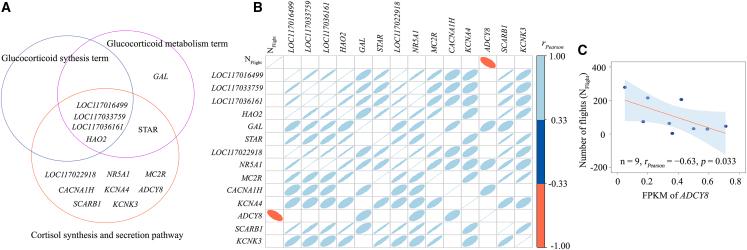
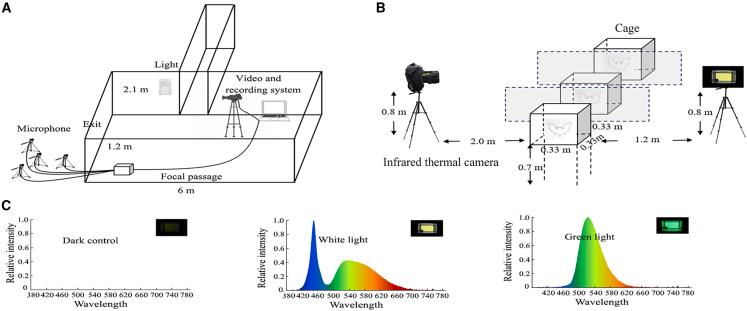
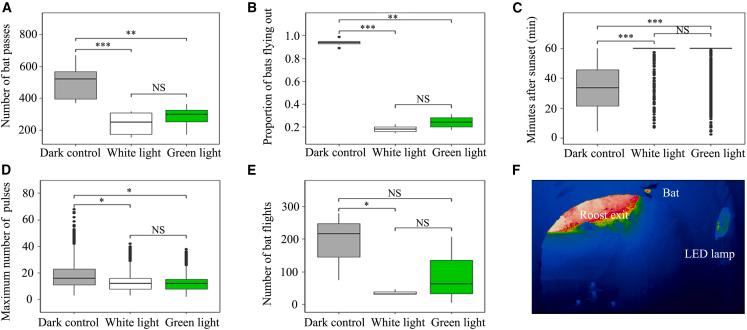
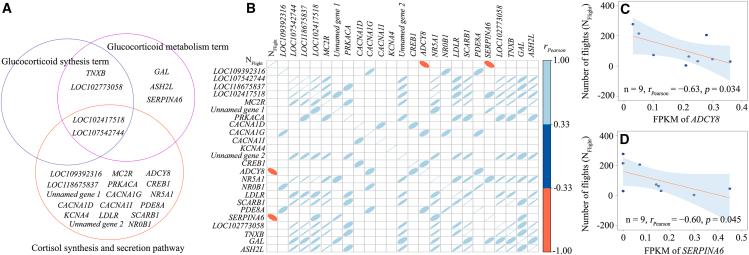
Artificial light has altered nighttime environments, jeopardizing the fitness of organisms. While many nocturnal animals avoid artificial light, the molecular mechanisms behind this phenomenon remain elusive. This study aimed to explore the behavioral and transcriptomic responses of least horseshoe bats () to artificial light. We manipulated three lighting conditions (i.e., dark control, white light, and green light) inside bat roost. We assessed behavioral responses and gene expressions in the adrenal gland-kidney complexes and brains of bats. Our analyses showed that white and green light caused a decline in bat flight activity and the number of echolocation vocalizations per pass. White and green light activated gene expressions responsible for glucocorticoid synthesis and metabolism. The flight activity of bats was negatively associated with expression levels of and genes. These findings imply that gene expressions involved in glucocorticoid signaling pathways affect light aversion in wild bats.
人工光改变了夜间环境,危及生物的健康。虽然许多夜行性动物会避开人工光,但这一现象背后的分子机制仍不清楚。本研究旨在探究大足鼠耳蝠对人工光的行为和转录组反应。我们在蝙蝠栖息地内设置了三种光照条件(即黑暗对照、白光和绿光)。我们评估了蝙蝠肾上腺-肾脏复合体和大脑中的行为反应和基因表达。我们的分析表明,白光和绿光导致蝙蝠飞行活动减少以及每次飞行中回声定位叫声的数量减少。白光和绿光激活了负责糖皮质激素合成和代谢的基因表达。蝙蝠的飞行活动与 和 基因的表达水平呈负相关。这些发现表明,糖皮质激素信号通路中涉及的基因表达会影响野生蝙蝠对光的厌恶。


 Zotero 插件