
整合与圆满:从生命历程视角看中国老年人的生活智慧与幸福
Integration and completion: life wisdom and happiness of Chinese older adults from a life course perspective.
作者信息
Cheng Sheng-Li, Zhang Xin, Liu Shushan, Zhao Chenxu, Bi Sizhen
机构信息
School of Philosophy and Social Development, Shandong University, Jinan, China.
Bussiness School, Shandong Agriculture and Engineering University, Jinan, China.
出版信息
Front Public Health. 2025 May 16;13:1575099. doi: 10.3389/fpubh.2025.1575099. eCollection 2025.
INTRODUCTION
Life course theory posits that historical events that transpired in the past shape an individual's well-being. In the last century, China experienced a series of significant events in rapid succession, including the Anti-Japanese War (AJW), the Civil War (CW), the Great Famine (GF), the Cultural Revolution (CR), and the Reform and Opening of China (ROC). These early life experiences may have lasting effects on older adults. Concurrently, given the discrepancies in life course, there may be discrepancies in well-being and perceptions of life between Chinese and Western older adults.
METHODS
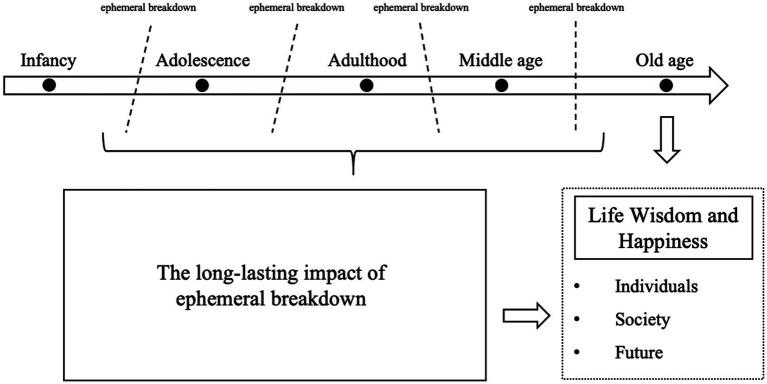
A qualitative study was conducted within a constructivist paradigm. In-depth interviews were carried out with 16 older adults using a standardized inventory. A theoretical framework was constructed through the effects of temporary breakdown on the life course and "vital involvement in the necessary disinvolvements of old age (VINDOA)." Data were coded using the Nvivo-12 software.
RESULTS
The themes of well-being and life wisdom among Chinese older adults centered on (1) valuing education, strong family ties, and active social participation, which were associated with personal experiences of well-being. (2) Satisfaction and gratitude for social welfare, being happy and worried about current social situation in the same time, which are related to older adults' values of society. (3) Expectations, encouragement, and transmission of wisdom to youth are related to their views of young people and youthfulness.
CONCLUSION AND DISCUSSION
A key finding is that how older adults perceive life strongly influences their present experiences and sense of well-being. In addition, the social class in which older people live plays an important role in the connection between a challenging past and a fulfilling present. Furthermore, social development has a positive impact on the well-being of older adults, while the level of social participation of older adult people exerts a further influence on their own well-being and their capacity to contribute to society.
引言
生命历程理论认为,过去发生的历史事件塑造了个体的幸福感。在上个世纪,中国接连经历了一系列重大事件,包括抗日战争、内战、大饥荒、文化大革命以及改革开放。这些早年经历可能对老年人产生持久影响。同时,鉴于生命历程的差异,中国和西方老年人在幸福感和生活认知方面可能存在差异。
方法
在建构主义范式下进行了一项定性研究。使用标准化量表对16名老年人进行了深入访谈。通过暂时中断对生命历程的影响以及“积极参与老年必要的超脱(VINDOA)”构建了一个理论框架。使用Nvivo - 12软件对数据进行编码。
结果
中国老年人的幸福感和生活智慧主题集中在:(1)重视教育、紧密的家庭关系和积极的社会参与,这与个人的幸福感体验相关。(2)对社会福利的满意和感激,同时对当前社会状况既感到高兴又有所担忧,这与老年人的社会价值观有关。(3)对年轻人的期望、鼓励以及智慧的传承与他们对年轻人和青春的看法有关。
结论与讨论
一个关键发现是老年人对生活的认知如何强烈影响他们当前的体验和幸福感。此外,老年人所处的社会阶层在充满挑战的过去与充实的现在之间的联系中起着重要作用。再者,社会发展对老年人的幸福感有积极影响,而老年人的社会参与程度对他们自身的幸福感以及为社会做出贡献的能力有进一步影响。
 Zotero 插件