
全身炎症反应指数在胶质瘤患者中的预后价值:一项荟萃分析
Prognostic value of systemic inflammation response index in patients with glioma: a meta-analysis.
作者信息
Jiang Yizhen, Zhou Lin
机构信息
Department of Medical Oncology, Huzhou Central Hospital, Affiliated Central Hospital of Huzhou University, Huzhou, Zhejiang, China.
Clinical Laboratory, Zhejiang Xinda Hospital, Huzhou, Zhejiang, China.
出版信息
Front Immunol. 2025 May 23;16:1576845. doi: 10.3389/fimmu.2025.1576845. eCollection 2025.
BACKGROUND
The systemic inflammation response index (SIRI) has been investigated for its prognostic relevance in patients with glioma; however, findings remain inconsistent. Therefore, this meta-analysis aimed to clarify the prognostic value of SIRI in glioma.
METHODS
PubMed, Web of Science, Embase, Cochrane Library, and CNKI were systematically searched through December 28, 2024. Pooled hazard ratios (HRs) with 95% confidence intervals (CIs) were calculated to assess the association between SIRI and glioma prognosis.
RESULTS
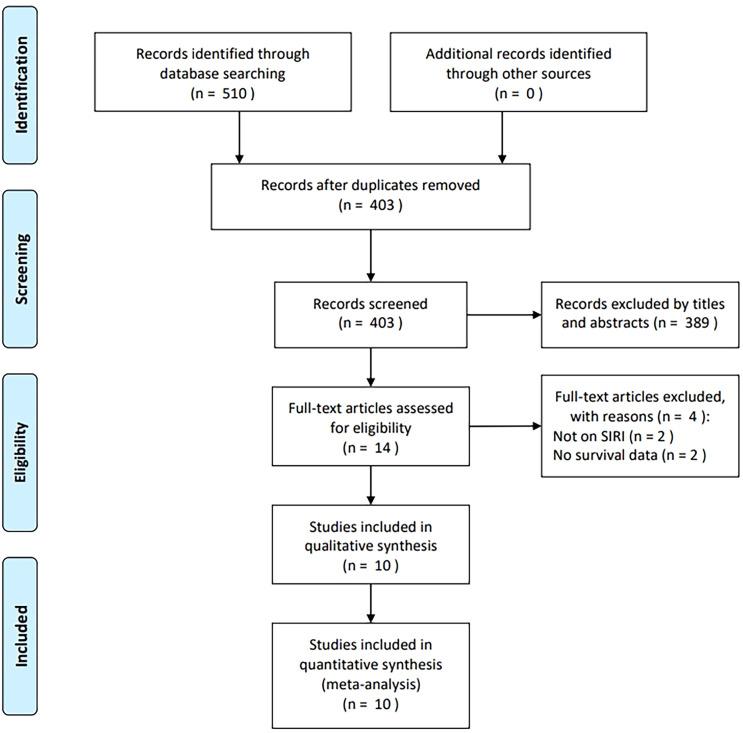
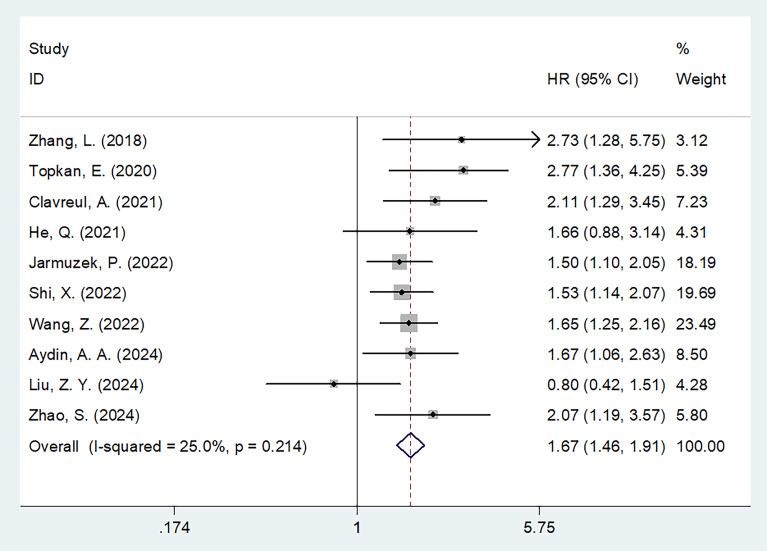
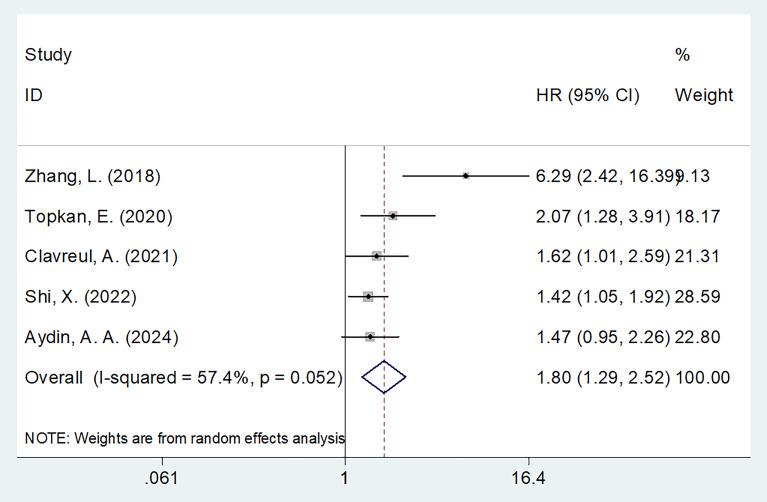
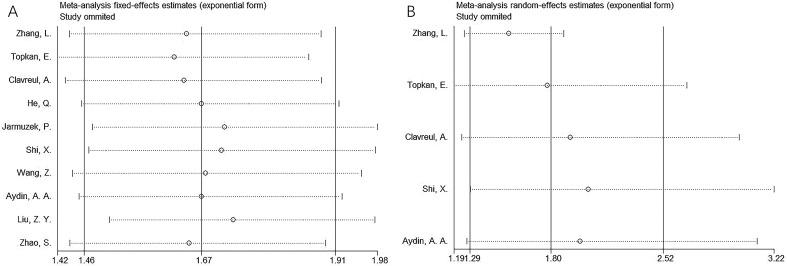
A total of 10 studies including 1,942 participants were analyzed. Elevated SIRI was significantly associated with poorer overall survival (OS) (HR=1.67, 95% CI=1.46-1.91, p<0.001) and shorter progression-free survival (PFS) (HR=1.80, 95% CI=1.29-2.52, p=0.001). Subgroup analyses indicated that the prognostic value of SIRI for OS and PFS was consistent regardless of sample size, pathological subtype, cutoff value, or type of survival analysis (p<0.05). Sensitivity and publication bias analyses confirmed the robustness of the results.
CONCLUSION
This meta-analysis demonstrates that high SIRI is a significant predictor of OS and PFS in patients with glioma. SIRI may serve as a promising prognostic biomarker in glioma-related clinical practice.
背景
系统炎症反应指数(SIRI)对胶质瘤患者的预后相关性已得到研究;然而,研究结果仍不一致。因此,本荟萃分析旨在阐明SIRI在胶质瘤中的预后价值。
方法
系统检索了截至2024年12月28日的PubMed、Web of Science、Embase、Cochrane图书馆和中国知网。计算合并风险比(HRs)及95%置信区间(CIs),以评估SIRI与胶质瘤预后之间的关联。
结果
共分析了10项研究,包括1942名参与者。SIRI升高与较差的总生存期(OS)(HR=1.67,95%CI=1.46-1.91,p<0.001)和较短的无进展生存期(PFS)(HR=1.80,95%CI=1.29-2.52,p=0.001)显著相关。亚组分析表明,无论样本量、病理亚型、临界值或生存分析类型如何,SIRI对OS和PFS的预后价值都是一致的(p<0.05)。敏感性和发表偏倚分析证实了结果的稳健性。
结论
本荟萃分析表明,高SIRI是胶质瘤患者OS和PFS的重要预测指标。SIRI可能成为胶质瘤相关临床实践中有前景的预后生物标志物。

 Zotero 插件