
迟发性类风湿关节炎:临床特征、诊断挑战及治疗方法
Late-onset rheumatoid arthritis: clinical features, diagnostic challenges, and treatment approaches.
作者信息
Zimba Olena, Baimukhamedov Chokan, Kocyigit Burhan Fatih
机构信息
Department of Rheumatology, Immunology and Internal Medicine, University Hospital in Krakow, Krakow, Poland.
National Institute of Geriatrics, Rheumatology and Rehabilitation, Warsaw, Poland.
出版信息
Rheumatol Int. 2025 Jun 9;45(6):152. doi: 10.1007/s00296-025-05908-1.
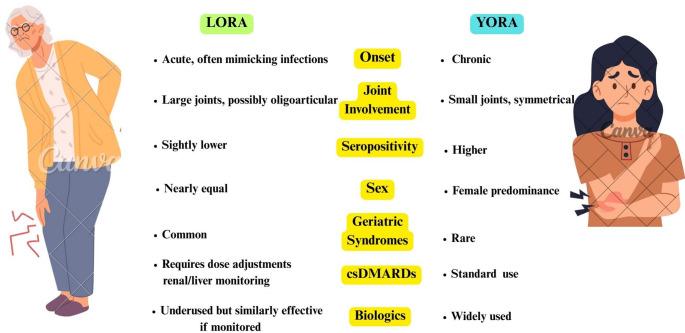
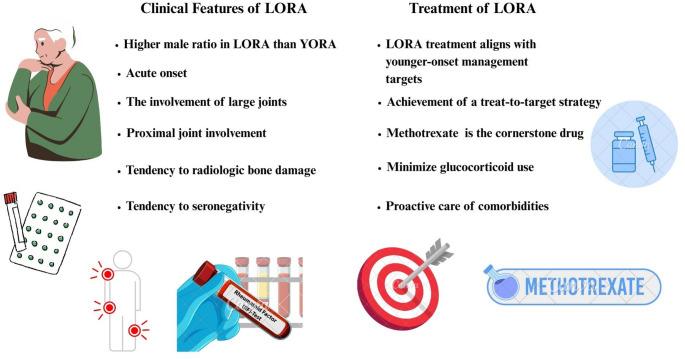
Late-Onset Rheumatoid Arthritis (LORA) is receiving increased clinical attention due to global aging trends. LORA presents distinct diagnostic, clinical, and therapeutic challenges. It often presents with a balanced gender distribution, acute onset, preferential involvement of larger joints, and decreased seropositivity. The diagnostic process is complex due to atypical presentations, comorbidities, and limitations of classification criteria, which insufficiently address the heterogeneity of LORA phenotypes. Patients with LORA often experience age-related geriatric syndromes, including frailty, cognitive decline, and malnutrition, in addition to comorbid cardiovascular disorders, pulmonary involvement, oncologic conditions, and osteoporosis. All these factors confound disease progression and treatment strategies, necessitating careful consideration of polypharmacy and modified drug metabolism. While the treatment principles largely align with those of Younge-Onset Rheumatoid Arthiritis (YORA), LORA management requires individualized approaches. Available evidence suggests that with proper monitoring, disease-modifying anti-rheumatic drugs (DMARDs) are safe and effective for older adults. Glucocorticoids should be minimized due to potential detrimental effects. Despite elevated baseline disease activity and functional deterioration, effectively managed LORA patients may achieve disease control similar to that of younger individuals. This review advocates for age-adjusted diagnostic strategies and patient-centered care models tailored to the needs of older RA patients. Addressing these unmet needs may enhance outcomes and quality of life for the growing population of LORA patients.
由于全球老龄化趋势,迟发性类风湿关节炎(LORA)正受到越来越多的临床关注。LORA带来了独特的诊断、临床和治疗挑战。它通常表现为性别分布均衡、急性起病、较大关节优先受累以及血清阳性率降低。由于临床表现不典型、合并症以及分类标准的局限性,诊断过程较为复杂,这些分类标准不足以应对LORA表型的异质性。LORA患者除了合并心血管疾病、肺部受累、肿瘤疾病和骨质疏松症外,还常出现与年龄相关的老年综合征,包括身体虚弱、认知能力下降和营养不良。所有这些因素都混淆了疾病进展和治疗策略,因此需要仔细考虑联合用药和药物代谢的改变。虽然治疗原则在很大程度上与早发性类风湿关节炎(YORA)一致,但LORA的管理需要个性化方法。现有证据表明,在适当监测下,改善病情抗风湿药(DMARDs)对老年人是安全有效的。由于可能存在有害影响,应尽量减少糖皮质激素的使用。尽管基线疾病活动度升高和功能恶化,但有效管理的LORA患者可能实现与年轻患者相似的疾病控制。本综述提倡针对老年类风湿关节炎患者的需求调整年龄相关的诊断策略和以患者为中心的护理模式。满足这些未满足的需求可能会改善越来越多LORA患者的治疗效果和生活质量。
 Zotero 插件