
沉浸式虚拟世界环境中的社区卫生工作者糖尿病预防意识培训:混合方法试点研究
Community Health Worker Diabetes Prevention Awareness Training in an Immersive Virtual World Environment: Mixed Methods Pilot Study.
作者信息
Ruggiero Laurie, Quinn Lauretta, Castillo Amparo, Monahan Colleen, Boughton Price Leticia, Hernandez Wandy
机构信息
Health Behavior and Nutrition Sciences, College Of Health Sciences, University of Delaware, Rm 315, 100 Discovery Blvd, Newark, DE, 19716, United States, 1 302-831-8506.
Biobehavioral Nursing Science, College of Nursing, University of Illinois at Chicago, Chicago, IL, United States.
出版信息
JMIR Form Res. 2025 Jun 10;9:e64051. doi: 10.2196/64051.
BACKGROUND
The burden of diabetes and obesity are greater for some racial-ethnic minority groups in the United States, including non-Hispanic blacks, underscoring the importance of raising community awareness of diabetes prevention. Community health workers (CHWs) play a critical role in extending our reach into communities to raise awareness of diabetes prevention. Systematic training and support are central to their work. Remote approaches have been helpful in delivering training to overcome common participation barriers. One remote approach, immersive 3D virtual worlds (VW) offer a unique approach to providing remote training incorporating engaging interactive contextual learning opportunities.
OBJECTIVE
This study aimed to implement and evaluate an internet-based 3D VW model to remotely deliver an adapted CHW training program on diabetes prevention awareness for racial-ethnic minority communities.
METHODS
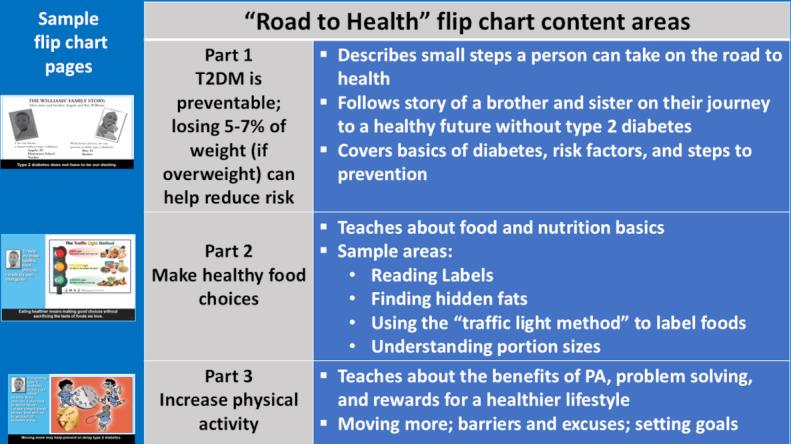
A sequential mixed methods design, including a pre-post pilot and explanatory phase, examined the feasibility, acceptability, and impact of the VW training. Female CHWs who self-identified as African American or Black or African Ancestry, between 21-65 years of age, fluent in English, and with risk factors for diabetes were recruited. CHW input was gathered to adapt a Centers for Disease Control and Prevention's CHW diabetes prevention awareness training and the VW environment for this study. The final adapted training was standardized for delivery over 10 weeks. Quantitative and qualitative data were collected to examine acceptability, feasibility, and impact of the training model. Primary quantitative pre-post outcomes included training content knowledge and confidence; and secondary behavioral outcomes included motivation for lifestyle change and eating habits. Focus group feedback was collected on acceptability and feasibility during the explanatory phase. Quantitative descriptive and qualitative thematic analysis approaches were used to examine the acceptability, feasibility, and impact of the VW training model.
RESULTS
A total of 26 CHWs initiated the study and 22 completed the postassessment. The majority of participants reported that their expectations were met across all sessions and content topics. Participants generally reported satisfaction with the information provided (20/22, 91% rated very good-excellent) and high levels of interactivity in the training (17/22, 77% rated very good-excellent). Results of the posttraining acceptability and feasibility quantitative survey and qualitative feedback were generally positive. Mean pre-post values improved across all quantitative outcomes for the VW training group (eg, 92% [11/12] improved in knowledge; 62% [8/13]-77% [10/13] improved across eating habits measures). Explanatory focus group findings were generally positive, highlighting satisfaction with the overall training, its interactivity, and content. The main constructive feedback was related to providing more training and support in using the avatar.
CONCLUSIONS
Findings on the acceptability, feasibility, and preliminary impact of the VW training model are promising and support continued use, development, and research on this approach.
背景
在美国,包括非西班牙裔黑人在内的一些种族和少数族裔群体面临着更大的糖尿病和肥胖负担,这凸显了提高社区糖尿病预防意识的重要性。社区卫生工作者(CHW)在拓展我们与社区的联系以提高糖尿病预防意识方面发挥着关键作用。系统的培训和支持是他们工作的核心。远程方法有助于提供培训,以克服常见的参与障碍。一种远程方法,沉浸式3D虚拟世界(VW)提供了一种独特的方式来提供远程培训,其中包含引人入胜的交互式情境学习机会。
目的
本研究旨在实施和评估基于互联网的3D VW模型,以远程为种族和少数族裔社区提供关于糖尿病预防意识的适应性CHW培训计划。
方法
采用顺序混合方法设计,包括前后试点和解释阶段,研究VW培训的可行性、可接受性和影响。招募了自我认定为非裔美国人或黑人或有非洲血统、年龄在21至65岁之间、英语流利且有糖尿病风险因素的女性CHW。收集CHW的意见,以改编美国疾病控制与预防中心的CHW糖尿病预防意识培训以及本研究的VW环境。最终改编后的培训在10周内进行标准化交付。收集定量和定性数据,以检查培训模型的可接受性、可行性和影响。主要的前后定量结果包括培训内容知识和信心;次要的行为结果包括生活方式改变的动机和饮食习惯。在解释阶段收集焦点小组关于可接受性和可行性的反馈。采用定量描述和定性主题分析方法来检查VW培训模型的可接受性、可行性和影响。
结果
共有26名CHW开始参与研究,22名完成了后评估。大多数参与者报告说,他们在所有课程和内容主题上的期望都得到了满足。参与者普遍对提供的信息表示满意(20/22,91%评为非常好 - 优秀),并对培训中的高互动性给予好评(17/22,77%评为非常好 - 优秀)。培训后可接受性和可行性定量调查以及定性反馈的结果总体上是积极的。VW培训组所有定量结果的前后均值均有所改善(例如,知识方面提高了92%[11/12];饮食习惯测量方面提高了62%[8/13] - 77%[10/13])。解释性焦点小组的调查结果总体上是积极的,突出了对整体培训、其互动性和内容的满意度。主要的建设性反馈是关于在使用虚拟化身方面提供更多的培训和支持。
结论
VW培训模型在可接受性、可行性和初步影响方面的研究结果很有前景,支持继续使用、开发和研究这种方法。

 Zotero 插件