
髋膝关节骨关节炎管理中的决策分析:一项系统评价
Decision Analysis in the Management of Hip and Knee Osteoarthritis: A Systematic Review.
作者信息
Daud Anser, Chahal Jaskarndip, Tong Jaryd, Naimark David M, Whelan Daniel B, Forner David, Apt Elad, Hoit Graeme
机构信息
Division of Orthopaedic Surgery, University of Toronto, Toronto, CAN.
University of Toronto Orthopaedic Sports Medicine (UTOSM), Women's College Hospital, Toronto, CAN.
出版信息
Cureus. 2025 May 10;17(5):e83860. doi: 10.7759/cureus.83860. eCollection 2025 May.
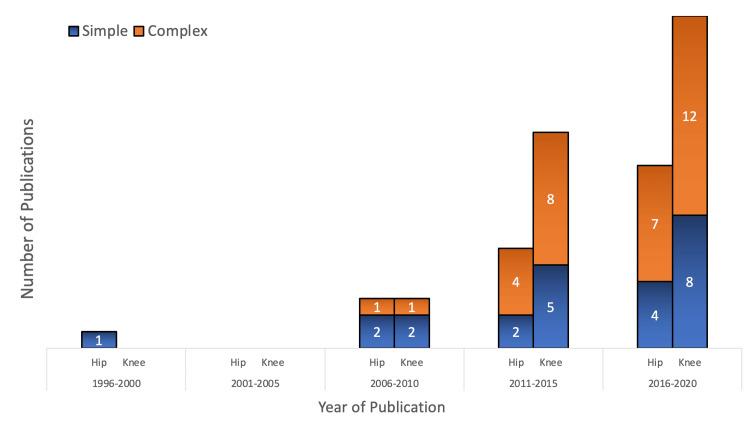
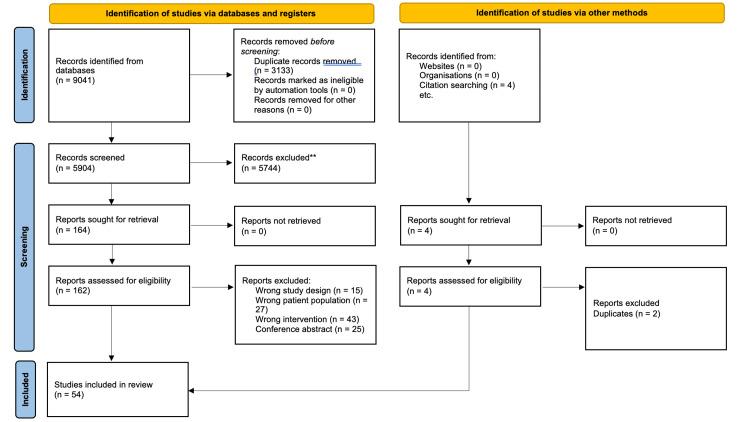
Decision analysis is an increasingly used tool to guide policymakers and clinicians toward objective decision-making in uncertain clinical scenarios by analyzing the cost-effectiveness and health benefits of treatment modalities. In this systematic review, we summarize and appraise the current use of decision analysis in the management of hip and knee osteoarthritis (OA), the leading source of disability and societal costs in patients over 70. Publications involving decision analysis modelling for hip and knee OA between 1995 and 2021 were included. Among 54 included studies, there were 33 knee- and 18 hip OA-related models, while three were overlapping. Included articles primarily used Markov decision models (39), followed by simple decision trees (eight), microsimulations (five), and discrete event simulations (two) to compare OA treatment modalities. Models most commonly compared surgical procedures and devices (21), surgical versus nonoperative management (12), intraarticular injections (seven), and rehab therapies (five). More than half of all included studies (33) were published in the last five years. This study finds that there has been a large increase in the publication of hip and knee OA-related decision analysis models, particularly over the most recent five years. High-quality decision analysis models incorporate sensitivity and value of information analyses and take on broader, societal perspectives to incorporate utilities, direct costs, and indirect costs of management decisions. Surgeons should be familiar with the principles of decision analysis, which can be used to guide complicated real-world decision-making by incorporating risks and benefits of multiple strategies.
决策分析是一种越来越常用的工具,通过分析治疗方式的成本效益和健康益处,引导政策制定者和临床医生在不确定的临床场景中进行客观决策。在这项系统评价中,我们总结并评估了决策分析在髋膝关节骨关节炎(OA)管理中的当前应用情况,OA是70岁以上患者残疾和社会成本的主要来源。纳入了1995年至2021年间涉及髋膝关节OA决策分析模型的出版物。在纳入的54项研究中,有33项与膝关节OA相关的模型,18项与髋关节OA相关的模型,其中三项重叠。纳入的文章主要使用马尔可夫决策模型(39项),其次是简单决策树(8项)、微观模拟(5项)和离散事件模拟(2项)来比较OA治疗方式。模型最常比较的是手术程序和器械(21项)、手术与非手术治疗(12项)、关节内注射(7项)和康复治疗(5项)。所有纳入研究中超过一半(33项)是在过去五年发表的。本研究发现,髋膝关节OA相关决策分析模型的发表量大幅增加,尤其是在最近五年。高质量的决策分析模型纳入了敏感性和信息价值分析,并从更广泛的社会角度纳入了管理决策的效用、直接成本和间接成本。外科医生应熟悉决策分析的原则,该原则可通过纳入多种策略的风险和益处来指导复杂的现实世界决策。
 Zotero 插件