
直觉出错:肠道-脑互动障碍与肝脏疾病之间的复杂关系
Gut feeling gone wrong: Tangled relationship between disorders of gut-brain interaction and liver disease.
作者信息
Goyal Manjeet Kumar, Goyal Prerna, Goyal Omesh, Sood Ajit
机构信息
Department of Gastroenterology and Human Nutrition Unit, All India Institute of Medical Sciences, New Delhi 110029, Delhi, India.
Department of Medicine, R.G. Stone Super Speciality Hospital, Ludhiana 141001, Punjab, India.
出版信息
World J Hepatol. 2025 May 27;17(5):105582. doi: 10.4254/wjh.v17.i5.105582.
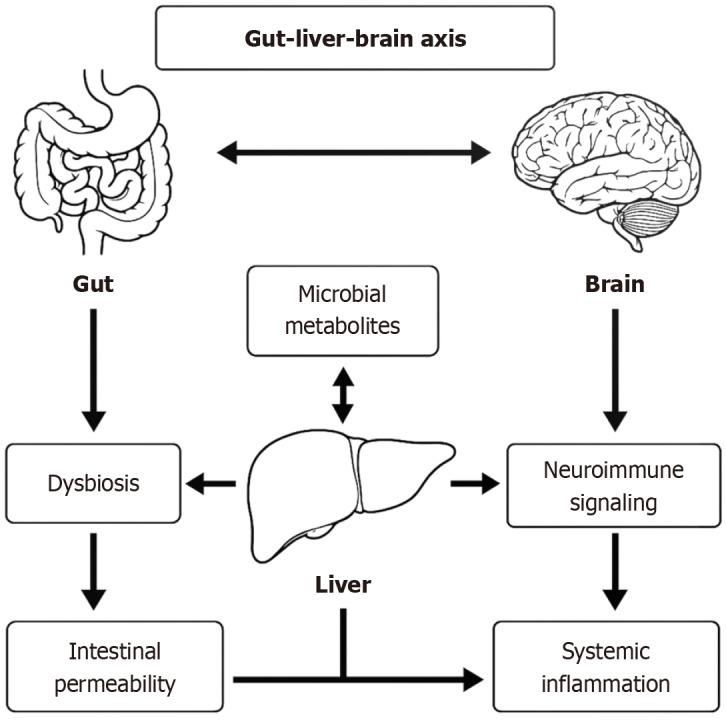
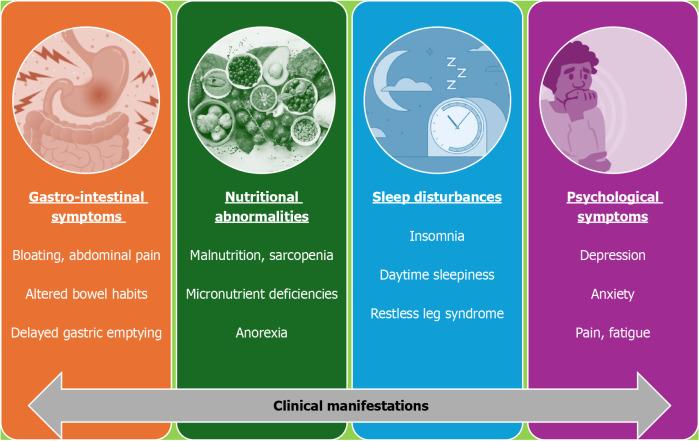
Functional gastrointestinal disorders, now termed "disorders of gut-brain interaction" (DGBI), are characterized by a spectrum of chronic gastrointestinal symptoms driven by dysregulated gut-brain interaction. DGBIs frequently coexist with liver diseases, including cirrhosis, thereby exacerbating clinical manifestations and complicating management; this overlap is underpinned by shared mechanisms, including gut dysbiosis, increased intestinal permeability, systemic inflammation, and altered neuroimmune signaling. Portal hypertension in cirrhosis promotes small intestinal bacterial overgrowth and microbial translocation, thereby triggering inflammatory pathways that worsen gut and liver function. This minireview explores the gut-liver axis as a central mediator in the interplay between DGBIs and liver disease/cirrhosis. Clinically, these interactions manifest as refractory gastrointestinal symptoms, nutritional deficiencies, and impaired quality of life. Emerging research emphasizes the need for integrative diagnostic approaches, such as combining advanced imaging, microbiome analysis, and biomarker profiling, to unravel the complex interplay between DGBIs and liver disease/cirrhosis. Therapeutic interventions targeting the gut microbiome, neuroimmune pathways, and lifestyle modification can mitigate disease burden. This review underscores the importance of a multidisciplinary framework for enhancing patient outcomes and guiding future research in this intersectional field.
功能性胃肠疾病,现称为“肠脑互动障碍”(DGBI),其特征是由失调的肠脑互动驱动的一系列慢性胃肠症状。DGBI常与包括肝硬化在内的肝脏疾病共存,从而加剧临床表现并使管理复杂化;这种重叠由共同机制支撑,包括肠道菌群失调、肠道通透性增加、全身炎症以及神经免疫信号改变。肝硬化中的门静脉高压会促进小肠细菌过度生长和微生物易位,从而触发炎症途径,使肠道和肝脏功能恶化。这篇小型综述探讨了肠-肝轴作为DGBI与肝脏疾病/肝硬化之间相互作用的核心介质。临床上,这些相互作用表现为难治性胃肠症状、营养缺乏和生活质量受损。新出现的研究强调需要综合诊断方法,如结合先进成像、微生物组分析和生物标志物谱分析,以阐明DGBI与肝脏疾病/肝硬化之间的复杂相互作用。针对肠道微生物组、神经免疫途径和生活方式改变的治疗干预可以减轻疾病负担。这篇综述强调了多学科框架对于改善患者预后和指导这一交叉领域未来研究的重要性。

 Zotero 插件