
尼日利亚对疾病爆发的公共卫生应对措施:优势与弱点综述
Nigeria's public health response to disease outbreaks: A review of strengths and weaknesses.
作者信息
Jonah Japhet H, Samuel Gabriel, Abdullahi Mohammed I, Emmanuel Edwin A, Danladi Samuel S, Ekwuluo Celestine E
机构信息
Department of Nursing, FHI360, Maiduguri, Nigeria.
International Humanitarian Action - (NOHA) - Institute for International Law of Peace and Armed Conflict (IFHV), Ruhr Universität, Bochum, Germany.
出版信息
J Public Health Afr. 2024 Dec 18;15(1):773. doi: 10.4102/jphia.v15i1.773. eCollection 2024.
BACKGROUND
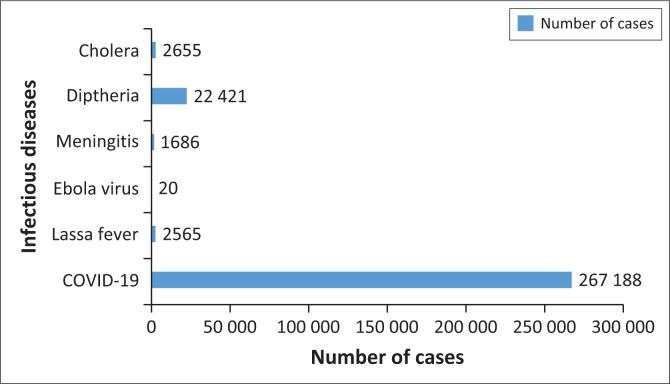
In the past 20 years, Nigeria has confronted an array of six significant infectious disease outbreaks, including coronavirus disease 2019 (COVID-19), Lassa fever, meningitis, diphtheria, cholera and Ebola. Although the country has generally managed to address most of these infections effectively, there are still some shortcomings in the nation's public health response.
AIM
This review examined the six most significant outbreaks of infectious diseases and the corresponding public health responses, evaluating the strengths and limitations of the country's public health system.
SETTING
This study focused on Nigeria. Nigeria is regarded as a country with the largest population in Africa.
METHOD
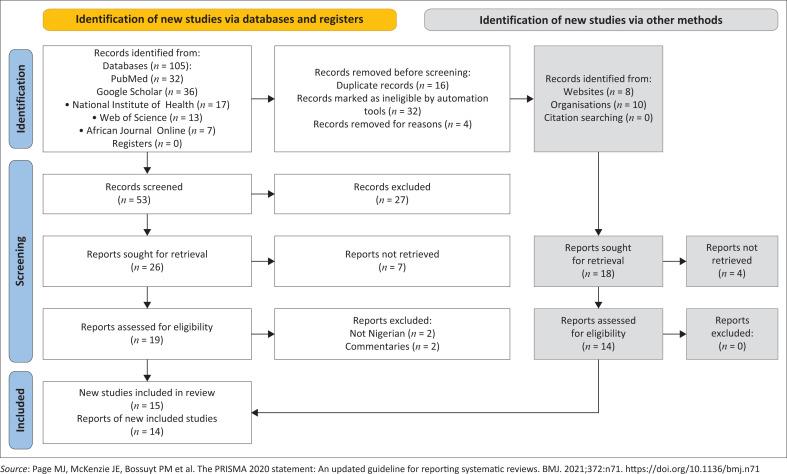
A narrative review approach was employed, which entailed identifying pertinent literature using search terms with various Boolean combinations derived from multiple electronic databases, including PubMed, Google Scholar, the National Institutes of Health (NIH) database, the Web of Science and Africa Journals Online.
RESULTS
The key strengths of Nigeria's public health system include surveillance, workforce development, prevention at entry points, risk communication and establishment of national reference libraries. However, the study also identified several areas of weakness, such as inadequate funding, inadequate efforts at the subnational level, poor coordination between public health and security authorities, a lack of integration between the animal and human health sectors, inadequate biosafety and biosecurity policies and programmes and logistical complexities.
CONCLUSION
Despite the strengths, there are still weaknesses within Nigeria's public health system response to infectious diseases.
CONTRIBUTION
The study outlined the various strengths and weaknesses of the Nigeria Public health system in combating infectious disease. Therefore, it is recommended that funding be increased, poverty and inequalities are addressed, efforts at the subnational level be increased, and a Memorandum of Understanding (MOU) between the public health sector and security authorities be established.
背景
在过去20年里,尼日利亚面临了一系列六大重大传染病疫情,包括2019冠状病毒病(COVID-19)、拉沙热、脑膜炎、白喉、霍乱和埃博拉。尽管该国总体上成功有效地应对了这些感染中的大多数,但在国家公共卫生应对方面仍存在一些不足。
目的
本综述研究了六大最重大的传染病疫情及相应的公共卫生应对措施,评估了该国公共卫生系统的优势和局限性。
背景
本研究聚焦于尼日利亚。尼日利亚被视为非洲人口最多的国家。
方法
采用叙述性综述方法,即使用从多个电子数据库(包括PubMed、谷歌学术、美国国立卫生研究院(NIH)数据库、科学网和非洲在线期刊)中得出的带有各种布尔组合的搜索词来识别相关文献。
结果
尼日利亚公共卫生系统的主要优势包括监测、劳动力发展、入境点预防、风险沟通以及国家参考图书馆的建立。然而,该研究也发现了几个薄弱领域,如资金不足、地方层面努力不够、公共卫生与安全当局之间协调不佳、动物与人类卫生部门缺乏整合、生物安全政策和计划不足以及后勤复杂。
结论
尽管有优势,但尼日利亚公共卫生系统在应对传染病方面仍存在弱点。
贡献
该研究概述了尼日利亚公共卫生系统在抗击传染病方面的各种优势和弱点。因此,建议增加资金、解决贫困和不平等问题、加强地方层面的努力,并在公共卫生部门和安全当局之间签署一份谅解备忘录(MOU)。
 Zotero 插件