
新型黄曲霉毒素氧化酶CotA的膳食补充可减轻黄曲霉毒素B诱导的日本鹌鹑肝脏氧化应激、脂质代谢紊乱和细胞凋亡。
Dietary Supplementation of Novel Aflatoxin Oxidase CotA Alleviates Aflatoxin B-Induced Oxidative Stress, Lipid Metabolism Disorder, and Apoptosis in the Liver of Japanese Quails.
作者信息
Lv Hao, Rao Zhiyong, Li Yuting, Zhang Wei, Zhao Lihong, Wang Zhixiang, Guo Yongpeng
机构信息
College of Animal Science and Technology, Henan Agricultural University, Zhengzhou 450046, China.
College of Animal Science and Technology, China Agricultural University, Beijing 100193, China.
出版信息
Animals (Basel). 2025 May 26;15(11):1555. doi: 10.3390/ani15111555.
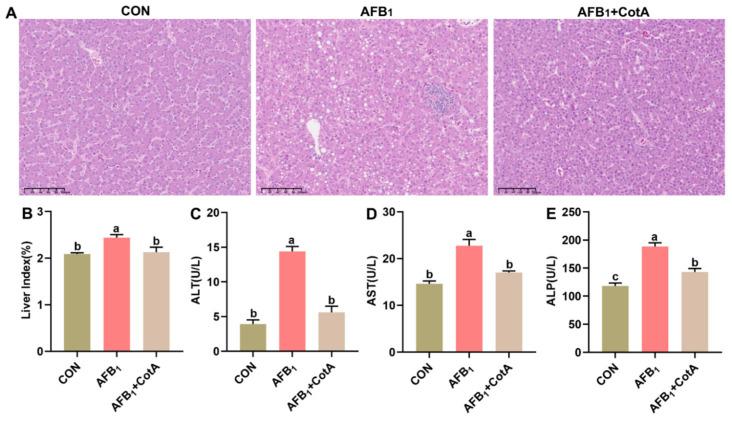
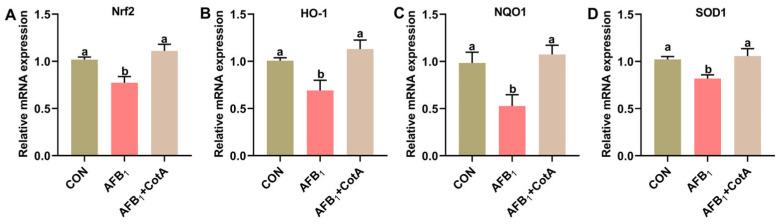
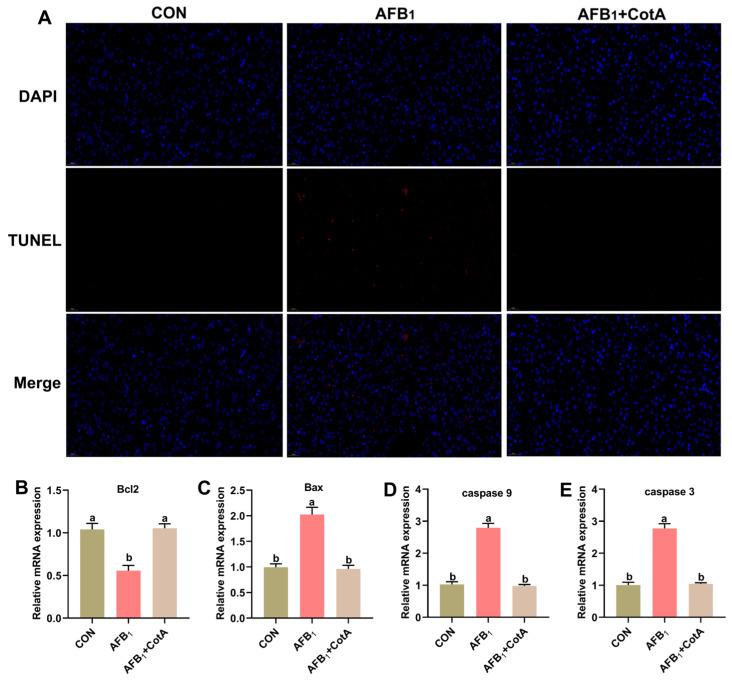
This research explored the role of aflatoxin oxidase CotA in mitigating aflatoxin B (AFB)-induced hepatotoxicity in Japanese quails. A total of 225 female Japanese quails, aged two weeks, were randomly assigned to three dietary groups: a control diet, an AFB-contaminated diet, and an AFB-contaminated diet supplemented with aflatoxin oxidase CotA for three weeks. The results indicate that quails receiving the AFB-contaminated diet exhibited reduced body weight gain, pronounced vacuolar degeneration within hepatocytes, and inflammatory cell infiltration. Additionally, the AFB group demonstrated an increased liver index and elevated serum liver enzyme activities (ALT, AST, and ALP). Supplementation with CotA improved body weight gain and conferred protection against AFB-induced liver injury. Furthermore, the addition of CotA significantly enhanced liver antioxidant enzyme activities (T-AOC, GST, GSH-Px, POD, and CAT), reduced hepatic HO and MDA levels, and upregulated the mRNA expression levels of genes in the Nrf2 pathway in quails exposed to AFB. AFB exposure led to lipid droplet accumulation in liver tissues and elevated serum TG and LDL-C levels. However, the introduction of CotA mitigated AFB-induced alterations in lipid metabolism. Furthermore, dietary supplementation with CotA inhibited AFB-induced hepatocyte apoptosis and decreased the mRNA expression of apoptosis-related genes, including Bax, caspase-9, and caspase-3. Notably, the AFB+CotA group exhibited a significant reduction in AFB residues and AFB-DNA adducts in quail liver tissues compared to the AFB group. These findings indicate that aflatoxin oxidase CotA holds promise as a feed additive to alleviate AFB-induced hepatotoxicity.
本研究探讨了黄曲霉毒素氧化酶CotA在减轻黄曲霉毒素B(AFB)诱导的日本鹌鹑肝毒性中的作用。总共225只两周龄的雌性日本鹌鹑被随机分为三个饮食组:对照饮食组、AFB污染饮食组和补充黄曲霉毒素氧化酶CotA的AFB污染饮食组,为期三周。结果表明,接受AFB污染饮食的鹌鹑体重增加减少,肝细胞内出现明显的空泡变性和炎性细胞浸润。此外,AFB组的肝脏指数增加,血清肝酶活性(ALT、AST和ALP)升高。补充CotA可改善体重增加,并对AFB诱导的肝损伤起到保护作用。此外,添加CotA可显著增强肝脏抗氧化酶活性(T-AOC、GST、GSH-Px、POD和CAT),降低肝脏HO和MDA水平,并上调暴露于AFB的鹌鹑中Nrf2途径相关基因的mRNA表达水平。AFB暴露导致肝组织中脂滴积累以及血清TG和LDL-C水平升高。然而,引入CotA可减轻AFB诱导的脂质代谢改变。此外,饮食中补充CotA可抑制AFB诱导的肝细胞凋亡,并降低凋亡相关基因(包括Bax、caspase-9和caspase-3)的mRNA表达。值得注意的是,与AFB组相比,AFB+CotA组鹌鹑肝组织中的AFB残留和AFB-DNA加合物显著减少。这些发现表明,黄曲霉毒素氧化酶CotA有望作为一种饲料添加剂来减轻AFB诱导的肝毒性。


 Zotero 插件