
永久性作物覆盖作为抗旱葡萄栽培的一种策略:关于根际宏基因组学如何影响叶片水平组学以增强植物整体反应的见解。
Permanent crop cover as a strategy for drought-resistant viticulture: insights on how rhizosphere metagenomics influences leaf-level -omics for an enhanced overall plant response.
作者信息
Jáuregui Iván, Ancín María, García-Mina José M, Zamarreño Angel M, Iglesias-Sanchez Ariadna, Florez-Sarasa Igor, Aranjuelo Iker
机构信息
Department of Sciences, Public University of Navarra (UPNA), Pamplona, Spain.
AgroBiotechnology Institute (IdAB), Consejo Superior de Investigaciones Científicas (CSIC)-Government of Navarre, Mutilva, Spain.
出版信息
Front Plant Sci. 2025 May 29;16:1543171. doi: 10.3389/fpls.2025.1543171. eCollection 2025.
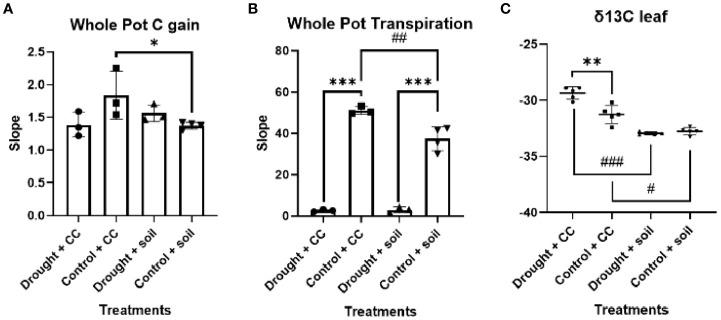
The viticulture sector is currently threatened by climate change, impacting grape quality and yield through altered weather patterns and reduced soil health. The incorporation of cover crops can significantly bolster sustainability by enhancing soil moisture retention and structural integrity, both of which are essential for the enduring viability of vineyards in the long term. Cover cropping presents numerous advantages, such as the enhancement of soil health, mitigation of erosion, and facilitation of nutrient cycling; however, it may also pose certain short-term risks, including competition for vital resources like water. In spite of the progress made in comprehending the advantages of cover crops in vineyard settings, the intricate dynamics between plant-microbe interactions and the leaf-level metabolic responses of grapevines at the leaf level to drought conditions remain unexplored. This study examines the impact of water availability and green cover (comprising perennial ryegrass and ) on grapevine photosynthetic and metabolism efficiency, positing that crop cover fosters a microhabitat that bolsters microbial communities and drought resilience. Through comprehensive examinations of gas exchange, isotopic analysis, metabolomics, transcriptomics, and soil metagenomics, this study clarifies the relationships among irrigation methodologies, photosynthesis, and soil health, ultimately aiding in the fortification of agricultural resilience in the face of climate change. Our investigation demonstrates that the adoption of cover crops yields unexpected immediate benefits in bolstering drought resilience for vineyards. Despite an observed increase in overall evapotranspiration during drought conditions, the use of cover crops facilitated carbon accumulation and enhanced osmolyte-acting metabolites (including sugars and sugar alcohols) and abscisic acid (ABA) concentrations, alongside a comprehensive molecular adaptation to drought stress. Moreover, cover cropping was shown to promote the expression of defense-related pathways, while vineyards devoid of cover crops exhibited minimal transcriptional responses; certain taxa exhibited responses contingent upon the treatment, with Tistrellales and Gaiellales being linked to crop cover under favorable conditions, whereas demonstrated a strong association with rhizospheric soil during drought conditions when crop cover was present. Our study is the first to show that cover cropping can boost cash crop resilience to drought through intricate plant-soil-microbe interactions, providing benefits from the outset.
葡萄种植行业目前正受到气候变化的威胁,通过改变天气模式和降低土壤健康状况影响葡萄品质和产量。种植覆盖作物可以通过增强土壤保水能力和结构完整性来显著提高可持续性,这两者对于葡萄园长期的持久生存能力至关重要。覆盖作物种植有许多优点,如改善土壤健康、减轻侵蚀和促进养分循环;然而,它也可能带来某些短期风险,包括对水等重要资源的竞争。尽管在理解覆盖作物在葡萄园环境中的优势方面取得了进展,但植物-微生物相互作用与葡萄叶片水平对干旱条件的代谢反应之间的复杂动态仍未得到探索。本研究考察了水分供应和绿色覆盖物(包括多年生黑麦草和 )对葡萄光合和代谢效率的影响,认为作物覆盖物营造了一个有利于微生物群落和抗旱能力的微生境。通过对气体交换、同位素分析、代谢组学、转录组学和土壤宏基因组学的全面研究, 本研究阐明了灌溉方法、光合作用和土壤健康之间的关系,最终有助于增强农业应对气候变化的能力。我们的调查表明,采用覆盖作物在增强葡萄园抗旱能力方面能带来意想不到的即时好处。尽管在干旱条件下观察到总蒸散量有所增加,但使用覆盖作物促进了碳积累,提高了渗透调节代谢物(包括糖和糖醇)和脱落酸(ABA)的浓度,同时对干旱胁迫进行了全面的分子适应。此外,覆盖作物种植被证明能促进防御相关途径的表达,而没有覆盖作物的葡萄园表现出最小的转录反应;某些分类群的反应因处理而异,在有利条件下,Tistrellales和Gaiellales与作物覆盖有关,而 在有作物覆盖的干旱条件下与根际土壤有很强的关联。我们的研究首次表明,覆盖作物种植可以通过复杂的植物-土壤-微生物相互作用提高经济作物的抗旱能力,并从一开始就带来益处。




 Zotero 插件