
超越BCL2(B细胞淋巴瘤)和BTK(布鲁顿酪氨酸激酶)抑制剂:慢性淋巴细胞白血病的新型药物及耐药机制
Beyond BCL2 (B cell lymphoma) and BTK (Bruton tyrosine kinase) inhibitors: novel agents and resistance mechanisms for chronic lymphocytic leukemia.
作者信息
Hays Priya
机构信息
Health Sciences Education, Geisel School of Medicine, Dartmouth College, Hanover, NH, 03755, USA.
出版信息
Discov Oncol. 2025 Jun 14;16(1):1100. doi: 10.1007/s12672-025-02947-9.
BACKGROUND
Chronic lymphocytic leukemia (CLL) is considered the one of most prevalent hematological diseases in the Western world, with an incidence of 4.2/100 000/year that increases to more than 30/100 000/year at an age of greater than 80 years. The Bruton tyrosine kinase inhibitor ibrutinib has been considered the treatment of choice in treatment naïve and relapsed/refractory settings (R/R). Venetoclax, along with navitoclax, are the selected BCL2 inhibitors in first and second-line settings for chronic lymphocytic leukemia. A degree of acquired resistance for this agents has been observed in clinical settings, and is also determined by scientific rationale.
METHODS
A PubMed literature search and Google Scholar search were conducted using the terms "chronic lymphocytic leukemia" AND "novel therapies", "BTK degraders", and "acquired resistance", and "bispecific antibodies", and "chimeric antigen T cell therapy." " recent phase III trials" and "CLL" AND "MURANO trial" AND "BRUIN trial" AND "CLL14 trial" AND "TRANSCEND trial" AND "updates."
RESULTS
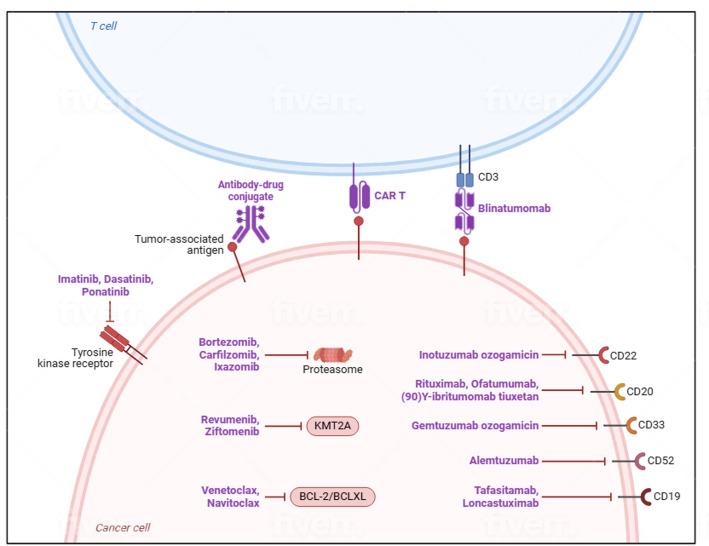
Acquired resistance has been extensively documented in treatment of CLL, mainly due to the mutation Gly101Val that leads to displacement of pro-apoptotic proteins. Newer agents identified include pirtobrutinib and nemtabrutinib, non-covalent, reversible BTK inhibitors, the anti-CD20 monoclonal antibodies employing CD20 target antigen mechanisms ofatumumab, obinutuzumab, lisocabtagene maraleucel, a CD19 chimeric antigen T cell receptor therapy, teclistamab, a BsAb that targets the B cell maturation antigen or BCMA and Siglec-6 monoclonal antibodies.
CONCLUSION
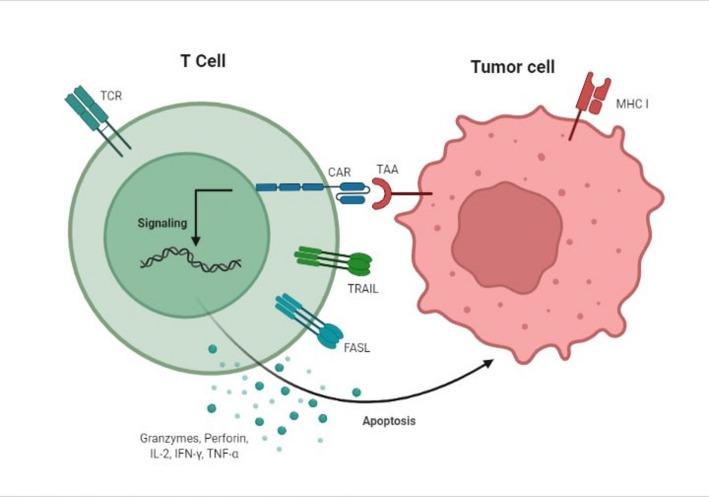
CLL has demonstrated acquired resistance to BTK inhibitors and BCL2 inhibitors, necessitating the development and evaluating of treatment options beyond their use. Cancer immunotherapies such as bispecific antibodies and chimeric T cell therapies present with viable therapies for CLL. Novel agents have also been developed that enhance the cytotoxic effect of T cells. Future studies may focus on the developing treatments that overcome the acquired resistance that results when treatment with standard of care targeted therapies ibrutinib and venetoclax.
背景
慢性淋巴细胞白血病(CLL)被认为是西方世界最常见的血液系统疾病之一,年发病率为4.2/10万,80岁以上人群发病率增至30/10万以上。布鲁顿酪氨酸激酶抑制剂伊布替尼被认为是初治和复发/难治性(R/R)患者的首选治疗药物。维奈克拉与纳维托克拉斯一起,是慢性淋巴细胞白血病一线和二线治疗中选定的BCL2抑制剂。在临床环境中已观察到这些药物存在一定程度的获得性耐药,这也有其科学依据。
方法
在PubMed和谷歌学术上进行文献检索,检索词为“慢性淋巴细胞白血病”以及“新疗法”“BTK降解剂”“获得性耐药”“双特异性抗体”“嵌合抗原T细胞疗法”“近期III期试验”“CLL”“MURANO试验”“BRUIN试验”“CLL14试验”“TRANSCEND试验”和“最新进展”。
结果
在CLL治疗中,获得性耐药已有广泛记录,主要原因是Gly101Val突变导致促凋亡蛋白移位。已确定的新型药物包括吡托布替尼和奈姆塔布替尼,这两种非共价、可逆的BTK抑制剂,采用CD20靶向抗原机制的抗CD20单克隆抗体奥法木单抗、奥妥珠单抗、利索卡提内马利尤塞,一种CD19嵌合抗原T细胞受体疗法,靶向B细胞成熟抗原或BCMA的双特异性抗体替西他单抗以及Siglec-6单克隆抗体。
结论
CLL已显示出对BTK抑制剂和BCL2抑制剂的获得性耐药,因此有必要开发和评估除使用这些药物之外的治疗选择。双特异性抗体和嵌合T细胞疗法等癌症免疫疗法为CLL提供了可行的治疗方法。还开发了增强T细胞细胞毒性作用的新型药物。未来的研究可能集中于开发能够克服使用标准护理靶向疗法伊布替尼和维奈克拉治疗时产生的获得性耐药的治疗方法。

 Zotero 插件