
中国农村老年人社会参与与医疗服务利用之间的关联:基于中国老年健康影响因素跟踪调查(2011 - 2018)的纵向研究
Association between social participation and medical care utilization among rural older adults in China: a longitudinal study based on the CLHLS (2011-2018).
作者信息
Yao Dianrui, Yang Le, Kondo Naoki
机构信息
School of Management, Shanxi Medical University, Taiyuan, Shanxi, China.
Department of Social Epidemiology, Graduate School of Medicine and School of Public Health, Kyoto University, Kyoto, Japan.
出版信息
BMC Geriatr. 2025 Jun 14;25(1):425. doi: 10.1186/s12877-025-06090-6.
BACKGROUND
There is limited understanding regarding the patterns and trajectories of social participation and their associations with medical care utilization among rural older adults. We aimed to investigate the patterns and trajectories of social participation and their associations with medical care utilization among rural older adults in China using longitudinal data.
METHODS
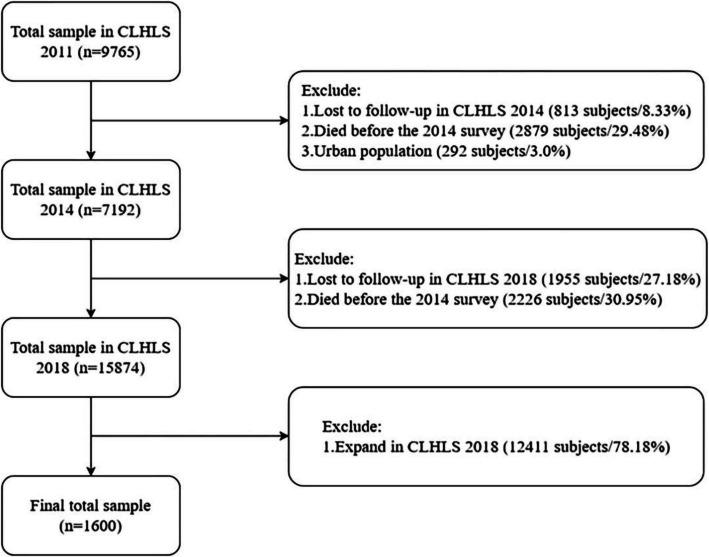
In this longitudinal study, we used data from 1600 participants aged 60 years and above in the Chinese Longitudinal Healthy Longevity Survey (CLHLS). We included participants with social participation information in 2011 (T1) as the baseline and followed them up in 2014(T2) and 2018(T3). Latent profile analysis (LPA) and latent transition analysis (LTA) were employed to identify the latent classes of social participation and the transition probabilities between these classes. Multinomial logistic regression was used to examine the predictors of transitions, while a two-part model and cross-lagged model were utilized to clarify the longitudinal relationship between social participation and medical care utilization among rural older adults.
RESULTS
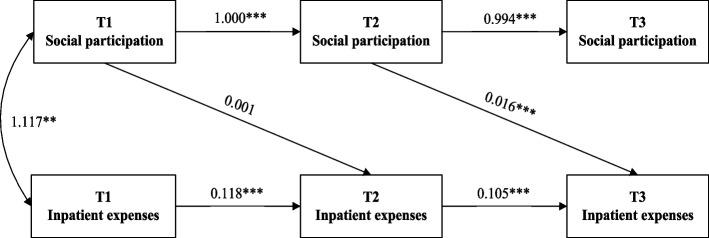
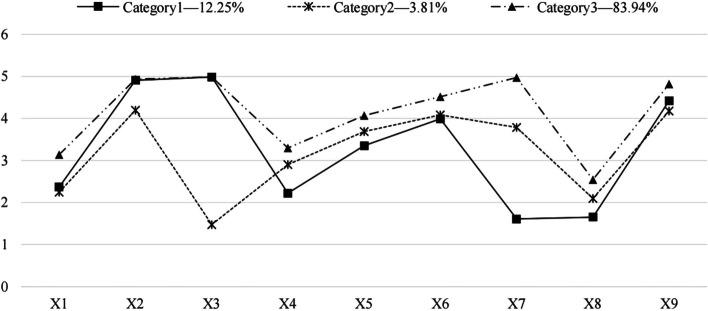
Three social participation classes were identified by LPA: low, moderate, and high social participation. The high social participation class exhibited strong stability, with rare transitions to other classes. Subjective economic status, self-rated health, and the number of chronic diseases significantly predicted social participation transition patterns (P < 0.05). Regarding outpatient care utilization, social participation consistently predicted more frequent outpatient visits in all waves (P < 0.05) but was associated with higher outpatient expenses only at T3 (P < 0.05). However, no significant association was observed between social participation and inpatient care utilization. This finding was further supported by cross-lagged modeling, demonstrating significant effects of social participation on outpatient care utilization (β = 0.016 to 0.018, SE = 0.004, P < 0.001).
CONCLUSIONS
This research reveals the social participation dynamics in rural older adults and their effects on medical care utilization in China. Social participation can significantly promote outpatient care utilization among rural older adults. Targeted policy and practice are needed for those with low levels of social participation in rural areas.
背景
对于农村老年人社会参与的模式和轨迹及其与医疗服务利用之间的关联,人们的了解有限。我们旨在利用纵向数据,调查中国农村老年人社会参与的模式和轨迹及其与医疗服务利用之间的关联。
方法
在这项纵向研究中,我们使用了中国健康与养老追踪调查(CLHLS)中1600名60岁及以上参与者的数据。我们将2011年(T1)有社会参与信息的参与者作为基线,并在2014年(T2)和2018年(T3)对他们进行随访。采用潜在类别分析(LPA)和潜在转变分析(LTA)来识别社会参与的潜在类别以及这些类别之间的转变概率。使用多项逻辑回归来检验转变的预测因素,同时采用两部分模型和交叉滞后模型来阐明农村老年人社会参与和医疗服务利用之间的纵向关系。
结果
LPA识别出三种社会参与类别:低、中、高社会参与。高社会参与类别表现出很强的稳定性,很少向其他类别转变。主观经济状况、自评健康状况和慢性病数量显著预测了社会参与的转变模式(P<0.05)。关于门诊服务利用,社会参与在所有波次中都持续预测更频繁的门诊就诊(P<0.05),但仅在T3时与更高的门诊费用相关(P<0.05)。然而,未观察到社会参与与住院服务利用之间存在显著关联。交叉滞后模型进一步支持了这一发现,表明社会参与对门诊服务利用有显著影响(β=0.016至0.018,SE=0.004,P<0.001)。
结论
本研究揭示了中国农村老年人的社会参与动态及其对医疗服务利用的影响。社会参与可显著促进农村老年人的门诊服务利用。对于农村地区社会参与水平较低的人群,需要有针对性的政策和实践。




 Zotero 插件