
毛囊再生的病理生理机制及潜在治疗策略。
Pathophysiological mechanisms of hair follicle regeneration and potential therapeutic strategies.
作者信息
Bellani Depti, Patil Raji, Prabhughate Ashwin, Shahare Riya, Gold Michael, Kapoor Rinky, Shome Debraj
机构信息
Department of Medical Affairs, QR678, Esthetic Centers International Pvt Ltd, Mumbai, Maharashtra, India.
Department of Research, The Esthetic Clinics, Mumbai, Maharashtra, India.
出版信息
Stem Cell Res Ther. 2025 Jun 15;16(1):302. doi: 10.1186/s13287-025-04420-4.
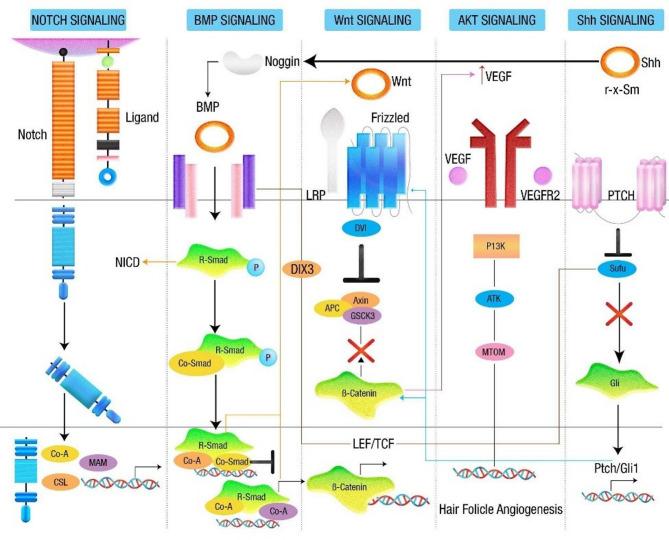
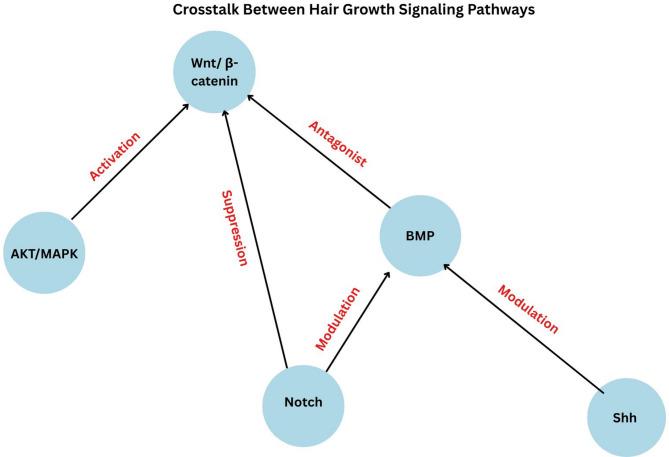
Androgenetic alopecia (AGA) is a chronic and progressive hair loss disorder marked by follicular miniaturization and a shortened anagen phase. While androgenic and genetic factors contribute to its pathogenesis, increasing evidence highlights the importance of dysregulated molecular signaling in impaired hair follicle (HF) regeneration.This review explores the interconnected signaling pathways that govern HF cycling and regeneration-Wnt/β-catenin, Sonic Hedgehog (Shh), Bone Morphogenetic Protein (BMP), and Notch. Wnt/β-catenin activation initiates anagen by stimulating stem cell proliferation and follicle formation, while Shh supports follicular proliferation and morphogenesis. Notch regulates HF stem cell (HFSC) fate, and BMP enforces quiescence and catagen onset. Crucially, crosstalk between Wnt-BMP and Shh-Notch pathways ensures follicular homeostasis, highlighting the need to view these pathways as an integrated regulatory network.Recent therapeutic innovations focus on modulating these signaling cascades. Small molecules such as valproic acid and CHIR99021 activate Wnt signaling; smoothened agonists target Shh; and Noggin mimetics or BMP-neutralizing antibodies inhibit BMP activity. These approaches have shown promising outcomes in preclinical models, including mouse studies, in vitro HFSC systems, etc. Additionally, emerging gene editing technologies (e.g., CRISPR-Cas9) and stem cell-biomaterial integration offer regenerative strategies that move beyond symptomatic treatments like minoxidil or hair transplantation.Given that AGA is associated with androgen-mediated Wnt suppression and TGF-β activation, targeting these dysregulated networks presents a promising route for long-term management. A deeper understanding of pathway interactions lays the groundwork for precise, durable, and disease-modifying therapies in the evolving landscape of alopecia treatment.
雄激素性脱发(AGA)是一种慢性进行性脱发疾病,其特征为毛囊小型化和生长期缩短。虽然雄激素和遗传因素在其发病机制中起作用,但越来越多的证据表明,分子信号失调在毛囊(HF)再生受损中具有重要意义。本综述探讨了调控HF周期和再生的相互关联的信号通路——Wnt/β-连环蛋白、音猬因子(Shh)、骨形态发生蛋白(BMP)和Notch。Wnt/β-连环蛋白激活通过刺激干细胞增殖和毛囊形成启动生长期,而Shh支持毛囊增殖和形态发生。Notch调节HF干细胞(HFSC)命运,BMP促使静止期和退行期开始。至关重要的是,Wnt-BMP和Shh-Notch通路之间的相互作用确保了毛囊内环境稳定,这突出了将这些通路视为一个综合调控网络的必要性。最近的治疗创新集中在调节这些信号级联反应。丙戊酸和CHIR99021等小分子激活Wnt信号;Smoothened激动剂靶向Shh;Noggin模拟物或BMP中和抗体抑制BMP活性。这些方法在临床前模型中,包括小鼠研究、体外HFSC系统等,已显示出有前景的结果。此外,新兴的基因编辑技术(如CRISPR-Cas9)和干细胞-生物材料整合提供了超越米诺地尔或毛发移植等对症治疗的再生策略。鉴于AGA与雄激素介导的Wnt抑制和转化生长因子-β(TGF-β)激活相关,针对这些失调的网络为长期管理提供了一条有前景的途径。对通路相互作用的更深入理解为脱发治疗不断发展的格局中精确、持久和疾病修饰疗法奠定了基础。
 Zotero 插件